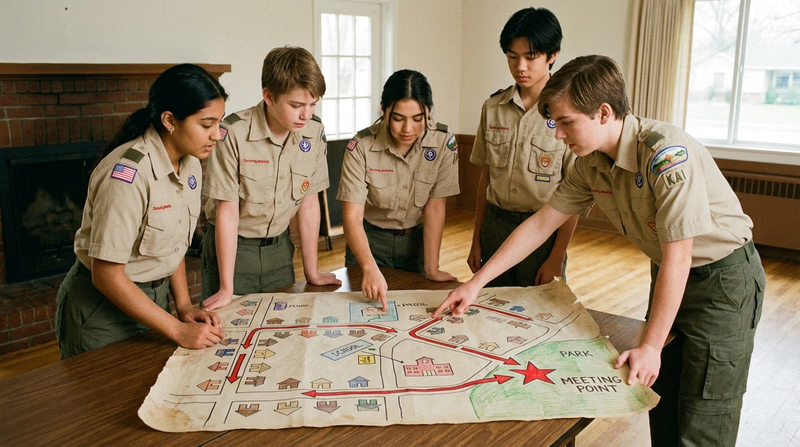
Req 2a — Family Emergency Plans
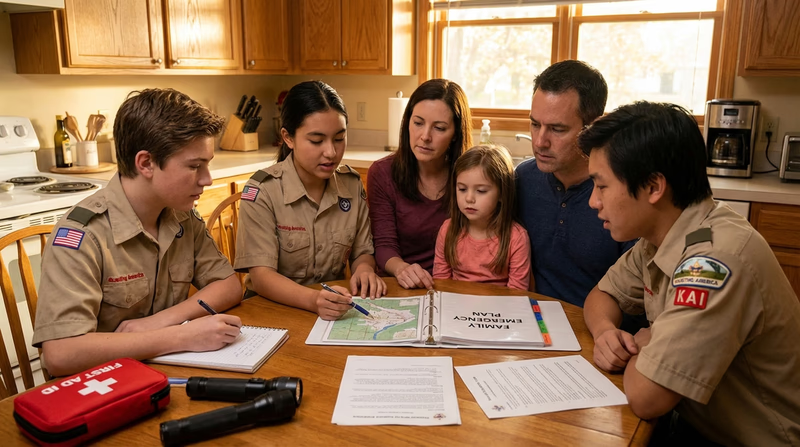
Now it is time to take what you learned in Requirements 1a and 1b and bring it home — literally. This requirement asks you to sit down with your family and talk through real emergency plans. This is one of the most practical things you will do in Scouting, and your family will benefit from it for years to come.
Family Emergency PlanWhy a Family Meeting Matters
Everyone in your household needs to be part of the plan. A plan that only one person knows is not a plan — it is a secret. During a real emergency, every family member should know exactly what to do without needing to be told.
Who should be there: Everyone who lives in your home — parents, siblings, grandparents, and anyone else. Even young children can learn simple actions like “go to the safe spot” or “stay with an adult.”
Sheltering in Place
Sheltering in place means staying inside your home (or another building) because going outside would be more dangerous. This might happen during a tornado, a chemical spill, or an active threat in your area.
Your shelter-in-place plan should cover:
- Safe room: Which room in your home is the safest? For tornadoes, this is usually an interior room on the lowest floor with no windows (like a bathroom or closet). For chemical spills, choose a room you can seal — close windows, doors, and vents.
- Supplies: What do you need in your safe room? Think water, flashlight, radio, first aid kit, and phone charger.
- Communication: How will you know when it is safe to come out? A battery-powered or hand-crank NOAA weather radio can provide updates when the power is out and cell towers are down.
- Pets: Do you have a plan for your pets? They need to shelter with you.
Evacuation
Evacuation means leaving your home because staying is too dangerous. This could happen during a wildfire, flood, hurricane, or gas leak. The key to a successful evacuation is planning it before you need it.
Your evacuation plan should cover:
- Routes: Identify at least two ways out of your neighborhood. Roads can be blocked, so having an alternate route is essential.
- Meeting place: Choose two meeting locations — one near your home (like a neighbor’s mailbox) and one outside your neighborhood (like a community center or relative’s house).
- Transportation: How will your family travel? Who drives? What if someone is not home when the evacuation order comes?
- Go bag: Each family member should have a pre-packed bag ready to grab. (You will build this in Requirement 2c.)
- Important documents: Keep copies of identification, insurance papers, and medical records in a waterproof container that is easy to grab.
Running the Family Meeting
Here is a simple agenda for your family meeting:
- Share your chart from Requirement 1b. Explain the 10 scenarios you studied and what you learned about each one.
- Discuss local risks. Which emergencies are most likely in your area? A family in Florida focuses on hurricanes. A family in Kansas focuses on tornadoes. A family in California focuses on earthquakes and wildfires.
- Create your shelter-in-place plan. Walk through the house together. Pick your safe room. Decide what supplies go there.
- Create your evacuation plan. Map your routes. Choose your meeting places. Assign roles (who grabs the go bag, who gathers pets, who checks on neighbors).
- Exchange contact information. Make sure every family member has a list of emergency phone numbers — including an out-of-area contact who can serve as a communication hub if local phone lines are overwhelmed.
Discussing with Your Counselor
When you meet with your counselor, be ready to explain:
- How you organized and ran the family meeting
- What shelter-in-place and evacuation plans your family created
- How your family decided which emergencies to prioritize
- What challenges or surprises came up during the discussion