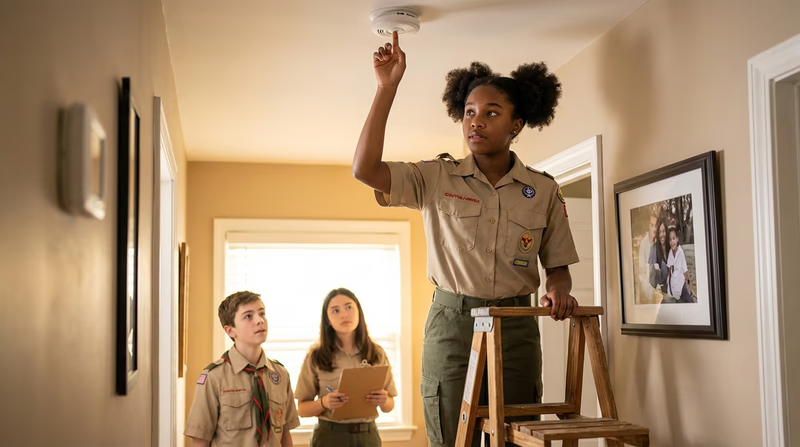
Req 2b — Home Fire Escape Plan
A home fire gives you very little time. You may have as little as two minutes to get out safely once a smoke alarm sounds. That is why every family needs a fire escape plan that is practiced, not just discussed.
This requirement asks you to do three specific things: draw a floor plan, mark escape routes, and identify a safe meeting place. Then practice the plan with your family.
Drawing Your Floor Plan
Start with a simple sketch of your home. It does not need to be to scale or architecturally perfect — it just needs to show:
- Every room in the house (bedrooms, kitchen, living room, bathrooms, basement)
- Every door and window that could be used as an exit
- Hallways and stairways
Label each room so anyone looking at the plan can quickly understand the layout.
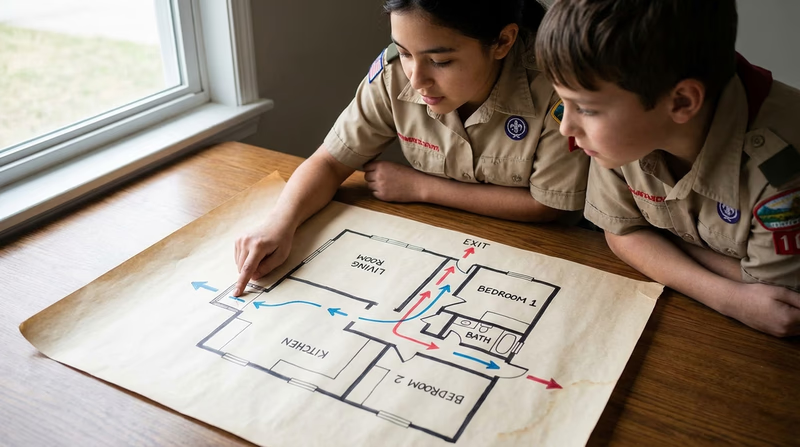
Marking Escape Routes
For each room — especially bedrooms — identify two ways out:
- Primary route: Usually through the door and down the hallway to the nearest exit.
- Secondary route: Usually through a window. This matters if the hallway is blocked by fire or smoke.
Draw arrows on your floor plan showing both routes for each room. Use different colors or line styles (solid vs. dashed) to distinguish primary from secondary routes.
Key Fire Escape Rules
Fire Escape Rules
Rules every family member should know
- When the smoke alarm sounds, get out immediately. Do not stop to gather belongings.
- Feel doors with the back of your hand before opening them. If the door is hot, do not open it — use your secondary exit.
- Stay low to the ground. Smoke and toxic gases rise, so the cleanest air is near the floor.
- Once you are out, stay out. Never go back into a burning building for any reason.
- Go to the meeting place and make sure everyone is accounted for.
- Call 911 from outside the house using a cell phone or a neighbor’s phone.
Choosing a Safe Meeting Place
Your meeting place should be:
- Outside your home but close enough that everyone can reach it quickly
- Easy to identify — a specific spot like the mailbox, a large tree, or a neighbor’s driveway
- Away from the building — far enough that falling debris, heat, or smoke will not reach you
Make sure every family member knows the meeting place. Mark it clearly on your floor plan.
Practice Your Plan
A plan on paper is only as good as the practice behind it. Hold a family fire drill at least twice a year — once during the day and once at night.
During your practice drill:
- Sound the smoke alarm (press the test button) so everyone knows what it sounds like
- Time how long it takes for everyone to reach the meeting place
- Practice using the secondary escape routes at least once
- Make sure young children and elderly family members can navigate the routes
Smoke Detectors: Your Early Warning System
Your escape plan depends on early warning. Make sure your home has working smoke detectors:
- On every level of the home (including the basement)
- Inside every bedroom
- Outside each sleeping area
Test smoke detectors monthly and replace batteries at least once a year (or when the alarm chirps). Replace the entire unit every 10 years.