Req 2c — Family Disaster Kit
A disaster kit is your family’s lifeline when normal systems fail. When the power is out, the water is off, and the stores are closed, your kit is what keeps your family safe, fed, and sheltered.
This requirement asks you to prepare two types of kits — one for sheltering in place (staying home) and one for evacuation (leaving home). Each has a different purpose and different contents.
Shelter-in-Place Kit
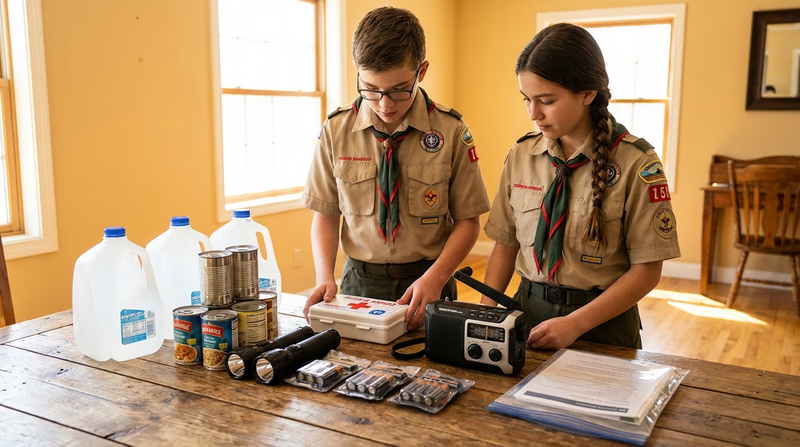
Your shelter-in-place kit is designed to sustain your family at home for at least 72 hours (three days) without power, running water, or access to stores. This kit stays in your home in an accessible location.
Shelter-in-Place Kit Essentials
Enough supplies for your family for 72 hours
- Water: One gallon per person per day (3 gallons per person minimum)
- Food: Non-perishable items that do not require cooking (canned goods, granola bars, peanut butter, dried fruit)
- Manual can opener
- Flashlights and extra batteries (at least two flashlights)
- Battery-powered or hand-crank NOAA weather radio
- First aid kit
- Medications: A 7-day supply of any prescription medications
- Whistle to signal for help
- Dust masks and plastic sheeting with duct tape (for sealing a room during chemical emergencies)
- Moist towelettes, garbage bags, and plastic ties (for sanitation)
- Wrench or pliers to turn off utilities (gas, water)
- Cell phone charger (battery pack or solar charger)
- Important documents in a waterproof container (IDs, insurance, medical records)
- Cash in small bills (ATMs may be offline)
- Blankets or sleeping bags
- Change of clothes for each family member
- Entertainment for children (books, cards, games)
- Pet supplies if applicable (food, water, leash, carrier)
Evacuation Kit (Go Bag)
Your evacuation kit — often called a “go bag” — is a portable kit you can grab and carry on foot or load into a car within minutes. It should be lighter and more compact than your shelter-in-place kit because you may need to carry it.
Evacuation Kit (Go Bag) Essentials
Ready to grab in 5 minutes or less
- Water: At least one liter per person (water bottles or hydration bladder)
- Food: Compact, high-calorie items (energy bars, trail mix, jerky)
- First aid kit (personal size)
- Medications: 3-day supply of prescriptions
- Flashlight and extra batteries
- Portable phone charger (fully charged)
- Copies of important documents in a waterproof bag
- Cash in small bills
- Change of clothes and sturdy shoes
- Rain poncho or lightweight jacket
- Whistle
- Multi-tool or pocket knife
- Emergency blanket (space blanket)
- Local map (paper — do not rely on your phone)
- N95 masks
- Comfort items for children
- Pet supplies if applicable
Key Differences Between the Two Kits
| Feature | Shelter-in-Place Kit | Evacuation Kit (Go Bag) |
|---|---|---|
| Location | Stored at home | Stored near the door or in the car |
| Weight | Can be heavy — not meant to carry | Lightweight and portable |
| Duration | 72+ hours of supplies | 24-72 hours of supplies |
| Water supply | 1 gallon per person per day | Minimum 1 liter per person |
| Food | Canned goods, bulk items | Compact, lightweight items |
Maintaining Your Kit
A kit you build and forget is a kit that will fail you. Schedule a check-up at least every six months.
Kit Maintenance Checklist
Review every 6 months
- Check expiration dates on food and water — rotate as needed
- Replace expired medications
- Test flashlight batteries — replace if weak
- Charge battery packs and solar chargers
- Update copies of important documents
- Adjust clothing for current season and sizes (especially for growing children)
- Check that the kit is in its designated location and easy to access
Build a Kit — Ready.gov
FEMA’s Ready.gov website provides detailed guidance on building and maintaining emergency kits for all types of disasters.
Build a Kit — Ready.gov FEMA's comprehensive guide to building your family emergency kit.