Req 3 — Preventing Accidents
Prevention is the most powerful tool in emergency preparedness — it stops emergencies before they start. This requirement gives you two options. Choose the one that fits your situation best, and complete it thoroughly.
Option A: Home Safety Inspection
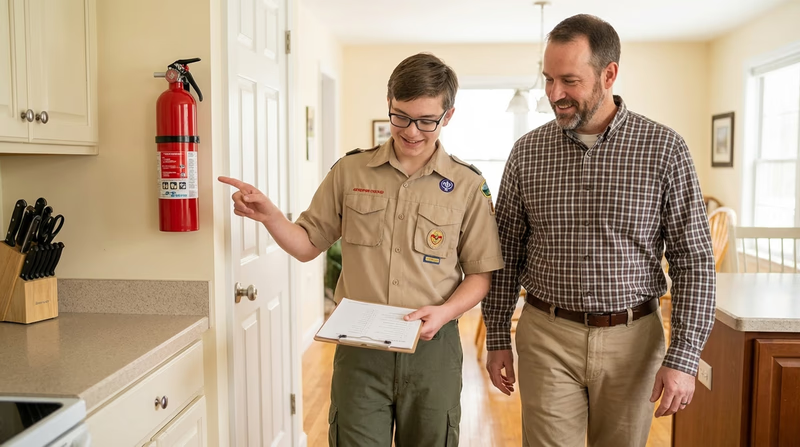
A home safety inspection is a room-by-room walkthrough of a home, looking for hazards that could cause fires, injuries, poisoning, or other emergencies. You will use a checklist to guide your inspection and record what you find.
How to Conduct the Inspection
Walk through each area of the home with an adult. Look at the space with fresh eyes — hazards that people live with every day often become invisible to them.
Kitchen Safety
Common hazards to look for
- Smoke detector present and working
- Fire extinguisher accessible and charged (check the gauge)
- Pot handles turned inward on the stove
- Flammable items (towels, curtains) kept away from the stove
- Cleaning chemicals stored separately from food
- Electrical outlets not overloaded
- No frayed cords on appliances
Living Areas & Bedrooms
Common hazards to look for
- Smoke detectors on every level and in every bedroom
- Carbon monoxide detectors near sleeping areas
- Extension cords not run under rugs or through doorways
- Space heaters at least 3 feet from anything flammable
- Candles placed on stable surfaces away from curtains
- Exits clear of clutter and furniture
- Night lights in hallways for safe navigation in the dark
Garage & Storage Areas
Common hazards to look for
- Flammable liquids stored in approved containers, away from ignition sources
- Tools and sharp objects stored securely
- Chemicals labeled and stored properly
- Gas-powered equipment stored with empty fuel tanks or properly sealed
- Fire extinguisher accessible
Outside the Home
Common hazards to look for
- House number visible from the street (so emergency vehicles can find you)
- Walkways and stairs in good repair, well-lit
- Gutters clear of debris (fire hazard in dry climates)
- Trees trimmed away from power lines
- Garden hose accessible for small fires
Option B: Emergency Prevention Plans for Family Activities
For this option, you develop emergency prevention plans for five different family activities that take place outside your home. The key is to think through each activity using the five aspects of emergency preparedness you learned in Requirement 1a.
How to Build Each Plan
For each activity, create a plan that covers:
- Activity description: Where, when, and who is involved
- Possible hazards: What could go wrong? (Think about weather, traffic, crowds, terrain, health)
- Prevention: What can you do to stop emergencies from happening?
- Protection: What safeguards should be in place?
- Mitigation: How can you reduce the impact if something goes wrong?
- Response: What do you do if an emergency happens during this activity?
- Recovery: How do you help everyone get back to normal after an incident?
Example Activities and Hazards to Consider
| Activity | Possible Hazards |
|---|---|
| Picnic at a park | Severe weather, insect stings, allergic reactions, heat exhaustion, getting lost |
| Movie theater | Fire, active threat, medical emergency in a crowd, loss of power |
| Beach outing | Drowning, rip currents, sunburn, jellyfish stings, severe weather |
| Road trip to visit a relative | Vehicle breakdown, crash, getting lost, fatigue |
| Attending a concert or ball game | Crowd crush, severe weather, dehydration, lost child, medical emergency |