Req 1 — Investigating a Manufactured Item
A toaster seems simple — you push down a lever, bread goes in, toast comes out. But inside that metal box, an electrical engineer designed nichrome wire heating elements that glow red-hot without melting. A mechanical engineer designed the spring-loaded carriage and the latch mechanism. A materials engineer chose plastics that won’t warp from heat and metals that conduct electricity efficiently. Even a “simple” household item is the result of multiple engineering disciplines working together.
This requirement asks you to pick one manufactured item, dig into how it actually works, and identify the engineering behind it. The goal is not just to describe what the item does, but to understand why it works the way it does.
Choosing Your Item
Pick something you find genuinely interesting — you will spend real time researching it. Here are some categories to consider:
Mechanical items (lots of moving parts to study):
- Bicycle gear system or brakes
- Mechanical pencil
- Door lock and key mechanism
- Wind-up clock or music box
Electrical/electronic items (circuits, motors, sensors):
- Flashlight or headlamp
- Smoke detector
- Electric fan or hair dryer
- Remote control car
Combination items (mechanical + electrical):
- Toaster or blender
- Battery-powered drill
- Automatic soap dispenser
- Sewing machine
How to Investigate
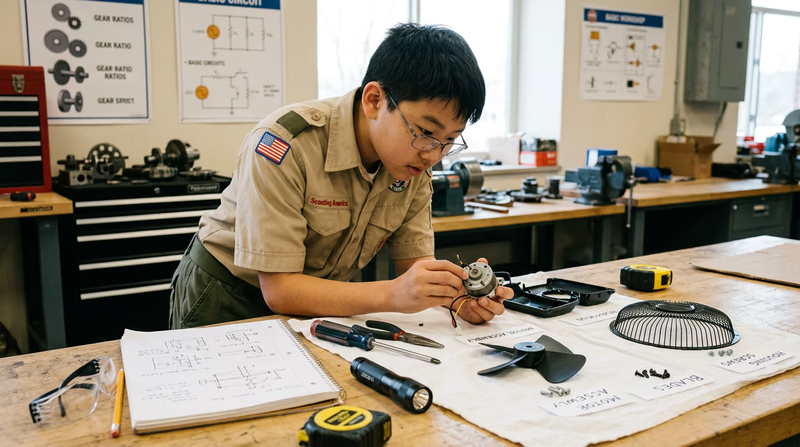
Think of yourself as an engineering detective. You are reverse-engineering a product — figuring out how it was designed by examining the finished result.
Step 1: Observe the Outside
Before you open anything up, study the exterior. Ask yourself:
- What does this item do? What problem does it solve?
- What materials is it made from? Why those materials?
- How does the user interact with it (buttons, switches, handles)?
- What are the inputs (electricity, batteries, manual force) and outputs (heat, light, motion, sound)?
Step 2: Investigate the Inside
With adult supervision, carefully take the item apart or research its internal components. Look for:
- Mechanical components: gears, springs, levers, bearings, screws
- Electrical components: wires, circuit boards, resistors, capacitors, motors
- Structural components: the frame, housing, or chassis that holds everything together
- Safety features: thermal fuses, grounding wires, insulation, protective guards
Step 3: Research the Engineering
Now connect what you see to engineering principles. Good research sources include:
- YouTube teardown videos — Search for “[your item] teardown” or “how does a [your item] work”
- How Stuff Works (howstuffworks.com) — Detailed explanations of common devices
- Manufacturer websites — Sometimes include technical specifications and diagrams
- Library books — Look in the engineering or technology section
Step 4: Identify the Engineering Disciplines
For each major component or system, identify which type of engineering was involved. For example, a hair dryer involves:
| Component | Engineering Discipline | Why |
|---|---|---|
| Heating element | Electrical engineering | Designed to convert electricity to heat safely |
| Fan motor | Mechanical + electrical | Motor converts electrical energy to rotational motion |
| Plastic housing | Materials engineering | Must withstand heat without melting or warping |
| Temperature switch | Electrical engineering | Safety cutoff prevents overheating |
| Aerodynamic nozzle | Mechanical engineering | Directs airflow efficiently |
Preparing for Your Counselor Discussion
Your counselor will want to hear:
- What you chose and why it interested you
- How the item works — explain the key mechanisms and systems
- Which engineering disciplines were needed to create it
- Where you found your information — what sources you used
- What surprised you — the most interesting thing you discovered
Investigation Checklist
Track your progress
- Choose a manufactured item and get counselor approval.
- Observe and document the exterior (materials, controls, inputs/outputs).
- Investigate the interior with adult supervision.
- Research how the key components work.
- Identify at least three engineering disciplines involved.
- Prepare to discuss your findings and sources with your counselor.