Req 1 — Defining Entrepreneurship
A corner bakery that has been open for forty years started because one person decided to take a chance. So did every tech giant, food truck, and neighborhood tutoring service. Entrepreneurship is what happens when someone identifies a problem or unmet need — and bets on their own ability to solve it.
What Is Entrepreneurship?
At its core, entrepreneurship is the process of creating, organizing, and running a business while taking on financial risk in the hope of earning a profit. An entrepreneur is the person who does this — someone who identifies an opportunity, gathers the resources needed, and takes action to bring a product or service to market.
But entrepreneurship is more than just “starting a business.” It involves:
- Identifying a need — seeing something people want or a problem that needs solving
- Taking initiative — acting on the idea rather than waiting for someone else to do it
- Accepting risk — putting your own time, money, or reputation on the line
- Creating value — providing something that people are willing to pay for
How Do Entrepreneurs Impact the U.S. Economy?
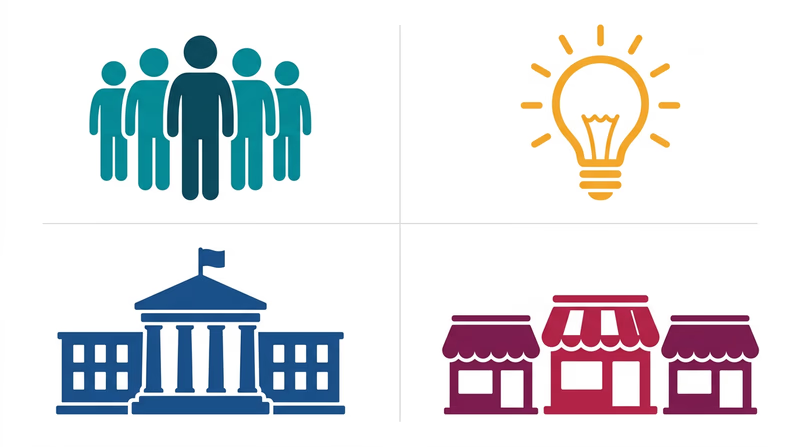
Entrepreneurs are not just business owners — they are one of the primary engines of the American economy. Here is how:
Job creation. Small businesses — the vast majority of which were started by entrepreneurs — employ about 46% of the private workforce in the United States. When an entrepreneur opens a dog-grooming shop and hires three employees, those are three jobs that did not exist before. Multiply that across millions of small businesses and the impact is enormous.
Innovation. Entrepreneurs bring new products, services, and technologies to market. The smartphone you carry was made possible by entrepreneurs who took risks on touchscreens, app stores, and mobile internet. Innovation drives competition, which keeps prices down and quality up for everyone.
Tax revenue. Every business that earns money pays taxes — income taxes, sales taxes, payroll taxes, and more. This revenue funds schools, roads, parks, and public services. Without entrepreneurs generating economic activity, government budgets would shrink dramatically.
Community development. Local entrepreneurs invest in their communities. A new coffee shop on Main Street attracts foot traffic, which helps the bookstore next door, which supports the print shop down the block. Economists call this the multiplier effect — one business’s success ripples outward.
Entrepreneurs You Already Know
You interact with the results of entrepreneurship every day. The grocery store where your family shops, the app you use to check the weather, the barber who cuts your hair — behind each of those is someone who took a risk and started something. Some entrepreneurs you might recognize:
- Sara Blakely started Spanx with $5,000 in savings and no business training. She is now a billionaire.
- Daymond John began selling hand-sewn hats on the streets of Queens, New York. That hustle grew into the FUBU clothing brand.
- Moziah Bridges started his bow-tie business, Mo’s Bows, at age nine. By fourteen, he had a deal with a major retailer.
These stories are not about luck. They are about seeing an opportunity, putting in the work, and not giving up when things got hard.
SBA Small Business Profile The U.S. Small Business Administration publishes annual profiles showing how small businesses impact each state's economy.