Req 2 — Essential Entrepreneur Skills
Nobody starts a business with just one skill. An entrepreneur who invents a brilliant product but cannot explain it to customers will struggle. Someone who can sell anything but cannot track expenses will run out of money. This requirement asks you to understand ten interconnected skills — and you probably already use most of them in Scouting.
The Ten Skills, Explained
Communication
An entrepreneur communicates constantly — pitching ideas to investors, describing products to customers, giving instructions to employees, writing emails, posting on social media, and listening to feedback. Poor communication leads to misunderstandings, lost sales, and frustrated teams. Good communication means being clear, concise, and knowing your audience. The way you describe your product to a teenager is different from how you describe it to a bank loan officer.
Planning
Starting a business without a plan is like hiking without a map. Planning means setting goals, identifying the steps needed to reach them, and anticipating obstacles before they appear. Entrepreneurs plan their finances, their marketing, their production schedules, and their growth strategies. Requirement 5 of this badge is entirely about building a business plan — that is how central planning is to entrepreneurship.
Organization
Organization is what keeps the plan on track. It means managing your time, keeping records, tracking inventory, and knowing where everything stands at any moment. A disorganized entrepreneur misses deadlines, loses receipts, double-books appointments, and eventually loses customers.
Problem Solving
Problems are guaranteed. Your supplier raises prices. A customer complains. Your website crashes on launch day. Entrepreneurs who survive are the ones who see problems as puzzles to solve, not reasons to quit. Good problem solving means gathering information, considering multiple solutions, and choosing the best option — even under pressure.
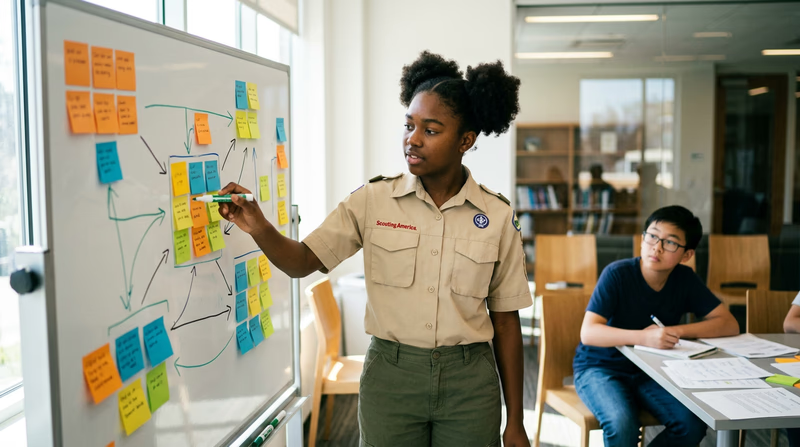
Decision Making
Entrepreneurs make dozens of decisions every day — some small (which social media post to publish), some enormous (whether to borrow money to expand). Good decision making means weighing the pros and cons, considering the risks, and being willing to commit once you have enough information. Waiting for perfect information means waiting forever.
Basic Math
You do not need advanced calculus, but you absolutely need to handle basic math. Entrepreneurs calculate costs, set prices, track revenue, estimate profits, manage budgets, and figure out whether they can afford to hire help. If you cannot do these calculations, you will not know whether your business is making money or losing it.
Adaptability
The business world changes fast. Customer preferences shift, new competitors appear, technology evolves, and unexpected events (like a pandemic) can upend everything overnight. Adaptable entrepreneurs pivot — they adjust their products, change their marketing, find new customers, or rethink their entire business model when necessary.
Technical Skills
“Technical skills” depends on your business. A web designer needs coding skills. A baker needs food preparation skills. A lawn care entrepreneur needs to know how to maintain equipment. Whatever your business does, you need to be competent at the core skill that delivers value to your customers.
Social Skills
Business is built on relationships. Social skills help you connect with customers, negotiate with suppliers, resolve conflicts with partners, and build a reputation in your community. Being polite, listening actively, showing empathy, and handling disagreements professionally are all social skills that directly affect your bottom line.
Teamwork
Even solo entrepreneurs rely on others — suppliers, mentors, family members, and eventually employees. Teamwork means collaborating effectively, respecting different perspectives, dividing responsibilities fairly, and supporting each other toward a shared goal. If you have ever worked on a patrol project, you know how important this is.
Leadership
Leadership ties all the other skills together. An entrepreneur leads by setting the vision, making tough decisions, motivating the team, and taking responsibility when things go wrong. Leadership is not about giving orders — it is about inspiring others to work toward a common goal and modeling the behavior you expect.

Skills Self-Assessment
Rate yourself honestly on each skill before meeting with your counselor
- Communication: Can you clearly explain an idea to someone who knows nothing about it?
- Planning: Do you set goals and create steps to reach them?
- Organization: Can you find any document or item you need within two minutes?
- Problem solving: When something goes wrong, do you look for solutions or get stuck?
- Decision making: Can you weigh options and commit without overthinking?
- Basic math: Can you calculate percentages, profit margins, and simple budgets?
- Adaptability: When plans change, do you adjust or freeze?
- Technical skills: What is the core skill your business idea would require?
- Social skills: Are you comfortable talking to new people and handling disagreements?
- Teamwork: Can you collaborate effectively even with people you do not choose?
- Leadership: Do people look to you when decisions need to be made?