Req 5c — Financial Plan
This is where your business plan goes from “good idea” to “real plan.” Numbers do not lie — they tell you whether your business can survive. The financial section answers three critical questions: How much do you need to start? How will you price your offering? Where does the money go?
Requirement 5c covers three sub-topics:
- Startup costs and funding — how much to launch, and where the money comes from
- Cost, pricing, and profit — the math behind making money
- Revenue allocation — what happens to the money you earn
Startup Costs and Funding
Startup costs are everything you need to spend before your first customer pays you. These fall into two categories:
One-time costs — things you buy once to get started:
- Equipment (tools, oven, computer, lawn mower)
- Supplies for your first batch of products
- Business cards, flyers, or a website
- Licenses or permits
- Initial inventory
Ongoing costs — expenses that repeat weekly, monthly, or per order:
- Materials and ingredients for each product
- Gas or transportation costs
- Website hosting or subscription fees
- Marketing and advertising
- Packaging and shipping supplies
Startup Cost Worksheet
List every expense you can think of — it is better to overestimate than be surprised
- Equipment and tools: What do you need to buy?
- Supplies and materials: What goes into each unit of your product or each service visit?
- Marketing: Flyers, business cards, website, social media ads?
- Licenses and permits: Any fees required by your city or state?
- Transportation: How will you get to customers or get supplies?
- Packaging: Boxes, bags, labels, stickers?
- Miscellaneous: Anything else that costs money before you earn money?
Where does the startup money come from? For young entrepreneurs, common funding sources include:
- Personal savings — the most common and least risky
- Family loans — borrowing from parents or relatives (set clear repayment terms)
- Pre-orders — selling products before you make them to fund materials
- Small competitions or grants — some organizations offer seed money for youth businesses
- Earned income — saving money from a part-time job to fund your venture
Cost, Pricing, and Profit
The most important math in any business is the relationship between three numbers:
Cost — what it takes to produce one unit of your product or deliver one session of your service.
Price — what you charge the customer.
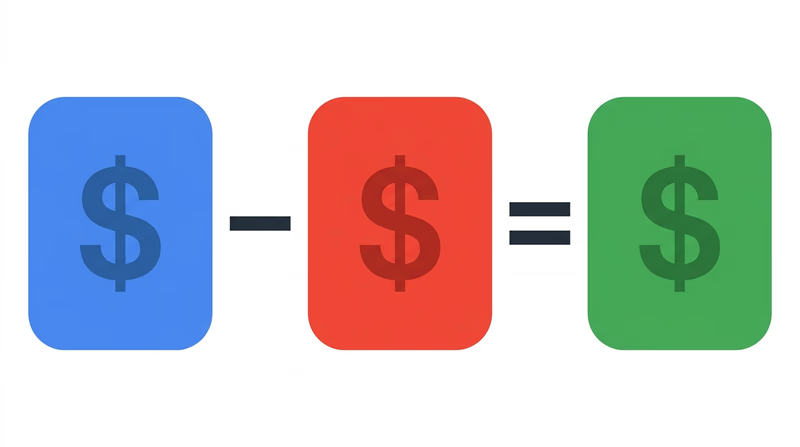
Profit — the difference between price and cost.
The formula is simple: Profit = Price - Cost
But calculating your true cost requires attention to detail. Here is an example for a custom cookie business:
| Expense | Cost per Dozen |
|---|---|
| Flour, sugar, butter, eggs | $3.50 |
| Decorating supplies (icing, sprinkles) | $2.00 |
| Packaging (box, ribbon, label) | $1.50 |
| Gas for delivery | $1.00 |
| Total cost per dozen | $8.00 |
If you charge $25.00 per dozen, your profit per dozen is $17.00. But you also need to account for your time. If each order takes two hours to bake, decorate, and deliver, you are effectively paying yourself $8.50 per hour.
Revenue Allocation
Once money starts coming in, where does it go? Your business plan should explain how you will use your revenue. Common categories include:
Reinvestment. Putting money back into the business to buy more supplies, upgrade equipment, or expand your offerings. Most young businesses should reinvest a significant portion of early revenue to grow.
Savings. Setting aside a percentage for emergencies — unexpected expenses, slow months, or equipment repairs. Financial advisors often recommend saving at least 10–20% of revenue.
Personal income. Paying yourself for your work. You deserve compensation for your time and effort, but smart entrepreneurs resist the temptation to take out too much too early.
Taxes. Yes, even young entrepreneurs may owe taxes on business income. If you earn more than a certain threshold, you may need to file taxes on that income. Ask a parent or guardian to help you understand the basics.
Debt repayment. If you borrowed money to start the business, set a clear schedule for paying it back.
Practical Money Skills — Teen Budgeting Free financial literacy resources, including budgeting tools and calculators suitable for young entrepreneurs.