Req 5d — Personnel Plan
Even a one-person business has a personnel plan — it just happens to be a plan about you. This section of your business plan explains who does the work, what qualifications they need, and whether you will need to bring anyone else on board.
Requirement 5d covers two sub-topics:
- Your own role and qualifications — what parts you handle yourself
- Additional help — whether you need it, and what those roles look like
Your Role and Qualifications
Start by listing every task your business requires. Be thorough — even small tasks take time and energy. For a custom cookie business, the task list might look like this:
- Baking and decorating cookies
- Purchasing ingredients and supplies
- Taking and managing orders
- Communicating with customers
- Delivering orders
- Managing money and tracking expenses
- Marketing and social media
- Cleaning up the workspace
Now ask yourself: Which of these can you do well? Be honest. Your qualifications might include skills you have developed through school, Scouting, hobbies, family responsibilities, or previous jobs.
For your business plan, write a brief paragraph about your qualifications that sounds like this:
“As the owner and sole operator, I will handle all baking, decorating, customer communication, and delivery. I have been baking for five years, completed a food safety course through my school’s family and consumer sciences program, and have experience managing orders through my troop’s annual fundraiser.”
Do You Need Additional Help?
For many Scout-run businesses, the answer is “not yet.” But thinking about it now prepares you for growth. Consider these questions:
Volume question: Can you fill every order yourself, or will demand exceed your capacity? If you expect more than ten orders per week but can only bake five dozen cookies on a Saturday, you need help.
Skills question: Does your business require a skill you do not have? If you plan to sell products online but do not know how to build a website, you might need a tech-savvy partner or helper.
Time question: Can you run the business around your existing commitments? If school, sports, and Scouting already fill your schedule, you might need someone to handle deliveries or social media.
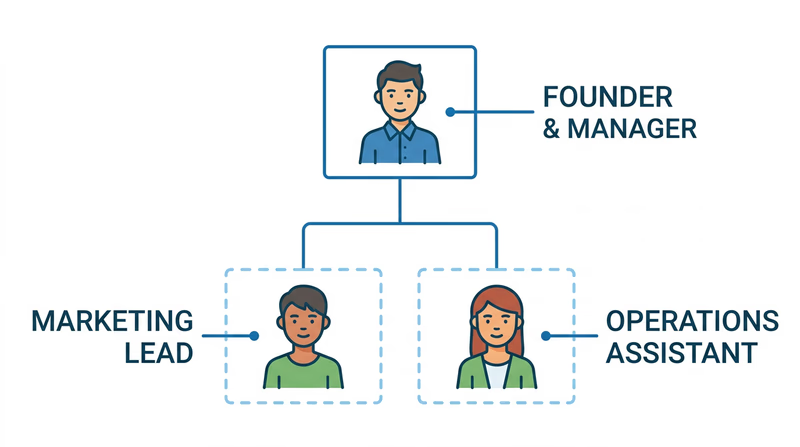
Defining Roles for Helpers
If you determine that you need additional help, your business plan should describe each role clearly:
| Element | What to Write |
|---|---|
| Job title | A clear, simple name (e.g., “Delivery Assistant”) |
| Responsibilities | Specific tasks this person would handle |
| Qualifications | Skills or traits they need |
| Time commitment | How many hours per week |
| Compensation | How they will be paid (hourly, per delivery, percentage of sales) |
For example:
“Delivery Assistant — Responsible for delivering completed orders to customers within a 5-mile radius on Saturdays between 10 AM and 2 PM. Must have a bicycle or access to a car (with a parent driver). Must be reliable, punctual, and comfortable interacting with customers. Compensation: $5 per delivery.”
Working with Friends and Family
Many young entrepreneurs recruit friends or siblings as helpers. This can work well, but it requires clear expectations from day one. Issues to discuss upfront:
- What exactly will each person do? Write it down so there are no misunderstandings.
- How will decisions be made? In a partnership, who has the final say? In a boss-helper arrangement, is that clear to both parties?
- How and when will they be paid? Agree on compensation before any work begins.
- What happens if someone wants out? Have a plan for transitions.
The personnel section of your plan does not need to be long. For a solo operation, a paragraph about your qualifications and a note about future hiring is sufficient. The point is to show that you have thought about who will do the work — and that the work will actually get done.
Youth Entrepreneurship Council A community for young entrepreneurs to connect, share ideas, and learn from experienced founders about building teams and growing businesses.