Extended Learning
A. Introduction
You have worked through all eleven requirements of the Environmental Science merit badge — congratulations! You have observed ecosystems, investigated pollution, studied endangered species, explored pollinators and invasive species, and even thought like an environmental planner. But the work does not stop here. The environment needs people who stay curious, stay informed, and take action long after the badge is earned.
B. Deep Dive: Citizen Science — Real Research You Can Do Right Now
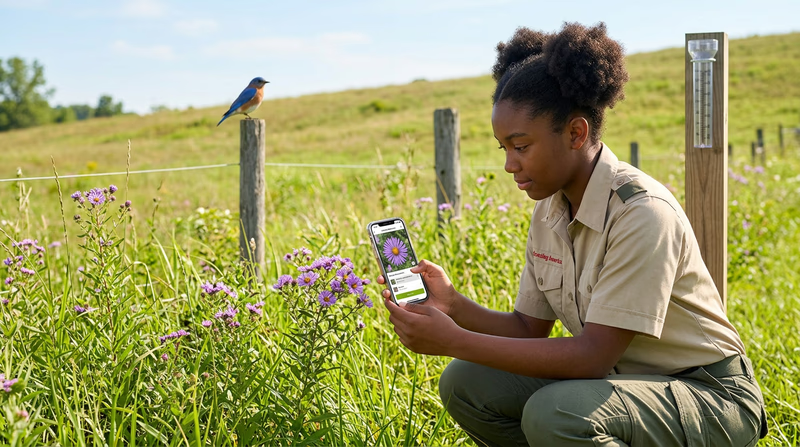
You do not need a degree to contribute to real scientific research. Citizen science programs invite everyday people — including Scouts — to collect data that professional scientists use in their work. Your observations become part of massive datasets that reveal trends no single researcher could track alone.
Here are some of the best citizen science programs for environmental science:
- iNaturalist — Photograph any plant, animal, or fungus. The community helps identify it, and your observation becomes part of a global biodiversity database used by researchers, land managers, and conservation organizations. Over 100 million observations have been recorded worldwide.
- eBird (ebird.org) — Record the birds you see on any outing. Your data helps scientists track bird populations, migration patterns, and habitat use across the continent. Run by the Cornell Lab of Ornithology.
- Globe Observer (observer.globe.gov) — A NASA program where you photograph clouds, trees, and land cover. Your data is compared with satellite observations to improve climate and environmental models.
- Community Collaborative Rain, Hail & Snow Network (CoCoRaHS) — Measure daily precipitation with a simple rain gauge and report it. Your data fills in gaps between official weather stations and improves flood and drought forecasting.
- Monarch Watch — Tag monarch butterflies during fall migration. Recovered tags reveal migration routes, survival rates, and population health.
The best part about citizen science is that you can start today. Download an app, step outside, and your backyard becomes a research station.
C. Deep Dive: Water Testing — Going Beyond the Report
In Requirement 4, you may have reviewed a water quality report. But you can go further by testing water yourself. Basic water testing kits are affordable and give you hands-on experience with the same parameters that professional labs measure.
What you can test:
- pH — Measures how acidic or basic the water is. Most aquatic life thrives between pH 6.5 and 8.5. Rain runoff from roads and mines can lower pH (make it more acidic).
- Dissolved oxygen (DO) — The amount of oxygen available in the water for fish and other aquatic organisms. Warm, stagnant water holds less oxygen. Pollution that causes algal blooms can crash DO levels.
- Turbidity — How clear or cloudy the water is. High turbidity usually indicates suspended sediment, algae, or pollution. It blocks sunlight from reaching underwater plants.
- Nitrates and phosphates — Nutrients that are essential in small amounts but cause problems in excess. High levels usually come from fertilizer runoff, sewage, or animal waste and fuel algal blooms.
- Temperature — Affects dissolved oxygen levels and the types of organisms that can survive. Many fish species are sensitive to even small temperature changes.
How to get started:
Basic water testing kits are available from educational science suppliers for $15–$30 and test multiple parameters. For more advanced testing, look into programs like the Izaak Walton League’s Save Our Streams or your state’s volunteer water monitoring program. Many states train volunteers and provide free testing equipment.
Testing the same water source over several weeks or months reveals trends that a single snapshot cannot show. Is water quality improving? Getting worse? Staying stable? That is the kind of data that matters.
D. Deep Dive: Building a Pollinator Habitat
One of the most impactful things a Scout can do for the environment is create habitat — and a pollinator garden is one of the easiest and most rewarding projects you can take on. Unlike many environmental challenges that require policy changes or massive funding, a pollinator garden can be started this weekend in your own yard.
Planning your garden:
- Choose a sunny location. Most pollinator-friendly plants need at least six hours of direct sunlight per day.
- Select native plants. Visit pollinator.org and enter your zip code to get a free planting guide specific to your region. Native plants are adapted to your soil and climate, and local pollinators have evolved alongside them.
- Plant for continuous bloom. Choose a mix of plants that flower in spring, summer, and fall so pollinators have food throughout the season. A garden that blooms only in June leaves pollinators hungry the rest of the year.
- Include a variety of flower shapes. Tubular flowers for hummingbirds and long-tongued bees. Flat, open flowers for butterflies and short-tongued insects. Clusters for flies and beetles.
- Provide nesting habitat. Leave patches of bare soil for ground-nesting bees. Install a bee hotel (a bundle of hollow stems or a block of wood with drilled holes) for solitary bees. Leave leaf litter in place over winter — many butterflies and moths overwinter as pupae in fallen leaves.
- Avoid pesticides. This is non-negotiable. Even “bee-safe” products can harm pollinators if applied improperly.
A pollinator garden also makes an excellent Eagle Scout service project, conservation project, or community service initiative. Contact your local extension office for advice on plants, and consider partnering with a school, park, or community center.
E. Real-World Experiences
National Wildlife Refuges
EPA Superfund Site Tours
Citizen Science BioBlitz Events
Local Stream Cleanups and Monitoring
State and National Park Junior Ranger Programs
F. Organizations
Protects birds and their habitats through science, advocacy, and community engagement. Local chapters offer bird walks, habitat restoration projects, and citizen science programs.
Works in all 50 states and over 70 countries to protect ecologically important lands and waters. Offers volunteer opportunities, nature preserves to visit, and educational resources.
Dedicated to protecting invertebrates — especially pollinators — and their habitats. Provides pollinator conservation guides, habitat assessment tools, and community science programs.
One of the oldest grassroots environmental organizations in the country. Offers outings, advocacy campaigns, and local chapter activities focused on clean energy, clean air, clean water, and wild places.
Focuses on conservation of soil, air, woods, water, and wildlife. Their Save Our Streams program trains volunteers in stream monitoring — a hands-on way to continue the water science you explored in this badge.
The EPA offers educational materials, career information, and resources for students interested in environmental science. Includes information about internships and fellowships.