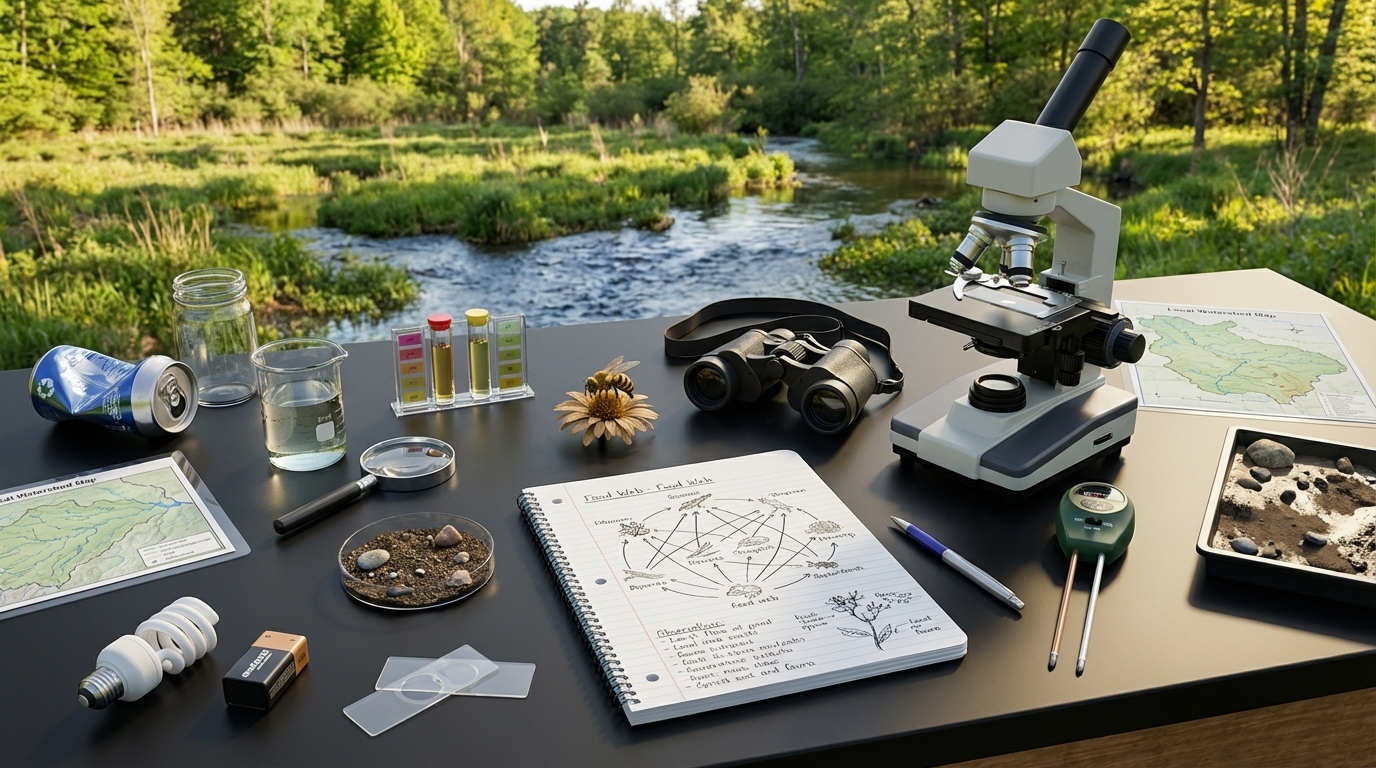
Environmental Science Merit Badge — Complete Digital Resource Guide
https://merit-badge.university/merit-badges/environmental-science/guide/
Introduction & Overview
The air you breathe, the water you drink, and the ground you walk on — environmental science studies all of it. It is the field that asks big questions: How do ecosystems work? What happens when pollution enters a river? How can we protect species from disappearing forever? As a Scout, you already spend time outdoors. This merit badge gives you the tools to understand and protect the world around you.
Environmental Science is one of the Eagle-required merit badges, and for good reason. The skills you develop here — observation, research, critical thinking, and problem-solving — will serve you far beyond Scouting.
Then and Now
Then — The Awakening
For most of human history, people assumed nature could handle whatever we threw at it. Forests seemed endless. Rivers could absorb any waste. Species would always be there. Then things started to change. In the 1800s, the bison that once numbered in the tens of millions were hunted to near extinction. Rivers in industrial cities ran thick with chemicals. Smog choked entire neighborhoods.
A few people sounded the alarm. President Theodore Roosevelt set aside millions of acres as national forests and parks. In 1962, marine biologist Rachel Carson published Silent Spring, revealing how the pesticide DDT was devastating bird populations and poisoning the food chain. Her book is often credited with launching the modern environmental movement.
- Key moment: The Cuyahoga River in Cleveland, Ohio, was so polluted it caught fire — multiple times. The last fire, in 1969, became a rallying cry for clean water laws.
- Mindset: Nature is tough enough to take care of itself — until it wasn’t.
Now — The Science of Solutions
Today, environmental science is a global field with millions of professionals and volunteers working to understand and solve environmental challenges. The U.S. Environmental Protection Agency (EPA), founded in 1970, enforces laws like the Clean Air Act and Clean Water Act. Citizen scientists use apps like iNaturalist and Merlin Bird ID to contribute real data to research projects. Satellites monitor deforestation, air quality, and ice melt in real time.
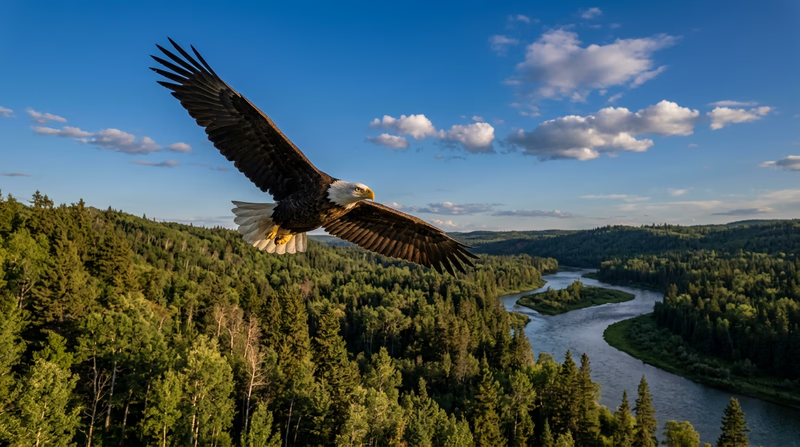
- Key moment: The bald eagle, once on the brink of extinction from DDT, was removed from the endangered species list in 2007 — one of conservation’s greatest success stories.
- Mindset: We caused many of these problems, and science gives us the tools to fix them.
Get Ready! This merit badge covers a lot of ground — literally. You will explore ecosystems, investigate pollution, study endangered species, and think about how your everyday choices affect the planet. Every section connects to the world right outside your door.
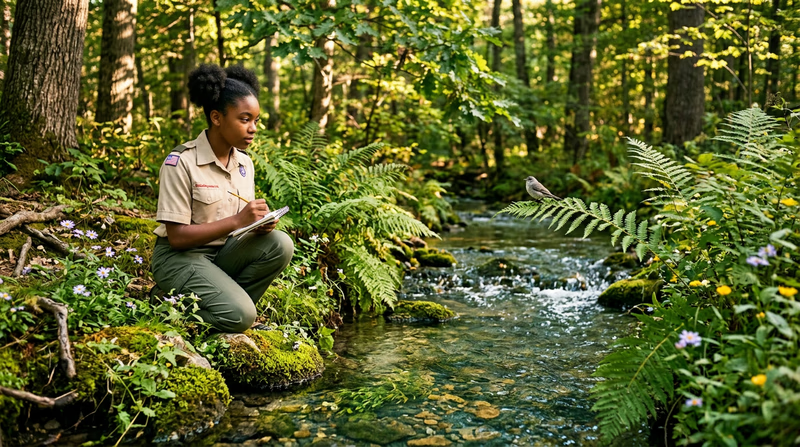
Kinds of Environmental Science
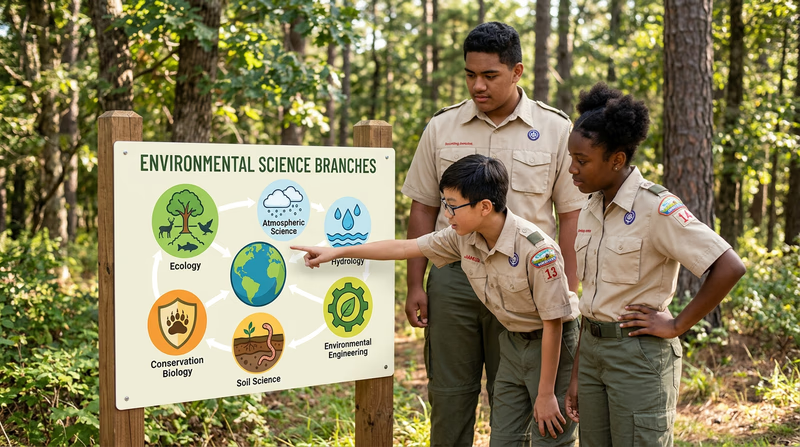
Environmental science is not just one subject — it is a collection of connected fields. Here are the major branches you will encounter as you work through this merit badge.
Ecology
Ecology is the study of how living things interact with each other and their surroundings. It covers everything from the relationship between a bee and a flower to the way an entire forest ecosystem recycles nutrients. When you observe a backyard ecosystem for Requirement 2, you are doing ecology.
Atmospheric Science
Atmospheric science focuses on the air around us — its composition, quality, and the weather patterns it creates. When you study air pollution in Requirement 3, you are exploring this branch. Scientists in this field track everything from smog in cities to the ozone layer high above Earth.
Hydrology
Hydrology is the study of water — where it comes from, where it goes, and what happens to it along the way. This includes rivers, lakes, groundwater, oceans, and even the water cycle itself. In Requirement 4, you will investigate water pollution and learn how your community manages its water supply.
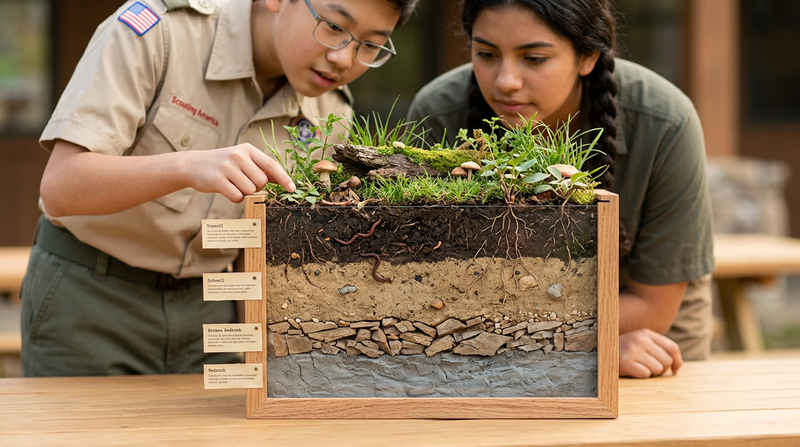
Soil Science
Soil science examines the ground beneath your feet. Soil is far more than dirt — it is a living system teeming with organisms, minerals, and organic matter. Erosion, contamination, and land management are all part of this field. Requirement 5 digs into land pollution, including pesticides, erosion, and toxic waste sites.
Conservation Biology
Conservation biology is the science of protecting species and their habitats. It asks: Why are species disappearing? What can we do to save them? How do we restore damaged ecosystems? Requirements 6, 8, and 9 all connect to this branch — from endangered species to pollinators to invasive species.
Environmental Engineering
Environmental engineers design practical solutions to environmental problems. They build water treatment plants, design systems to capture air pollutants, and figure out how to clean up contaminated land. Requirement 10, where you assess the environmental impact of a construction project, gives you a taste of this work.
Now let’s start with the first requirement and explore what environmental science really means.
Req 1 — Defining Environmental Science
What Is Environmental Science?
Environmental science is the study of how the natural world works — and how humans affect it. It combines ideas from biology, chemistry, geology, and other sciences to answer questions about the air, water, land, and living things around us.
Here is a simple way to think about it: environmental science looks at three big things.
- How nature works on its own. How do forests grow? How does water move through the ground? How do animals depend on each other?
- How humans change nature. What happens when factories release chemicals into a river? What happens when we clear a forest to build houses?
- How we can fix the damage and prevent more. Can we clean up polluted lakes? Can we build things without destroying habitats?
Environmental science is not just one subject in a textbook. It is an approach — using observation, data, and experiments to understand the environment and make better decisions.
The Three Pillars: Understand, Conserve, Improve
When the requirement asks how science helps us “understand, conserve, and improve” the environment, it is asking you to think about three connected goals.
Understand
Before you can solve a problem, you need to understand it. Scientists collect data through observation, field studies, and experiments. They measure things like water quality, air pollution levels, animal populations, and soil composition. This data reveals patterns — some healthy, some alarming.
For example, scientists studying bird populations noticed a sharp decline in bald eagles in the mid-1900s. By investigating, they discovered that the pesticide DDT was making eagle eggshells so thin they cracked before chicks could hatch. Without that scientific understanding, nobody would have known what was killing the eagles.
Conserve
Conservation means protecting what we have. Once scientists understand how an ecosystem works, they can identify what it needs to stay healthy. Conservation efforts include protecting endangered species, preserving wetlands, managing forests, and reducing pollution.
Improve
Sometimes the environment has already been damaged, and we need to actively repair it. This is where restoration and engineering come in. Scientists and engineers work to clean up oil spills, restore wetlands, replant forests, remove invasive species, and redesign cities to be more sustainable.
The cleanup of the Cuyahoga River in Ohio is a powerful example. Once so polluted it caught fire, the river is now home to dozens of fish species and is safe for recreation — thanks to decades of scientific study and environmental laws.
How to Prepare for This Requirement
Your counselor will ask you to describe environmental science in your own words. That means you should not memorize a textbook definition. Instead, think about what environmental science means to you. Consider these questions as you prepare:
- What environmental issues have you noticed in your own community?
- Have you ever seen pollution, litter, or habitat loss firsthand?
- What role does science play in solving those problems?
🎬 Video: What is Environmental Science? Definition and Scope of the Field — https://www.youtube.com/watch?v=kB0JA7jsqMw
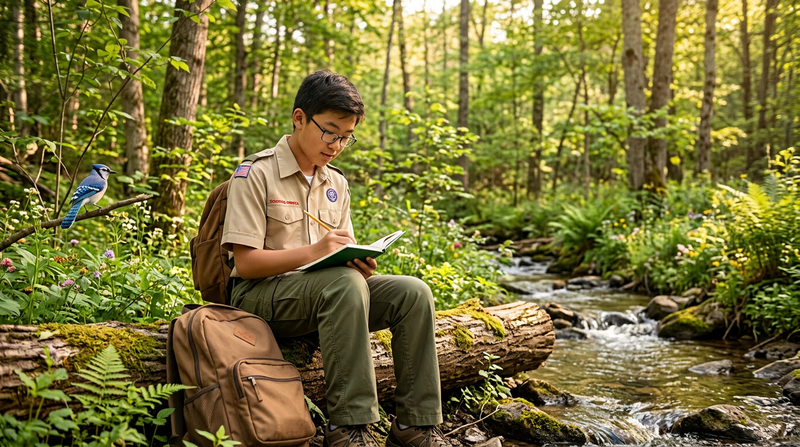
With a clear understanding of what environmental science is and why it matters, you are ready to get hands-on.
Req 2a — Observing an Ecosystem
What Is an Ecosystem?
An ecosystem is a community of living things (plants, animals, insects, microorganisms) interacting with each other and with their nonliving surroundings (soil, water, air, sunlight, temperature). Your backyard, a pond, a forest clearing, or even a crack in a sidewalk can be an ecosystem.
The key idea is interaction. Nothing in an ecosystem exists alone. A tree provides shade and shelter for birds. Fallen leaves decompose and feed the soil. Insects pollinate flowers. Predators keep prey populations in check. Everything is connected.
Choosing Your Observation Site
Your counselor needs to approve your site before you begin. Here are some good options to consider:
- A backyard or garden — easy to access, surprisingly rich in life
- A local park or nature trail — more variety of species
- A pond, stream, or wetland edge — water attracts a wide range of organisms
- A school campus or community green space — convenient and often underappreciated
- A section of forest or meadow — excellent biodiversity
The best site is one you can visit comfortably on two different days and spend at least 30 minutes observing each time. Pick a spot with a mix of features — some plants, some open ground, maybe a water source nearby.
How to Observe Like a Scientist
This requirement asks you to use three senses: sight, sound, and smell. Here is how to make the most of each.
Sight
Look carefully and look in layers. Start with the big picture — what does the landscape look like? Then zoom in. What is growing on the ground? What is crawling on a log? What is flying overhead?
- Look up: Birds, treetops, cloud cover, sky conditions
- Look around: Shrubs, grasses, rocks, water features, human-made structures
- Look down: Soil, leaf litter, insects, fungi, roots, animal tracks
- Look for movement: Squirrels, birds, insects, ripples in water
Sound
Sit still for at least five minutes with your eyes closed. The sounds of an ecosystem tell you things your eyes might miss. You might hear a bird you could not see, or the rustle of a small animal in the brush.
- Natural sounds: Birdsong, insect buzzing, wind in leaves, water flowing, frog calls
- Human-caused sounds: Traffic, aircraft, machinery, voices
- Note the absence of sound: Silence can tell you something too — areas near heavy traffic often have fewer bird calls
Smell
Smell is often overlooked, but it provides real data. Healthy soil has a rich, earthy scent. Stagnant water smells different from a flowing stream. Flowers in bloom have distinct fragrances that attract pollinators.
- Natural smells: Soil, flowers, decaying leaves, fresh rain, pine
- Warning smells: Chemical odors, sewage, or rot may indicate pollution or decay
Recording Your Observations
A good field notebook is your most important tool. Write down what you observe as you observe it — do not rely on memory. Include:
- Date and time of each visit
- Weather conditions (temperature, cloud cover, wind, recent rain)
- Location details (describe the exact spot)
- Observations organized by sense (what you saw, heard, and smelled)
- Sketches — even rough drawings help capture details words might miss
Field Observation Kit
What to bring to your observation site- Notebook and pencil: Your primary recording tool.
- Watch or phone: To note the time of observations.
- Magnifying glass: To examine insects, leaves, and soil up close.
- Binoculars (optional): To observe birds and distant wildlife.
- Camera or phone camera: To document what you find.
- Field guide or nature app: To help identify species (try iNaturalist or Merlin Bird ID).
- Sit pad or small towel: So you can sit comfortably and observe for extended periods.
🎬 Video: Observe Nature Like a Scientist! — https://www.youtube.com/watch?v=7NVce3RK-Lo
🎬 Video: Observe Nature with iNaturalist — https://www.youtube.com/watch?v=Mb_i-WoUKt0
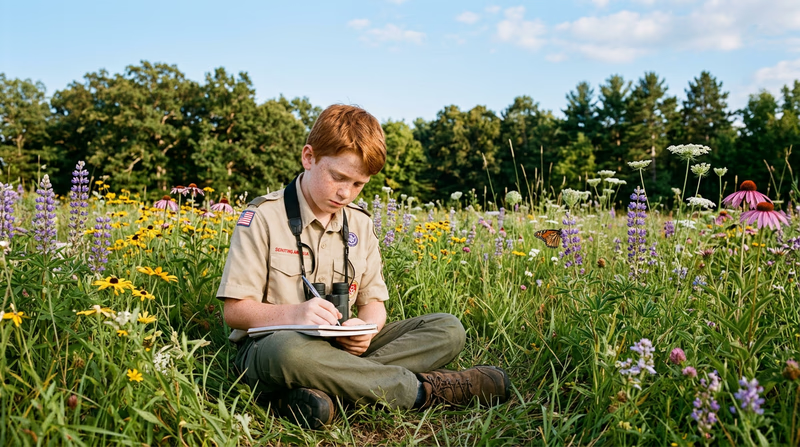
Now that you know how to observe, it is time to make sense of what you find.
Req 2b — Ecosystem Components
Sorting Your Observations
After observing your ecosystem in Requirement 2a, you need to organize what you found into three categories. Scientists use these categories to map out the structure of any ecosystem.
Living Components (Biotic)
These are organisms that are alive right now. They grow, reproduce, consume energy, and respond to their environment.
- Plants: Trees, shrubs, grasses, mosses, algae, wildflowers
- Animals: Birds, mammals, reptiles, amphibians, fish, insects, spiders, worms
- Fungi: Mushrooms, mold, lichens (lichens are actually a partnership between fungi and algae)
- Microorganisms: Bacteria in the soil, algae in water (you may not see these, but they are there)
Nonliving Components (Abiotic)
These are the physical and chemical parts of the environment that are not alive and never were alive. They shape the conditions that living things must adapt to.
- Rocks and minerals: Boulders, gravel, sand, clay
- Water: Streams, puddles, groundwater, humidity
- Air: Wind patterns, oxygen levels, carbon dioxide
- Sunlight: How much reaches the ground, shaded vs. open areas
- Soil composition: Sandy, clay, loamy (soil itself is a mix of abiotic minerals and biotic organisms)
- Temperature and weather: Daily highs and lows, recent rainfall
Formerly Living Components (Detritus)
These were once alive but are no longer. They play a critical role in recycling nutrients back into the ecosystem.
- Fallen leaves and branches: Leaf litter on the forest floor
- Dead trees (snags): Standing dead trees that shelter woodpeckers, owls, and insects
- Animal remains: Bones, feathers, shells, shed skin
- Decomposing material: Rotting logs, compost, humus in soil
Understanding Interactions
An ecosystem is not just a list of parts — it is a web of relationships. Here are the key interactions to look for in your area.
Food Chains and Food Webs
A food chain shows a single path of energy: sun → grass → grasshopper → frog → hawk. A food web is more realistic — it shows many overlapping food chains, because most organisms eat more than one thing and are eaten by more than one predator.
Every food chain starts with producers (plants that convert sunlight into energy through photosynthesis), moves through consumers (herbivores eat plants, carnivores eat other animals, omnivores eat both), and ends with decomposers (fungi and bacteria that break down dead material and return nutrients to the soil).
Predators and Prey
Predator-prey relationships keep ecosystems balanced. If a predator population grows too large, prey numbers drop. Then predators run out of food and their population drops too, allowing prey to recover. This back-and-forth cycle is one of the most fundamental patterns in ecology.
In your observation area, look for signs of predation: spider webs with trapped insects, hawk feathers near a clearing, claw marks on trees, or piles of broken snail shells where a bird has been feeding.
Native vs. Invasive Species
Native species are organisms that have lived in an ecosystem for thousands of years. They have evolved alongside each other, and the ecosystem is adapted to their presence.
Invasive species are organisms that were introduced from somewhere else — often by human activity — and cause harm to the native ecosystem. They may outcompete native species for food and space, have no natural predators, and spread rapidly.
Common examples you might encounter:
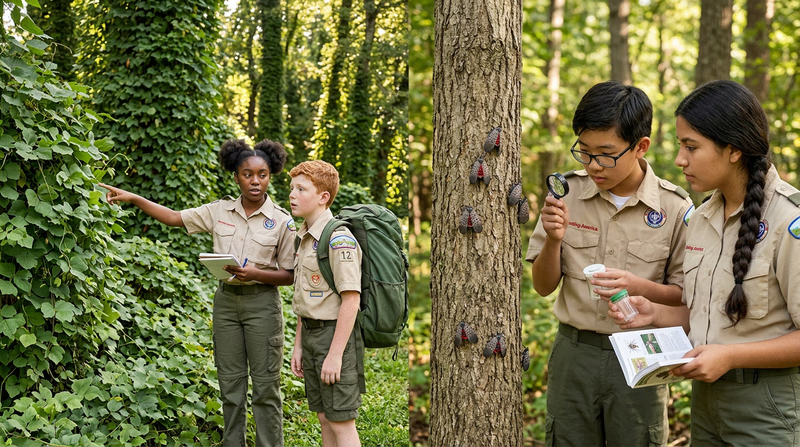
- English ivy — smothers native ground plants and climbs trees, blocking their sunlight
- European starlings — aggressive birds that outcompete native songbirds for nesting sites
- Japanese honeysuckle — fast-growing vine that crowds out native plants
- Spotted lanternfly — an invasive insect that damages trees and crops
Human Impact
The final piece of this requirement asks you to identify how human activities have affected your ecosystem. Almost every ecosystem on Earth shows some sign of human influence. Look for:
- Litter and debris — trash, bottles, plastic bags
- Trails and paths — worn-down areas from foot traffic or vehicles
- Construction and development — buildings, roads, fences, parking lots nearby
- Noise and light — traffic sounds, artificial lighting at night
- Water changes — storm drains, channelized streams, runoff from roads
- Air quality — visible haze, industrial odors
- Managed landscapes — mowed grass, planted non-native ornamental trees, pesticide use
- Positive impacts — bird feeders, pollinator gardens, restored wetlands, nest boxes
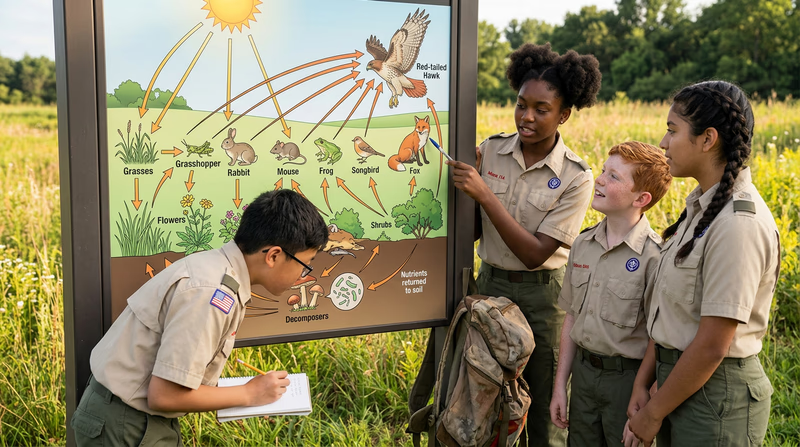
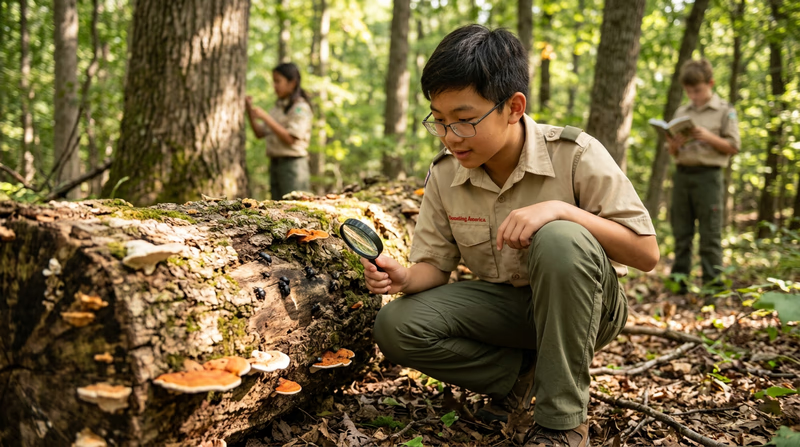
You have mapped the living, nonliving, and formerly living parts of your ecosystem and traced the connections between them. Next, we shift from ecology to pollution.
Req 3 — Air Pollution
Choose one of the three options below. Each option explores a different angle of air pollution. Read through all three, pick the one that interests you most, and dive in.
Option A: Particulate Matter
What Is Particulate Matter?
Particulate matter (PM) is a term for tiny particles and droplets floating in the air. Some are large enough to see — like soot or dust. Others are so small they are invisible to the naked eye but can still enter your lungs.
Scientists divide PM into two main categories:
- PM10 — particles 10 micrometers or smaller (about 1/7 the width of a human hair). Examples: dust, pollen, mold spores.
- PM2.5 — particles 2.5 micrometers or smaller (about 1/30 the width of a human hair). These are the most dangerous because they can penetrate deep into your lungs and even enter your bloodstream. Examples: smoke, vehicle exhaust, industrial emissions.
Where Does PM Come From?
- Natural sources: Wildfires, volcanic eruptions, dust storms, pollen
- Human sources: Vehicle exhaust, power plants, construction sites, factories, agricultural burning, wood-burning stoves
Health Effects
PM2.5 is linked to asthma, bronchitis, heart disease, and even premature death. Children, older adults, and people with respiratory conditions are especially vulnerable.
Your Experiment
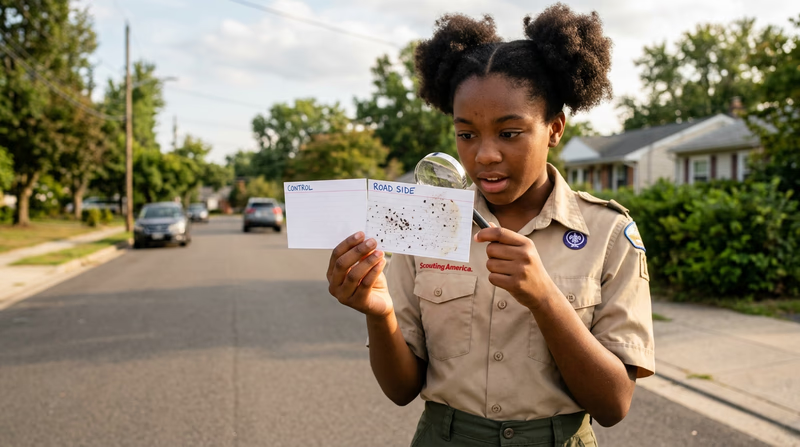
A simple but effective experiment is the sticky card test:
- Coat several index cards with a thin layer of petroleum jelly.
- Place them in different locations — near a road, in a park, inside your home, near a parking lot.
- Leave them exposed for 24–48 hours.
- Collect the cards and compare them. Use a magnifying glass to examine what settled on each one.
- Record which locations collected the most particles and describe what you see.
🎬 Video: Particulate Matter — What It Is and How to Avoid It — https://www.youtube.com/watch?v=zj4rd77EAt4
Option B: Air Pollution and Transportation
The Connection Between Transportation and Air Pollution
Transportation is one of the largest sources of air pollution worldwide. Burning fossil fuels in engines releases pollutants including carbon monoxide, nitrogen oxides, particulate matter, and volatile organic compounds.
Here are examples of how transportation and air pollution interact:
- Rush hour traffic creates concentrated zones of exhaust near highways, raising PM2.5 and ozone levels in surrounding neighborhoods.
- Diesel trucks and buses emit significantly more nitrogen oxides and particulate matter than gasoline vehicles, contributing to smog in urban areas.
- Airplane emissions release pollutants at high altitudes, including carbon dioxide and water vapor contrails that can affect climate patterns.
- Shipping ports concentrate emissions from cargo ships, which burn heavy fuel oil — one of the dirtiest fossil fuels available.
- Electric vehicles produce zero tailpipe emissions, but the electricity used to charge them may come from fossil fuel power plants, shifting the pollution source rather than eliminating it.
Comparing Two Modes
When you compare two modes of transportation, consider:
- Emissions per mile — How much pollution does each mode produce per passenger per mile traveled?
- Energy source — Fossil fuel, electricity, human power?
- Infrastructure impact — Roads and highways require land clearing and materials; bike paths are simpler.
- Lifecycle impact — Manufacturing, fuel production, and disposal all create pollution beyond what comes out of the tailpipe.
🎬 Video: What Really Comes Out of Your Car Exhaust — https://www.youtube.com/watch?v=WTg4i-5N62U
Option C: The Clean Air Act
What Is the Clean Air Act?
The Clean Air Act (CAA) is a federal law designed to protect air quality in the United States. The original version was passed in 1963, with major amendments in 1970 and 1990 that gave it real enforcement power.
Goals
- Set limits on how much of specific pollutants can be in the air (National Ambient Air Quality Standards, or NAAQS)
- Regulate emissions from factories, power plants, and vehicles
- Protect the ozone layer by phasing out chemicals like chlorofluorocarbons (CFCs)
- Reduce acid rain by limiting sulfur dioxide and nitrogen oxide emissions
Progress
Since 1970, the six most common air pollutants (called “criteria pollutants”) have decreased by about 78%, even as the U.S. population and economy grew significantly. Leaded gasoline was phased out. Acid rain has been dramatically reduced. The ozone hole is slowly healing.
What Remains
Ground-level ozone (smog) and fine particulate matter (PM2.5) remain problem areas, especially in large cities. Wildfires — increasing in frequency — create major air quality challenges that the law was not originally designed to address. Environmental justice concerns persist, as low-income communities and communities of color often bear a disproportionate pollution burden.
Benefits and Costs
The EPA estimates that the Clean Air Act’s benefits outweigh its costs by a ratio of more than 30 to 1. Benefits include fewer premature deaths, fewer hospital visits, higher crop yields, and better visibility. Costs include compliance expenses for industries and vehicle emission control systems.
Enforcement
The EPA sets the standards. State and local agencies monitor air quality, issue permits, and enforce regulations. Violations can result in fines, shutdowns, and legal action.
🎬 Video: What Is the Clean Air Act? — https://www.youtube.com/watch?v=um517CsDC2w
🎬 Video: Air Pollution 101 — National Geographic — https://www.youtube.com/watch?v=e6rglsLy1Ys
From the air above us, we move to the water around us.
Req 4 — Water Pollution
Choose one of the three options below. Each explores a different aspect of water and its environmental challenges.
Option A: Your Community’s Water Supply
Where Does Your Water Come From?
Every community gets its water from one of two main sources:
- Surface water — rivers, lakes, and reservoirs. Most large cities use surface water because it is available in large quantities.
- Groundwater — water stored underground in layers of rock and sediment called aquifers. Many rural areas and smaller towns rely on wells that tap into groundwater.
Some communities use a combination of both. Your local water utility can tell you exactly where your water originates.
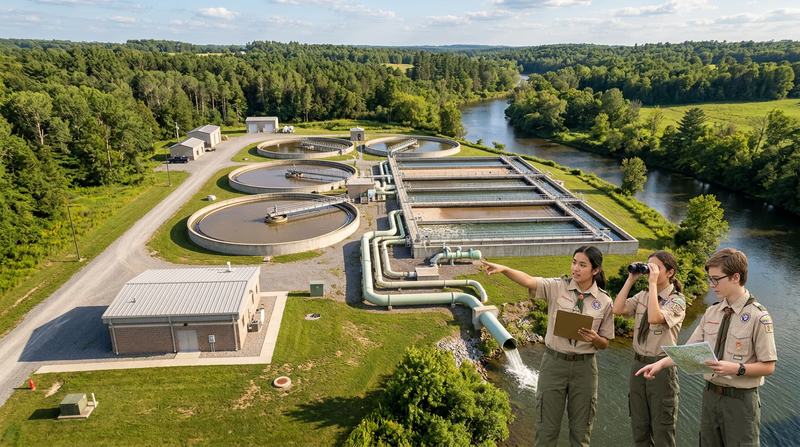
How Is It Treated?
Before water reaches your tap, it goes through a treatment process:
- Coagulation and flocculation — chemicals are added that cause tiny particles to clump together
- Sedimentation — the clumps settle to the bottom of a tank
- Filtration — water passes through layers of sand, gravel, and charcoal to remove smaller particles
- Disinfection — chlorine or other disinfectants kill bacteria and viruses
After you use water, it goes down the drain and enters the wastewater treatment system. Wastewater plants remove solids, break down organic material using bacteria, disinfect the water, and return it to a river or ocean.
Your Water Quality Report
Every public water system in the United States is required to publish an annual Consumer Confidence Report (also called a water quality report). You can usually find yours on your water utility’s website or by calling them.
The report lists contaminants found in your water, their levels, and whether those levels meet EPA safety standards. Look for:
- Contaminants detected and their measured levels
- Maximum Contaminant Levels (MCLs) — the highest level the EPA allows
- Sources of contamination — where pollutants may be entering the water supply
🎬 Video: Understanding a Drinking Water Quality Report — https://www.youtube.com/watch?v=Wtc0Se2vz1A
🎬 Video: How Do Water Treatment Plants Work? — https://www.youtube.com/watch?v=0_ZcCqqpS2o
Option B: Flooding and Drought
Understanding Extreme Water Events
Flooding and drought are opposite extremes of the water cycle, but both can devastate ecosystems and communities.
Flooding occurs when water overwhelms the land’s ability to absorb or channel it. Causes include heavy rain, snowmelt, dam failures, and storm surges. Environmental impacts of flooding include:
- Erosion — fast-moving water strips away topsoil and reshapes riverbanks
- Habitat destruction — nesting sites, burrows, and dens can be swept away
- Water contamination — floodwaters pick up sewage, chemicals, and debris and spread them across the landscape
- Sediment displacement — deposits of mud and silt can smother aquatic habitats downstream
Drought occurs when an area receives significantly less precipitation than normal for an extended period. Environmental impacts include:
- Water stress — streams dry up, wetlands shrink, and groundwater levels drop
- Wildfire risk — dry vegetation becomes fuel for fires
- Species displacement — animals migrate or die when water sources disappear
- Soil degradation — dry soil erodes more easily and loses its ability to support plant life
How to Research Your Area
- FEMA Flood Maps — Search your address to see if you are in a flood zone
- U.S. Drought Monitor (droughtmonitor.unl.edu) — View current and historical drought conditions
- Local newspaper archives — Search for coverage of past flooding or drought events
- USGS Water Data — Stream gauge data showing water levels over time
🎬 Video: Watersheds! — https://www.youtube.com/watch?v=2pwW2rlGIa8
Option C: The Clean Water Act
What Is the Clean Water Act?
The Clean Water Act (CWA) is the primary federal law governing water pollution in the United States. It was passed in 1972 (officially the Federal Water Pollution Control Act Amendments of 1972) in response to widespread pollution of the nation’s rivers, lakes, and coastal waters.
Goals
- Make all U.S. waters safe for swimming and fishing
- Eliminate the discharge of pollutants into navigable waters
- Establish water quality standards for all surface waters
- Regulate the discharge of pollutants through a permitting system (NPDES permits)
- Fund the construction of wastewater treatment facilities
Progress
Before the CWA, many rivers and lakes were essentially open sewers. Since its passage:
- Two-thirds of the nation’s waters now meet clean water goals (up from about one-third in 1972)
- Billions of pounds of pollutants have been prevented from entering waterways each year
- Wetland loss has slowed dramatically
- Iconic recoveries have occurred — the Chesapeake Bay, the Great Lakes, and the Potomac River are far healthier than they were in the 1970s
What Remains
- Nonpoint source pollution (runoff from farms, roads, and lawns) is now the largest source of water pollution and is harder to regulate than factory discharge
- Aging infrastructure — many sewage systems are old and overflow during heavy rain
- Emerging contaminants — pharmaceuticals, microplastics, and PFAS (“forever chemicals”) were not anticipated when the law was written
- Environmental justice — some communities still lack access to clean, safe drinking water
Benefits and Costs
The CWA has generated trillions of dollars in benefits through improved public health, recreation, fishing, and property values. Costs include municipal wastewater treatment upgrades and industrial compliance. Like the Clean Air Act, studies consistently show benefits far exceeding costs.
Enforcement
The EPA and state environmental agencies issue permits, monitor water quality, and enforce the law. The Army Corps of Engineers also plays a role in protecting wetlands. Citizens can file lawsuits under the CWA to enforce compliance.
🎬 Video: Environmental Law: The Clean Water Act — https://www.youtube.com/watch?v=OYMf9zJikVU
🎬 Video: The Hydrologic Cycle — https://www.youtube.com/watch?v=ArBYU1SPZ48
From water, we move to the ground beneath our feet.
Req 5 — Land Pollution
Choose one of the three options below. Each one examines a different way human activity pollutes the land.
Option A: Pesticides, Herbicides, and Fertilizers
Understanding Chemical Treatments
Modern agriculture and landscaping rely heavily on chemicals to control pests, weeds, and soil fertility. Understanding these chemicals — and their side effects — is a core part of environmental science.
- Pesticides kill insects and other pests that damage crops or spread disease. Examples: insecticides, rodenticides, fungicides.
- Herbicides kill unwanted plants (weeds) that compete with crops or landscaping.
- Fertilizers add nutrients (nitrogen, phosphorus, potassium) to soil to help plants grow faster and larger.
Benefits
These chemicals increase crop yields, maintain attractive landscapes, and control disease-carrying pests. Without them, global food production would be significantly lower.
Environmental Impacts
The problem is that chemicals do not stay where they are applied.
- Non-target species — Pesticides designed to kill one type of insect often harm beneficial insects too, including pollinators like bees and butterflies. The pesticide DDT nearly drove bald eagles to extinction by thinning their eggshells.
- Groundwater contamination — Rain carries chemicals through the soil into underground aquifers, potentially contaminating drinking water supplies.
- Runoff — When it rains, chemicals wash off the land and into streams, rivers, and lakes. Fertilizer runoff causes algal blooms — explosions of algae growth that consume oxygen in the water and create “dead zones” where fish and other aquatic life cannot survive.
- Human health — Farm workers, residents near treated areas, and people drinking contaminated water can all be exposed to harmful chemicals.
How to Research Your Site
Talk to the groundskeeper, farm manager, or homeowner who manages the area. Ask:
- What products do you use? (Get brand names and active ingredients)
- How often are they applied?
- How do you decide when and how much to apply?
- Are there any restrictions on what you can use near water sources?
🎬 Video: Do We Really Need Pesticides? — https://www.youtube.com/watch?v=GLllZ-qiXJA
Option B: Erosion
What Is Erosion?
Erosion is the process by which soil, rock, and sediment are worn away and transported by natural forces — primarily water, wind, ice, and gravity. Some erosion is natural and happens over thousands of years (think the Grand Canyon). But human activity dramatically accelerates erosion.
Types of Erosion
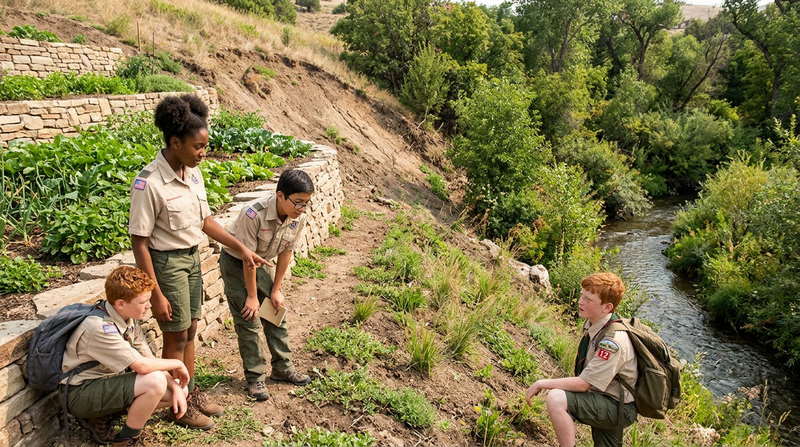
- Water erosion — the most common type. Rain hits bare soil and dislodges particles. Flowing water carries them downhill. This creates rills, gullies, and eventually deep channels.
- Wind erosion — common in dry, open areas. Wind lifts loose topsoil and carries it away. The Dust Bowl of the 1930s was caused by massive wind erosion on over-plowed farmland.
- Coastal erosion — waves and tides wear away shorelines, cliffs, and beaches.
- Ice erosion — glaciers grind down rock and carry debris as they move. (This is how valleys and fjords form over millennia.)
Where Does Eroded Material Go?
Eroded soil and sediment follow gravity and water downhill. The material often ends up in:
- Streams and rivers — making them shallower and muddier, which harms aquatic life
- Lakes and reservoirs — reducing water storage capacity
- Oceans — contributing to coastal sediment buildup
- Low-lying areas — filling in wetlands and floodplains
How to Minimize Erosion
- Plant ground cover — roots hold soil in place. Grass, ground cover plants, and trees are the best defense against erosion.
- Use mulch — covers bare soil and absorbs raindrop impact.
- Terracing — creating step-like levels on steep slopes slows water flow.
- Riparian buffers — planting vegetation along stream banks filters runoff and stabilizes the bank.
- Avoid disturbing soil unnecessarily — construction, trail building, and plowing all expose soil to erosion.
🎬 Video: Soil Erosion — Causes, Effects, and Solutions — https://www.youtube.com/watch?v=BoSUEIkK_Y4
Option C: Superfund Sites
What Is the Superfund Program?
The Superfund program was created in 1980 after several high-profile toxic waste disasters. It gives the EPA the authority and funding to clean up the most contaminated sites in the country. Sites that pose the greatest risk are placed on the National Priorities List (NPL).
As of today, there are over 1,300 sites on the NPL, with hundreds more that have been cleaned up and removed from the list.
Famous Superfund Sites
- Love Canal, New York — A neighborhood was built on top of a buried chemical waste dump. Residents experienced high rates of illness and birth defects. It was one of the events that led to the creation of Superfund.
- Times Beach, Missouri — A town was contaminated with dioxin when waste oil containing the chemical was sprayed on dirt roads to control dust. The entire town was eventually evacuated and demolished.
- Iron Mountain Mine, California — An abandoned copper mine that leaches highly acidic, metal-laden water into the Sacramento River watershed. It has been called the most toxic spot in the country.
How to Research a Superfund Site
- Visit the EPA’s Superfund site search tool (search “EPA Superfund site search” online).
- Search by your state or zip code to find sites near you.
- Each listing includes the site’s history, contaminants found, cleanup actions taken, and current status.
For your report, answer these four questions:
- What caused the contamination?
- What were the effects on the environment and human health?
- What cleanup (remediation) has been done?
- What is the current condition of the site?
🎬 Video: Introduction to Superfund — https://www.youtube.com/watch?v=klO1hJBJjns
From the land beneath us, we turn our attention to the species that depend on healthy ecosystems.
Req 6 — Rare, Threatened, or Endangered Species
Choose one of the three options below. Each one explores a different side of species conservation — from species in danger, to success stories, to hands-on habitat restoration.
Understanding the Terms
Before diving into the options, make sure you understand the key terms:
- Endangered — A species in danger of extinction throughout all or a significant part of its range.
- Threatened — A species likely to become endangered in the foreseeable future.
- Rare — A species with a small population that is not yet threatened or endangered but is at risk because of its limited numbers.
The Endangered Species Act (ESA), passed in 1973, protects listed species and their habitats. It is one of the strongest wildlife protection laws in the world.
Option A: An Endangered Species in Your State
How to Choose a Species
Every state has endangered species — often more than you would expect. To find species in your state:
- Visit the U.S. Fish & Wildlife Service Environmental Conservation Online System (ECOS) and search by state
- Check your state’s Department of Natural Resources or wildlife agency website
- Search for “[your state] endangered species list”
When choosing a species, pick one that interests you. It could be a mammal, bird, fish, reptile, amphibian, insect, or even a plant. Plants can be endangered too.
What to Research
Your research should cover:
- Natural habitat — Where does this species live? What does it need to survive (food, shelter, climate, water)?
- Why it is endangered — Habitat loss? Pollution? Overhunting? Invasive species? Disease? Climate change?
- Conservation efforts — What is being done to protect it? Breeding programs? Habitat restoration? Legal protections?
- Population numbers — How many individuals remain in the wild? Is the population stable, increasing, or declining?
Writing Your Report
The requirement asks for 100 words — that is about one short paragraph. Be concise and focus on the most important facts. Include a drawing you make or a photo you take (photos from wildlife agencies are also acceptable if you cite the source).
🎬 Video: Most Endangered Species in Every U.S. State — https://www.youtube.com/watch?v=uhj1WmVdi3o
Option B: A Conservation Success Story
Recovery Stories Worth Knowing
Some of conservation’s greatest achievements are species that were brought back from the edge of extinction. Here are a few to consider:
- Bald Eagle — Nearly wiped out by DDT and hunting. After DDT was banned and protections were put in place, the population rebounded from 417 nesting pairs in 1963 to over 71,000 pairs today. Removed from the endangered list in 2007.
- California Condor — Dropped to just 22 birds in 1987. A captive breeding program has brought the population to over 500, with more than 300 flying free.
- Gray Wolf — Once nearly eliminated from the lower 48 states. Reintroduction to Yellowstone in 1995 sparked one of the most famous ecological recovery stories in history.
- Whooping Crane — Declined to just 21 birds in 1941. Through careful breeding and habitat protection, the population has grown to over 800.
- American Alligator — Listed as endangered in 1967 due to overhunting and habitat loss. Recovery was so successful it was delisted in 1987 and now numbers in the millions.
What Made Recovery Possible?
Look for common themes in your chosen species’ recovery:
- Legal protection (Endangered Species Act, hunting bans)
- Habitat preservation or restoration
- Captive breeding programs
- Removal of the original threat (banning a pesticide, stopping hunting)
- Public awareness and support
🎬 Video: Top 10 Most Remarkable Wildlife Conservation Success Stories — https://www.youtube.com/watch?v=ZrrdDYmzoME
🎬 Video: California Condor Recovery: A Soaring Success Story — https://www.youtube.com/watch?v=prU4UdQv9P4
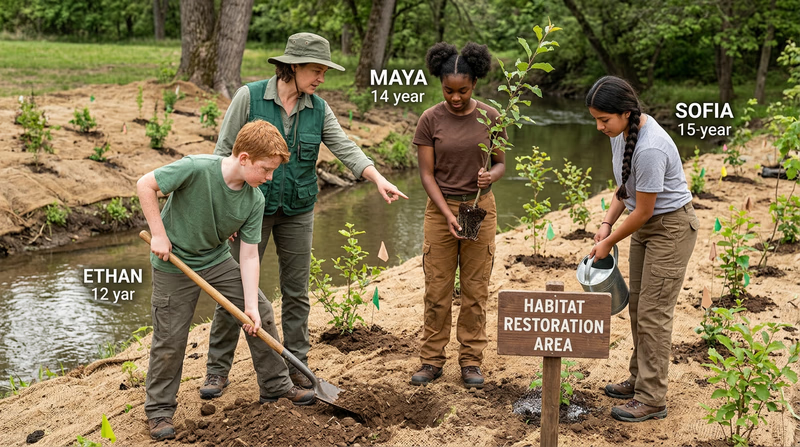
Option C: Habitat Restoration Site Visit
Finding a Habitat Restoration Project
This option gets you out into the real world to see conservation in action. Here is how to find a suitable project:
- Contact your local U.S. Fish & Wildlife Service office — They can point you to completed restoration projects in your area.
- Reach out to your state’s Department of Natural Resources — They manage many habitat restoration projects.
- Contact local conservation organizations — Groups like The Nature Conservancy, Audubon Society chapters, or local land trusts often manage restored habitats.
- Ask at nature centers or national wildlife refuges — Staff can direct you to restoration sites open to the public.
What to Look For During Your Visit
- What species is the project designed to help?
- What did the habitat look like before restoration?
- What changes were made (planting native species, removing invasive plants, restoring water flow, building nesting structures)?
- Are the target species using the restored habitat?
- What ongoing maintenance does the site need?
🎬 Video: Largest Ecosystem Restoration Project in the World — The Florida Everglades — https://www.youtube.com/watch?v=98d8p49XJGM
Species need healthy ecosystems. Healthy ecosystems need us to reduce pollution and use resources wisely.
Req 7 — Pollution Prevention & Conservation
Choose one of the three options below. Each focuses on how you can reduce waste, conserve resources, and protect the environment through everyday actions.
Option A: Conserving Resources
What Does Conservation Look Like in Daily Life?
Conservation is not just about protecting forests and rivers — it starts in your home. Every time you use less water, electricity, or materials, you are reducing the strain on natural resources and cutting down on pollution.
Here are categories to explore when identifying your five conservation methods:
Water Conservation
- Take shorter showers (aim for 5 minutes or less)
- Turn off the faucet while brushing your teeth
- Fix dripping faucets — a single drip can waste over 3,000 gallons per year
- Water plants in the early morning or evening to reduce evaporation
Energy Conservation
- Turn off lights when you leave a room
- Unplug chargers and electronics when not in use (they draw power even when off)
- Use natural light instead of artificial light during the day
- Adjust the thermostat — even 1–2 degrees makes a difference
Material Conservation
- Use reusable water bottles and lunch containers instead of disposable ones
- Print on both sides of paper
- Donate or swap items instead of throwing them away
- Bring reusable bags to stores
Food Waste Reduction
- Plan meals to avoid buying more than you need
- Compost food scraps instead of sending them to the landfill
- Learn to read expiration dates correctly — “best by” does not mean “unsafe after”
🎬 Video: 10 Ways to Take Care of the Environment — https://www.youtube.com/watch?v=X2YgM1Zw4_E
Option B: Resource Recovery and the Three Rs
What Is Resource Recovery?
Resource recovery is the process of extracting useful materials or energy from waste that would otherwise go to a landfill. Instead of treating trash as the end of the line, resource recovery treats it as a source of raw materials.
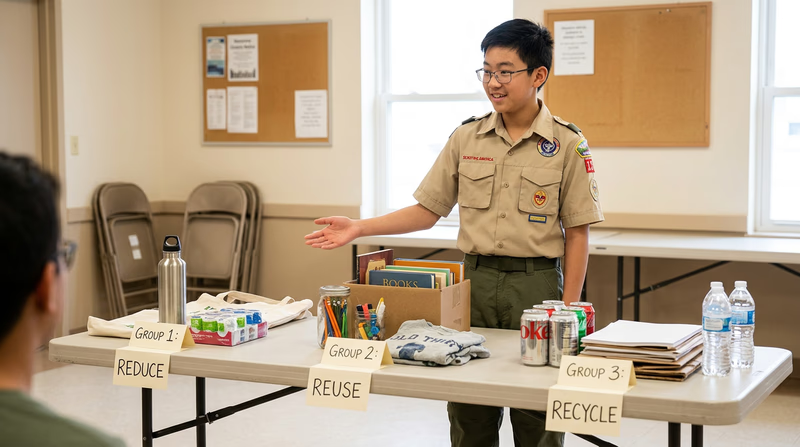
The three levels of resource recovery — Reduce, Reuse, Recycle — are listed in order of environmental impact:
- Reduce — The best option. Use less in the first place. A product that was never made created zero waste and zero pollution.
- Reuse — Use items again instead of discarding them. A glass jar can hold leftovers. An old T-shirt can become a cleaning rag. A sturdy box can be used for storage.
- Recycle — Process used materials into new products. Aluminum cans become new cans. Paper becomes new paper. Plastic bottles become fleece fabric or park benches.
Your Collection
Gather or photograph ten items that illustrate these principles. Try to include examples from all three categories. For each item, explain:
- What it is
- Which “R” it represents (Reduce, Reuse, or Recycle)
- How it is currently handled in your community
- How it could be handled better
Example items:
- A reusable water bottle (Reduce — replaces hundreds of disposable bottles)
- A glass jar repurposed for storage (Reuse)
- An aluminum can (Recycle — aluminum can be recycled infinitely)
- A cardboard box (Recycle or Reuse)
- A cloth shopping bag (Reduce — replaces plastic bags)
🎬 Video: Reduce, Reuse, Recycle — https://www.youtube.com/watch?v=u8MQwOR2og8
Option C: Household Hazardous Waste
What Is Household Hazardous Waste?
Household hazardous waste (HHW) includes products in your home that contain chemicals that can be dangerous to people and the environment if improperly stored, discarded, or mixed together. These items should never go in the regular trash or be poured down the drain.
Common Household Hazardous Items
Look around your home for items like these:
- Paints and stains — contain volatile organic compounds (VOCs) and heavy metals
- Batteries (especially lithium-ion and button cell) — contain toxic metals like lead, cadmium, and mercury
- Cleaning products — bleach, ammonia, oven cleaners, drain openers
- Pesticides and herbicides — leftover garden chemicals
- Motor oil and antifreeze — toxic to animals and contaminates water
- Compact fluorescent light bulbs (CFLs) — contain small amounts of mercury
- Electronics (old phones, computers, TVs) — contain lead, mercury, and other toxic materials
- Expired medications — can contaminate water supplies if flushed
- Nail polish and remover — contain acetone and other solvents
- Propane tanks and aerosol cans — pressurized and potentially explosive
Proper Disposal
Most communities offer hazardous waste disposal options:
- Household hazardous waste collection events — many cities hold periodic collection days
- Permanent drop-off facilities — some counties have year-round HHW drop-off sites
- Retailer take-back programs — many stores accept batteries, electronics, and paint for recycling
- Earth911.org — search by material type and zip code to find drop-off locations near you
🎬 Video: Proper Disposal of Household Hazardous Waste — https://www.youtube.com/watch?v=MJX0rvGsRpA
From conserving resources, we turn to one of nature’s most essential processes.
Req 8 — Pollination
Choose one of the three options below. Each explores pollination from a different angle — investigation, field observation, or agriculture.
What Is Pollination?
Before choosing an option, make sure you understand the basics. Pollination is the transfer of pollen from the male part of a flower (anther) to the female part (stigma). This transfer is essential for plants to produce seeds and fruit.
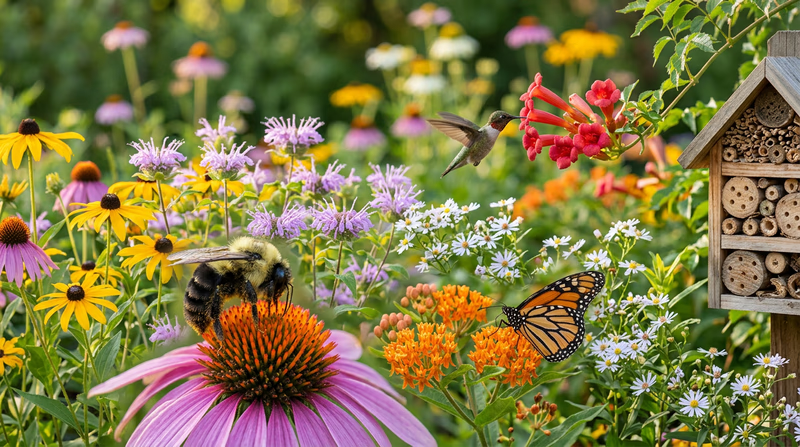
Some plants are pollinated by wind or water. But the vast majority of flowering plants depend on pollinators — animals that carry pollen from flower to flower as they feed on nectar, pollen, or other flower resources.
Common pollinators include:
- Bees — the most important pollinator group worldwide
- Butterflies and moths — attracted to colorful, fragrant flowers
- Hummingbirds — drawn to red, tubular flowers
- Bats — pollinate many tropical and desert plants (including agave and saguaro cactus)
- Flies, beetles, and wasps — often overlooked but important pollinators for many plant species
Option A: Investigating Pollination
Finding Pollinators in Your Region
To identify five pollinators and their associated plants, you will need to do some research about what is native to your area. Resources to help:
- Pollinator Partnership (pollinator.org) — search by zip code for a planting guide specific to your ecoregion
- Xerces Society (xerces.org) — offers regional pollinator conservation guides
- Your state’s cooperative extension service — provides native plant and pollinator information
- iNaturalist — photograph pollinators and the app will help identify them
How Scouts Can Help
There are practical, hands-on ways Scouts can support pollinators:
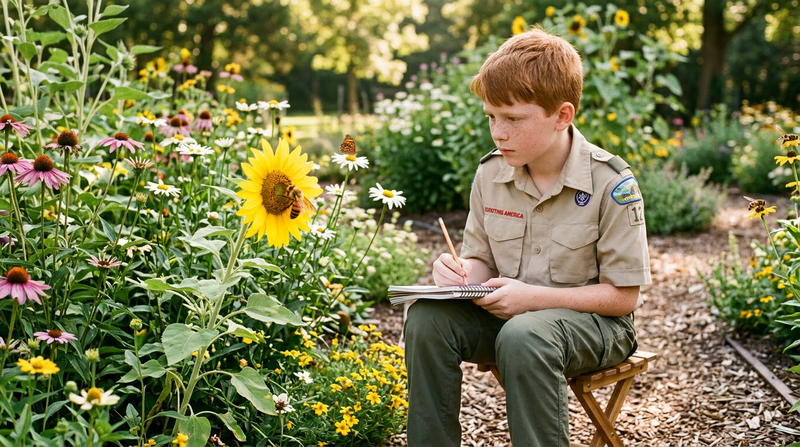
- Plant a pollinator garden at your home, school, or meeting place using native flowering plants
- Avoid pesticides — especially neonicotinoids, which are highly toxic to bees
- Leave natural areas undisturbed — ground-nesting bees need bare soil, and many butterflies need leaf litter
- Provide water — a shallow dish with pebbles and water gives pollinators a safe place to drink
- Build bee hotels — bundles of hollow stems or drilled wood blocks provide nesting sites for solitary bees
- Spread the word — teach your troop, family, and community about pollinator conservation
🎬 Video: The Power of Pollinators — https://www.youtube.com/watch?v=eDxZojp9yNg
🎬 Video: How Pollination Works — https://www.youtube.com/watch?v=qWc8X6YeTv8
Option B: Field Observation of Pollination
Planning Your Observation
- When: Visit during peak pollination hours — typically mid-morning to early afternoon on a warm, sunny day. Pollinators are less active in cold, windy, or rainy weather.
- Where: A garden, wildflower meadow, park with flower beds, community garden, or botanical garden. Choose a spot with a variety of flowering plants.
- What to bring: Notebook, pencil, camera or phone, a watch, and optionally a magnifying glass.
What to Record
For each observation, note:
- The type of pollinator (bee, butterfly, moth, hummingbird, fly, beetle, wasp)
- The type of plant it visited
- The flower color, shape, and size
- How the pollinator interacted with the flower (landing on it, hovering, crawling inside)
- How long it stayed
- Whether it visited multiple flowers of the same type or different types
Patterns to Look For
- Color preferences — Bees are attracted to blue, purple, and yellow flowers. Hummingbirds prefer red. Moths are drawn to white or pale flowers that are fragrant at night.
- Flower shape — Tubular flowers attract hummingbirds and long-tongued insects. Open, flat flowers attract beetles and flies. Flowers with landing platforms attract bees.
- Timing — Some pollinators are most active in the morning. Others come out at dusk.
Pollination Observation Log
What to record during your hour of observation- Date, time, and weather conditions: Temperature, cloud cover, wind.
- Location description: Garden, meadow, park — describe the setting.
- Plant species observed: List each flowering plant and its color.
- Pollinator species observed: Identify each visitor as specifically as you can.
- Plant-pollinator pairs: Which pollinators visited which plants.
- Behavioral notes: How pollinators interacted with flowers.
- Sketches or photos: Visual records of what you observed.
🎬 Video: The Beauty of Pollination — https://www.youtube.com/watch?v=MQiszdkOwuU
Option C: Pollination and Agriculture
Why Agriculture Depends on Pollinators
Without pollinators, many of the crops we rely on would produce little or no fruit. In the United States alone, pollinator-dependent crops are worth over $15 billion per year. Globally, the number is estimated at over $200 billion.
Some crops are almost entirely dependent on insect pollination. Others benefit from it but can also be pollinated by wind. And a few staple crops (wheat, rice, corn) are primarily wind-pollinated and do not need insect help.
Crop-Pollinator Pairs to Know
Here are examples of important crop-pollinator relationships:
| Crop | Primary Pollinator | Notes |
|---|---|---|
| Almonds | Honeybees | Nearly 100% dependent on bee pollination. California almond growers rent millions of beehives each spring. |
| Apples | Honeybees, bumblebees | Bees must visit each flower multiple times for full-sized fruit to develop. |
| Blueberries | Bumblebees | Bumblebees are especially effective because they “buzz pollinate” — vibrating at a frequency that releases pollen. |
| Chocolate (cacao) | Midges (tiny flies) | Cacao flowers are so small that only midges can pollinate them. No midges, no chocolate. |
| Vanilla | Orchid bees (or hand pollination) | Outside of Mexico, vanilla is almost entirely hand-pollinated — one flower at a time. |
| Squash and pumpkins | Squash bees | Specialized native bees that are active before dawn, perfectly timed for squash flowers. |
The Pollinator Crisis
Pollinator populations are declining worldwide due to:
- Habitat loss — fewer wildflowers and nesting sites
- Pesticide use — neonicotinoids are particularly harmful to bees
- Disease and parasites — Varroa mites devastate honeybee colonies
- Climate change — shifts in bloom timing can leave pollinators without food at critical moments
These declines have real economic consequences. Farmers who once relied on wild pollinators now pay to rent managed honeybee hives — a significant added cost.
🎬 Video: Pollinators and Agriculture — https://www.youtube.com/watch?v=RczHxJI57xU
From the helpful creatures that pollinate our crops, we shift to the harmful ones that invade our ecosystems.
Req 9 — Invasive Species
What Makes a Species “Invasive”?
Not every non-native species is invasive. A species is considered invasive when it meets all three criteria:
- It is not native to the ecosystem where it is found.
- It was introduced by human activity — either deliberately or accidentally.
- It causes harm to the environment, economy, or human health.
Many non-native species exist peacefully alongside native ones. But invasive species spread aggressively, outcompete native organisms, and disrupt the balance of the ecosystem.
How Do Invasive Species Arrive?
Invasive species reach new ecosystems through many pathways:
- Intentional introduction — Some species were brought on purpose. Kudzu was planted across the southeastern U.S. in the 1930s to control erosion. European starlings were released in New York City in the 1890s by a group that wanted every bird mentioned in Shakespeare’s plays to live in America.
- Accidental transport — Ships carry organisms in their ballast water. Packing materials harbor insects. Firewood moves forest pests from state to state.
- Escape from cultivation or captivity — Pet snakes released in the Everglades. Aquarium plants dumped in lakes. Garden plants that jump the fence and spread into wild areas.
- Natural spread after introduction — Once established, invasive species expand their range through wind, water, and animal dispersal.
Invasive Species to Know
Here are well-known examples from across the country. You should research species found specifically in your community or camp, but these can give you context:
Invasive Plants
- Kudzu — “The vine that ate the South.” Grows up to one foot per day and smothers native trees by blocking their sunlight. Native to Japan.
- Purple loosestrife — A showy purple flower that invades wetlands and displaces native plants that wildlife depends on. Native to Europe and Asia.
- Garlic mustard — A shade-tolerant plant that invades forest floors and releases chemicals that inhibit the growth of native plants and the fungi that help trees absorb nutrients.
- English ivy — Climbs trees, blocks their light, and adds weight that makes them more likely to fall in storms. Covers the forest floor and prevents native seedlings from growing.
Invasive Animals
- Burmese python — Tens of thousands now live in the Florida Everglades after being released by pet owners. They prey on native birds, mammals, and even alligators.
- Spotted lanternfly — An insect from Asia that feeds on over 70 plant species, including grapevines, fruit trees, and hardwoods. First detected in Pennsylvania in 2014 and spreading rapidly.
- Emerald ash borer — A beetle from Asia that has killed hundreds of millions of ash trees across North America since its discovery in 2002.
- Feral hogs — Descendants of escaped domestic pigs. They root up native vegetation, destroy crops, erode stream banks, and carry diseases. Found in at least 35 states.
- Zebra mussels — Tiny freshwater mussels from Eastern Europe that clog water intake pipes, coat boat hulls, and outcompete native mussels. They arrived in the Great Lakes in the late 1980s in ship ballast water.
How to Research Your Two Species
For each of your two chosen species, gather information on:
Invasive Species Research Guide
What to learn about each species- Origin: Where is this species originally from?
- Introduction: How and when did it arrive in your area?
- Life history: What does it eat? How fast does it reproduce? What is its lifespan?
- Spread: How does it disperse — wind, water, animal transport, human activity?
- Impact: How does it harm native species and ecosystems? Economic damage?
- Control methods: What is being done to eradicate or contain it? Biological controls? Chemical treatments? Manual removal?
Where to Find Information
- Your state’s Department of Natural Resources — most publish invasive species lists and fact sheets
- USDA National Invasive Species Information Center (invasivespeciesinfo.gov)
- Your local cooperative extension service — university experts who study local invasive species
- EDDMapS (eddmaps.org) — an invasive species mapping system where you can see reported sightings in your area
- Park rangers and nature center staff — they deal with invasive species firsthand
🎬 Video: The Threat of Invasive Species — https://www.youtube.com/watch?v=spTWwqVP_2s
🎬 Video: Why We Don't Just Kill Off Invasive Species — https://www.youtube.com/watch?v=TNfIGtZ3k1Q
Now that you understand how invasive species disrupt ecosystems, it is time to think like an environmental planner.
Req 10 — Environmental Impact Assessment
What Is an Environmental Impact Assessment?
An Environmental Impact Assessment (EIA) is a formal process that evaluates how a proposed project might affect the natural environment. Before a highway is built, a building goes up, or a dam is constructed, experts study the potential effects on air, water, land, wildlife, and people.
In the United States, the National Environmental Policy Act (NEPA), signed in 1970, requires federal agencies to assess the environmental impact of major projects before they begin. Many states have similar laws for state and local projects.
You are not expected to write a professional EIA for this requirement. But you should think through the same questions a professional would ask.
Choosing Your Project
Pick a construction project you can evaluate. Good options include:
- Building a house on an undeveloped lot
- Adding a building to your Scout camp (a dining hall, shower house, or storage building)
- A road or trail extension in a park or community
- A school addition or new playground
- Any project your counselor approves
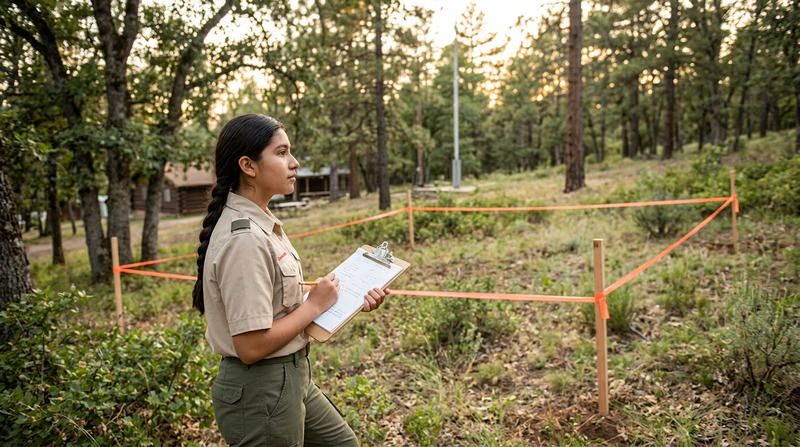
The best choice is a project you can actually visit or visualize clearly. If you pick a Scout camp addition, for example, you can walk the site and observe the existing environment firsthand.
The Three Parts of Your Evaluation
Part 1: Purpose and Benefit
Every project exists for a reason. Start by clearly stating:
- What is the project? Describe what would be built.
- Why is it needed? What problem does it solve or what need does it meet?
- Who benefits? Individuals, a community, a camp, a school?
Be specific. “We need a new dining hall at camp because the current one only seats 80 Scouts and camp attendance has grown to 150” is much stronger than “we need more space.”
Part 2: Alternatives — Including No Action
A critical part of any environmental assessment is considering alternatives — different ways to achieve the same goal, including doing nothing at all.
- The preferred alternative — the proposed project as designed
- Modified alternatives — Could the project be smaller? In a different location? Built with different materials? Could an existing structure be renovated instead?
- The no-action alternative — What happens if the project is not built? This is always considered. Sometimes the best decision is to do nothing.
Part 3: Environmental Consequences
This is the heart of the assessment. For your chosen project, consider the impact on each of these areas:
Environmental Impact Topics
Areas to evaluate for your project- Land and soil: Will the project require clearing vegetation, grading, or excavation? Will it increase erosion?
- Water: Will the project affect streams, wetlands, or groundwater? Will it increase stormwater runoff?
- Air quality: Will construction or operation produce dust, emissions, or odors?
- Wildlife and habitat: Does the site provide habitat for any species? Will construction displace animals or destroy nesting sites?
- Vegetation: Will trees or native plants be removed? Can they be replaced?
- Noise: Will construction or operation create noise that disturbs wildlife or neighbors?
- Waste: What waste will the project generate during construction and operation? How will it be managed?
- Cultural and historical resources: Are there any historical, archaeological, or culturally significant features on or near the site?
- Visual impact: Will the project change the appearance of the landscape?
- Cumulative effects: How does this project add to the effects of other development in the area?
Putting It All Together
Your discussion with your counselor should follow a logical flow:
- Describe the project and its purpose
- Walk through the alternatives you considered
- Identify the environmental impacts — both positive and negative
- Suggest mitigation measures — things that could reduce the negative impacts (for example: planting trees to replace ones removed, using permeable pavement to reduce runoff, scheduling construction outside of bird nesting season)
- Make a recommendation — Based on your analysis, do you think the project should proceed? With modifications? Or should the no-action alternative be chosen?
🎬 Video: What Is an Environmental Impact Assessment? — https://www.youtube.com/watch?v=V7W3l1Qgj-0
🎬 Video: Environmental Impact Assessments — Key to Sustainable Development — https://www.youtube.com/watch?v=aznhAlo8rJo
You have learned to think like an environmental planner. Now let’s look at where this kind of thinking can take you as a career.
Req 11 — Career Exploration
Careers in Environmental Science
Environmental science is one of the fastest-growing career fields. As communities, businesses, and governments work to address pollution, climate change, and resource management, the demand for people with environmental skills continues to rise.
Here are career paths to consider when identifying your three options. Each uses the same skills you have been developing throughout this merit badge — observation, research, data analysis, and problem-solving.
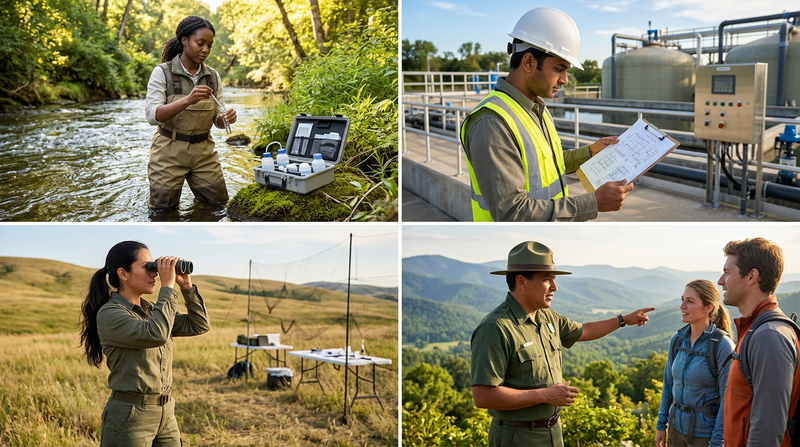
Environmental Scientist
Environmental scientists study the natural world and investigate how human activities affect it. They collect soil, water, and air samples, analyze data, and recommend solutions to environmental problems.
- Education: Bachelor’s degree in environmental science, biology, chemistry, or a related field. Many positions prefer a master’s degree.
- Work settings: Government agencies (EPA, state environmental departments), consulting firms, research labs, nonprofit organizations.
- What they do: Conduct field studies, analyze samples, write environmental reports, advise on compliance with environmental laws.
Environmental Engineer
Environmental engineers design systems and solutions to environmental problems — water treatment plants, air pollution controls, waste management systems, and contaminated site cleanups.
- Education: Bachelor’s degree in environmental engineering, civil engineering, or chemical engineering. A Professional Engineer (PE) license is often required.
- Work settings: Engineering firms, government agencies, construction companies, industrial facilities.
- What they do: Design treatment systems, manage cleanup projects, ensure facilities meet environmental regulations.
Wildlife Biologist
Wildlife biologists study animal populations, their habitats, and the threats they face. They develop management plans to protect species and restore ecosystems.
- Education: Bachelor’s degree in wildlife biology, ecology, or zoology. Fieldwork experience is essential. Many positions require a master’s degree.
- Work settings: U.S. Fish & Wildlife Service, state wildlife agencies, national parks, conservation organizations, universities.
- What they do: Conduct population surveys, track species, manage habitats, develop recovery plans for endangered species.
Park Ranger / Natural Resource Manager
Park rangers and natural resource managers protect and manage public lands — national parks, state parks, forests, and wildlife refuges. They combine environmental knowledge with public outreach and land management.
- Education: Bachelor’s degree in natural resource management, forestry, environmental science, or a related field.
- Work settings: National Park Service, U.S. Forest Service, Bureau of Land Management, state parks departments.
- What they do: Manage trails and facilities, educate visitors, monitor wildlife, fight wildfires, enforce regulations.
Environmental Consultant
Environmental consultants are hired by businesses and developers to assess environmental risks and ensure projects comply with environmental laws. They are the professionals who conduct many of the environmental impact assessments you learned about in Requirement 10.
- Education: Bachelor’s degree in environmental science, geology, engineering, or a related field.
- Work settings: Private consulting firms (often working on-site at client locations).
- What they do: Conduct site assessments, perform environmental audits, advise clients on regulatory compliance, oversee remediation projects.
Conservation Scientist / Forester
Conservation scientists and foresters manage the overall quality of forests, parks, rangelands, and other natural resources. They balance environmental protection with human use — timber production, recreation, and watershed management.
- Education: Bachelor’s degree in forestry, conservation science, or natural resource management.
- Work settings: U.S. Forest Service, state forestry agencies, timber companies, land trusts.
- What they do: Develop land management plans, oversee timber harvests, restore degraded lands, prevent and manage wildfires.
Researching Your Chosen Career
After identifying three careers, pick one and dig deeper. Here is how to structure your research:
Career Research Checklist
What to investigate for your chosen career- Education required: What degree do you need? What should you major in?
- Certifications or licenses: Are any special credentials required (like a PE license or GIS certification)?
- Experience: What kind of entry-level experience is expected? Internships? Fieldwork?
- Cost of education: What does the degree program cost? Are scholarships available for environmental fields?
- Starting salary: What can you expect to earn in your first position? (Check the Bureau of Labor Statistics at bls.gov.)
- Advancement: Where can you go after your first job? Management? Specialization? Starting your own consulting firm?
- Job outlook: Is the field growing? Are there geographic areas with more opportunities?
- Day-to-day work: What does a typical day look like? Office, field, lab, or a mix?
Where to Research
- Bureau of Labor Statistics Occupational Outlook Handbook (bls.gov/ooh) — salary data, job outlook, education requirements
- Professional associations — organizations like the National Association of Environmental Professionals or the Society for Conservation Biology publish career guides
- University program websites — look at what courses are required for a degree in your chosen field
- Informational interviews — ask a professional in the field about their career path (your merit badge counselor may know someone)
🎬 Video: Environmental Scientist — Future Jobs — https://www.youtube.com/watch?v=PrOPITyZPaU
🎬 Video: What Does an Environmental Engineer Do? — https://www.youtube.com/watch?v=k2epvAUEdCI
You have explored the full range of environmental science — from ecology to pollution, from endangered species to career paths. Now let’s go even further.
Extended Learning
A. Introduction
You have worked through all eleven requirements of the Environmental Science merit badge — congratulations! You have observed ecosystems, investigated pollution, studied endangered species, explored pollinators and invasive species, and even thought like an environmental planner. But the work does not stop here. The environment needs people who stay curious, stay informed, and take action long after the badge is earned.
B. Deep Dive: Citizen Science — Real Research You Can Do Right Now
You do not need a degree to contribute to real scientific research. Citizen science programs invite everyday people — including Scouts — to collect data that professional scientists use in their work. Your observations become part of massive datasets that reveal trends no single researcher could track alone.
Here are some of the best citizen science programs for environmental science:
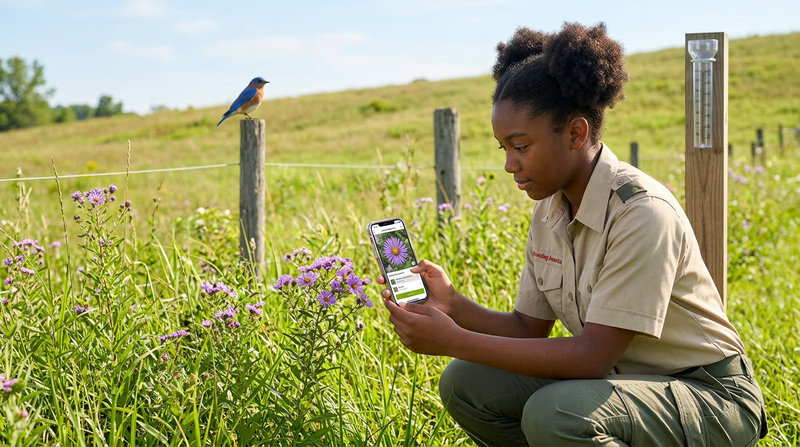
- iNaturalist — Photograph any plant, animal, or fungus. The community helps identify it, and your observation becomes part of a global biodiversity database used by researchers, land managers, and conservation organizations. Over 100 million observations have been recorded worldwide.
- eBird (ebird.org) — Record the birds you see on any outing. Your data helps scientists track bird populations, migration patterns, and habitat use across the continent. Run by the Cornell Lab of Ornithology.
- Globe Observer (observer.globe.gov) — A NASA program where you photograph clouds, trees, and land cover. Your data is compared with satellite observations to improve climate and environmental models.
- Community Collaborative Rain, Hail & Snow Network (CoCoRaHS) — Measure daily precipitation with a simple rain gauge and report it. Your data fills in gaps between official weather stations and improves flood and drought forecasting.
- Monarch Watch — Tag monarch butterflies during fall migration. Recovered tags reveal migration routes, survival rates, and population health.
The best part about citizen science is that you can start today. Download an app, step outside, and your backyard becomes a research station.
C. Deep Dive: Water Testing — Going Beyond the Report
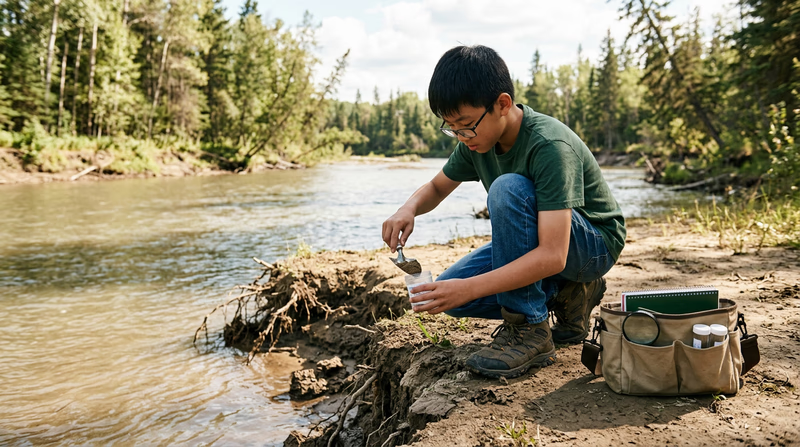
In Requirement 4, you may have reviewed a water quality report. But you can go further by testing water yourself. Basic water testing kits are affordable and give you hands-on experience with the same parameters that professional labs measure.
What you can test:
- pH — Measures how acidic or basic the water is. Most aquatic life thrives between pH 6.5 and 8.5. Rain runoff from roads and mines can lower pH (make it more acidic).
- Dissolved oxygen (DO) — The amount of oxygen available in the water for fish and other aquatic organisms. Warm, stagnant water holds less oxygen. Pollution that causes algal blooms can crash DO levels.
- Turbidity — How clear or cloudy the water is. High turbidity usually indicates suspended sediment, algae, or pollution. It blocks sunlight from reaching underwater plants.
- Nitrates and phosphates — Nutrients that are essential in small amounts but cause problems in excess. High levels usually come from fertilizer runoff, sewage, or animal waste and fuel algal blooms.
- Temperature — Affects dissolved oxygen levels and the types of organisms that can survive. Many fish species are sensitive to even small temperature changes.
How to get started:
Basic water testing kits are available from educational science suppliers for $15–$30 and test multiple parameters. For more advanced testing, look into programs like the Izaak Walton League’s Save Our Streams or your state’s volunteer water monitoring program. Many states train volunteers and provide free testing equipment.
Testing the same water source over several weeks or months reveals trends that a single snapshot cannot show. Is water quality improving? Getting worse? Staying stable? That is the kind of data that matters.
D. Deep Dive: Building a Pollinator Habitat
One of the most impactful things a Scout can do for the environment is create habitat — and a pollinator garden is one of the easiest and most rewarding projects you can take on. Unlike many environmental challenges that require policy changes or massive funding, a pollinator garden can be started this weekend in your own yard.
Planning your garden:
- Choose a sunny location. Most pollinator-friendly plants need at least six hours of direct sunlight per day.
- Select native plants. Visit pollinator.org and enter your zip code to get a free planting guide specific to your region. Native plants are adapted to your soil and climate, and local pollinators have evolved alongside them.
- Plant for continuous bloom. Choose a mix of plants that flower in spring, summer, and fall so pollinators have food throughout the season. A garden that blooms only in June leaves pollinators hungry the rest of the year.
- Include a variety of flower shapes. Tubular flowers for hummingbirds and long-tongued bees. Flat, open flowers for butterflies and short-tongued insects. Clusters for flies and beetles.
- Provide nesting habitat. Leave patches of bare soil for ground-nesting bees. Install a bee hotel (a bundle of hollow stems or a block of wood with drilled holes) for solitary bees. Leave leaf litter in place over winter — many butterflies and moths overwinter as pupae in fallen leaves.
- Avoid pesticides. This is non-negotiable. Even “bee-safe” products can harm pollinators if applied improperly.
A pollinator garden also makes an excellent Eagle Scout service project, conservation project, or community service initiative. Contact your local extension office for advice on plants, and consider partnering with a school, park, or community center.
E. Real-World Experiences
National Wildlife Refuges
EPA Superfund Site Tours
Citizen Science BioBlitz Events
Local Stream Cleanups and Monitoring
State and National Park Junior Ranger Programs
F. Organizations
Protects birds and their habitats through science, advocacy, and community engagement. Local chapters offer bird walks, habitat restoration projects, and citizen science programs.
Organization: National Audubon Society — https://www.audubon.org/
Works in all 50 states and over 70 countries to protect ecologically important lands and waters. Offers volunteer opportunities, nature preserves to visit, and educational resources.
Organization: The Nature Conservancy — https://www.nature.org/
Dedicated to protecting invertebrates — especially pollinators — and their habitats. Provides pollinator conservation guides, habitat assessment tools, and community science programs.
Organization: Xerces Society for Invertebrate Conservation — https://www.xerces.org/
One of the oldest grassroots environmental organizations in the country. Offers outings, advocacy campaigns, and local chapter activities focused on clean energy, clean air, clean water, and wild places.
Organization: Sierra Club — https://www.sierraclub.org/
Focuses on conservation of soil, air, woods, water, and wildlife. Their Save Our Streams program trains volunteers in stream monitoring — a hands-on way to continue the water science you explored in this badge.
Organization: Izaak Walton League of America — https://www.iwla.org/
The EPA offers educational materials, career information, and resources for students interested in environmental science. Includes information about internships and fellowships.
Organization: Environmental Protection Agency (EPA) — Student Resources — https://www.epa.gov/students