Req 2b — Ecosystem Components
Sorting Your Observations
After observing your ecosystem in Requirement 2a, you need to organize what you found into three categories. Scientists use these categories to map out the structure of any ecosystem.
Living Components (Biotic)
These are organisms that are alive right now. They grow, reproduce, consume energy, and respond to their environment.
- Plants: Trees, shrubs, grasses, mosses, algae, wildflowers
- Animals: Birds, mammals, reptiles, amphibians, fish, insects, spiders, worms
- Fungi: Mushrooms, mold, lichens (lichens are actually a partnership between fungi and algae)
- Microorganisms: Bacteria in the soil, algae in water (you may not see these, but they are there)
Nonliving Components (Abiotic)
These are the physical and chemical parts of the environment that are not alive and never were alive. They shape the conditions that living things must adapt to.
- Rocks and minerals: Boulders, gravel, sand, clay
- Water: Streams, puddles, groundwater, humidity
- Air: Wind patterns, oxygen levels, carbon dioxide
- Sunlight: How much reaches the ground, shaded vs. open areas
- Soil composition: Sandy, clay, loamy (soil itself is a mix of abiotic minerals and biotic organisms)
- Temperature and weather: Daily highs and lows, recent rainfall
Formerly Living Components (Detritus)
These were once alive but are no longer. They play a critical role in recycling nutrients back into the ecosystem.
- Fallen leaves and branches: Leaf litter on the forest floor
- Dead trees (snags): Standing dead trees that shelter woodpeckers, owls, and insects
- Animal remains: Bones, feathers, shells, shed skin
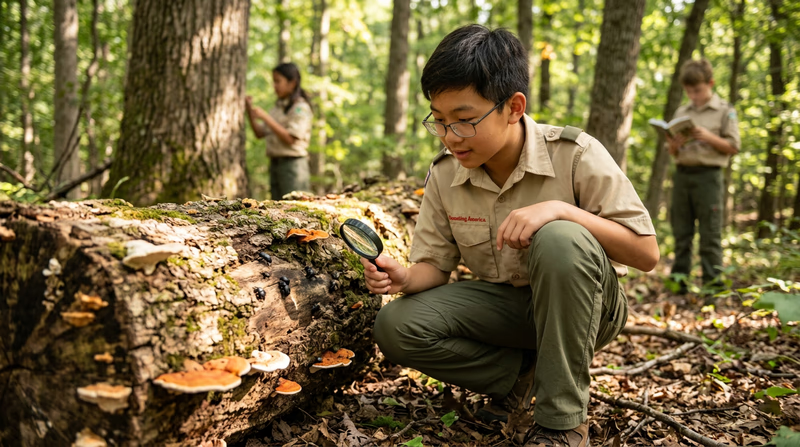
- Decomposing material: Rotting logs, compost, humus in soil
Understanding Interactions
An ecosystem is not just a list of parts — it is a web of relationships. Here are the key interactions to look for in your area.
Food Chains and Food Webs
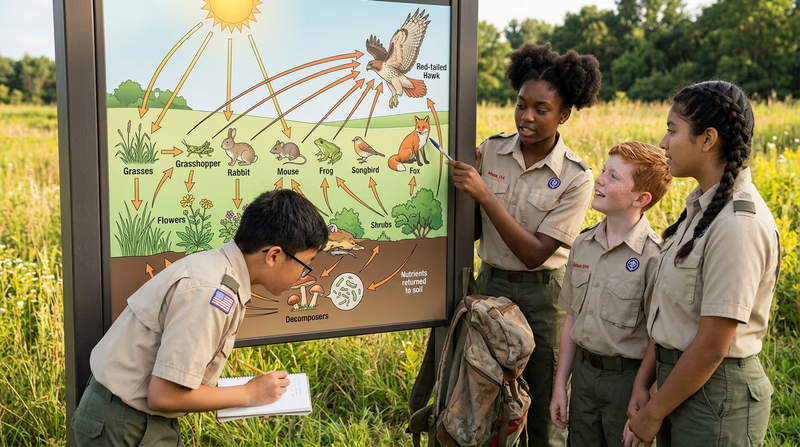
A food chain shows a single path of energy: sun → grass → grasshopper → frog → hawk. A food web is more realistic — it shows many overlapping food chains, because most organisms eat more than one thing and are eaten by more than one predator.
Every food chain starts with producers (plants that convert sunlight into energy through photosynthesis), moves through consumers (herbivores eat plants, carnivores eat other animals, omnivores eat both), and ends with decomposers (fungi and bacteria that break down dead material and return nutrients to the soil).
Predators and Prey
Predator-prey relationships keep ecosystems balanced. If a predator population grows too large, prey numbers drop. Then predators run out of food and their population drops too, allowing prey to recover. This back-and-forth cycle is one of the most fundamental patterns in ecology.
In your observation area, look for signs of predation: spider webs with trapped insects, hawk feathers near a clearing, claw marks on trees, or piles of broken snail shells where a bird has been feeding.
Native vs. Invasive Species
Native species are organisms that have lived in an ecosystem for thousands of years. They have evolved alongside each other, and the ecosystem is adapted to their presence.
Invasive species are organisms that were introduced from somewhere else — often by human activity — and cause harm to the native ecosystem. They may outcompete native species for food and space, have no natural predators, and spread rapidly.
Common examples you might encounter:
- English ivy — smothers native ground plants and climbs trees, blocking their sunlight
- European starlings — aggressive birds that outcompete native songbirds for nesting sites
- Japanese honeysuckle — fast-growing vine that crowds out native plants
- Spotted lanternfly — an invasive insect that damages trees and crops
Human Impact
The final piece of this requirement asks you to identify how human activities have affected your ecosystem. Almost every ecosystem on Earth shows some sign of human influence. Look for:
- Litter and debris — trash, bottles, plastic bags
- Trails and paths — worn-down areas from foot traffic or vehicles
- Construction and development — buildings, roads, fences, parking lots nearby
- Noise and light — traffic sounds, artificial lighting at night
- Water changes — storm drains, channelized streams, runoff from roads
- Air quality — visible haze, industrial odors
- Managed landscapes — mowed grass, planted non-native ornamental trees, pesticide use
- Positive impacts — bird feeders, pollinator gardens, restored wetlands, nest boxes
You have mapped the living, nonliving, and formerly living parts of your ecosystem and traced the connections between them. Next, we shift from ecology to pollution.