Req 5 — Land Pollution
Choose one of the three options below. Each one examines a different way human activity pollutes the land.
Option A: Pesticides, Herbicides, and Fertilizers
Understanding Chemical Treatments
Modern agriculture and landscaping rely heavily on chemicals to control pests, weeds, and soil fertility. Understanding these chemicals — and their side effects — is a core part of environmental science.
- Pesticides kill insects and other pests that damage crops or spread disease. Examples: insecticides, rodenticides, fungicides.
- Herbicides kill unwanted plants (weeds) that compete with crops or landscaping.
- Fertilizers add nutrients (nitrogen, phosphorus, potassium) to soil to help plants grow faster and larger.
Benefits
These chemicals increase crop yields, maintain attractive landscapes, and control disease-carrying pests. Without them, global food production would be significantly lower.
Environmental Impacts
The problem is that chemicals do not stay where they are applied.
- Non-target species — Pesticides designed to kill one type of insect often harm beneficial insects too, including pollinators like bees and butterflies. The pesticide DDT nearly drove bald eagles to extinction by thinning their eggshells.
- Groundwater contamination — Rain carries chemicals through the soil into underground aquifers, potentially contaminating drinking water supplies.
- Runoff — When it rains, chemicals wash off the land and into streams, rivers, and lakes. Fertilizer runoff causes algal blooms — explosions of algae growth that consume oxygen in the water and create “dead zones” where fish and other aquatic life cannot survive.
- Human health — Farm workers, residents near treated areas, and people drinking contaminated water can all be exposed to harmful chemicals.
How to Research Your Site
Talk to the groundskeeper, farm manager, or homeowner who manages the area. Ask:
- What products do you use? (Get brand names and active ingredients)
- How often are they applied?
- How do you decide when and how much to apply?
- Are there any restrictions on what you can use near water sources?
Option B: Erosion
What Is Erosion?
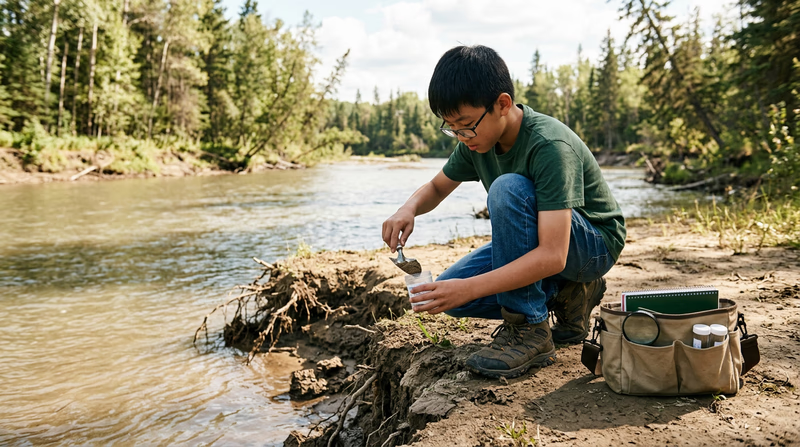
Erosion is the process by which soil, rock, and sediment are worn away and transported by natural forces — primarily water, wind, ice, and gravity. Some erosion is natural and happens over thousands of years (think the Grand Canyon). But human activity dramatically accelerates erosion.
Types of Erosion
- Water erosion — the most common type. Rain hits bare soil and dislodges particles. Flowing water carries them downhill. This creates rills, gullies, and eventually deep channels.
- Wind erosion — common in dry, open areas. Wind lifts loose topsoil and carries it away. The Dust Bowl of the 1930s was caused by massive wind erosion on over-plowed farmland.
- Coastal erosion — waves and tides wear away shorelines, cliffs, and beaches.
- Ice erosion — glaciers grind down rock and carry debris as they move. (This is how valleys and fjords form over millennia.)
Where Does Eroded Material Go?
Eroded soil and sediment follow gravity and water downhill. The material often ends up in:
- Streams and rivers — making them shallower and muddier, which harms aquatic life
- Lakes and reservoirs — reducing water storage capacity
- Oceans — contributing to coastal sediment buildup
- Low-lying areas — filling in wetlands and floodplains
How to Minimize Erosion
- Plant ground cover — roots hold soil in place. Grass, ground cover plants, and trees are the best defense against erosion.
- Use mulch — covers bare soil and absorbs raindrop impact.
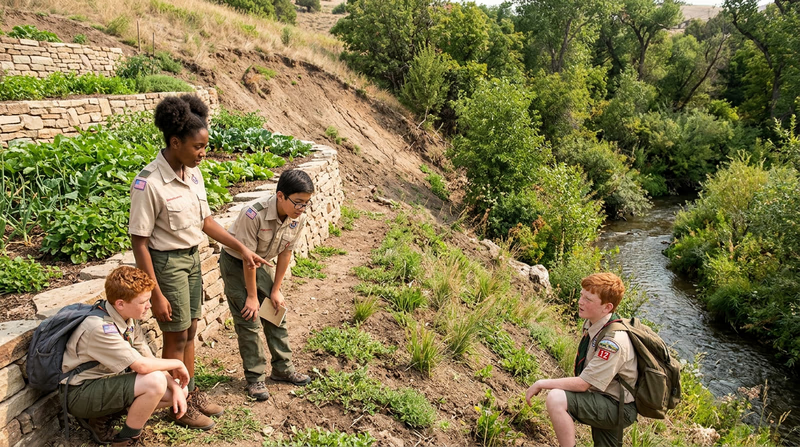
- Terracing — creating step-like levels on steep slopes slows water flow.
- Riparian buffers — planting vegetation along stream banks filters runoff and stabilizes the bank.
- Avoid disturbing soil unnecessarily — construction, trail building, and plowing all expose soil to erosion.
Option C: Superfund Sites
What Is the Superfund Program?
The Superfund program was created in 1980 after several high-profile toxic waste disasters. It gives the EPA the authority and funding to clean up the most contaminated sites in the country. Sites that pose the greatest risk are placed on the National Priorities List (NPL).
As of today, there are over 1,300 sites on the NPL, with hundreds more that have been cleaned up and removed from the list.
Famous Superfund Sites
- Love Canal, New York — A neighborhood was built on top of a buried chemical waste dump. Residents experienced high rates of illness and birth defects. It was one of the events that led to the creation of Superfund.
- Times Beach, Missouri — A town was contaminated with dioxin when waste oil containing the chemical was sprayed on dirt roads to control dust. The entire town was eventually evacuated and demolished.
- Iron Mountain Mine, California — An abandoned copper mine that leaches highly acidic, metal-laden water into the Sacramento River watershed. It has been called the most toxic spot in the country.
How to Research a Superfund Site
- Visit the EPA’s Superfund site search tool (search “EPA Superfund site search” online).
- Search by your state or zip code to find sites near you.
- Each listing includes the site’s history, contaminants found, cleanup actions taken, and current status.
For your report, answer these four questions:
- What caused the contamination?
- What were the effects on the environment and human health?
- What cleanup (remediation) has been done?
- What is the current condition of the site?
From the land beneath us, we turn our attention to the species that depend on healthy ecosystems.