Req 6 — Rare, Threatened, or Endangered Species
Choose one of the three options below. Each one explores a different side of species conservation — from species in danger, to success stories, to hands-on habitat restoration.
Understanding the Terms
Before diving into the options, make sure you understand the key terms:
- Endangered — A species in danger of extinction throughout all or a significant part of its range.
- Threatened — A species likely to become endangered in the foreseeable future.
- Rare — A species with a small population that is not yet threatened or endangered but is at risk because of its limited numbers.
The Endangered Species Act (ESA), passed in 1973, protects listed species and their habitats. It is one of the strongest wildlife protection laws in the world.
Option A: An Endangered Species in Your State
How to Choose a Species
Every state has endangered species — often more than you would expect. To find species in your state:
- Visit the U.S. Fish & Wildlife Service Environmental Conservation Online System (ECOS) and search by state
- Check your state’s Department of Natural Resources or wildlife agency website
- Search for “[your state] endangered species list”
When choosing a species, pick one that interests you. It could be a mammal, bird, fish, reptile, amphibian, insect, or even a plant. Plants can be endangered too.
What to Research
Your research should cover:
- Natural habitat — Where does this species live? What does it need to survive (food, shelter, climate, water)?
- Why it is endangered — Habitat loss? Pollution? Overhunting? Invasive species? Disease? Climate change?
- Conservation efforts — What is being done to protect it? Breeding programs? Habitat restoration? Legal protections?
- Population numbers — How many individuals remain in the wild? Is the population stable, increasing, or declining?
Writing Your Report
The requirement asks for 100 words — that is about one short paragraph. Be concise and focus on the most important facts. Include a drawing you make or a photo you take (photos from wildlife agencies are also acceptable if you cite the source).
Option B: A Conservation Success Story
Recovery Stories Worth Knowing
Some of conservation’s greatest achievements are species that were brought back from the edge of extinction. Here are a few to consider:
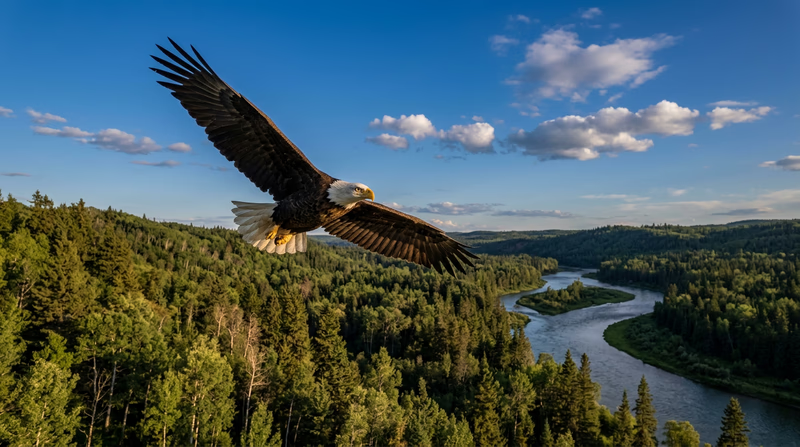
- Bald Eagle — Nearly wiped out by DDT and hunting. After DDT was banned and protections were put in place, the population rebounded from 417 nesting pairs in 1963 to over 71,000 pairs today. Removed from the endangered list in 2007.
- California Condor — Dropped to just 22 birds in 1987. A captive breeding program has brought the population to over 500, with more than 300 flying free.
- Gray Wolf — Once nearly eliminated from the lower 48 states. Reintroduction to Yellowstone in 1995 sparked one of the most famous ecological recovery stories in history.
- Whooping Crane — Declined to just 21 birds in 1941. Through careful breeding and habitat protection, the population has grown to over 800.
- American Alligator — Listed as endangered in 1967 due to overhunting and habitat loss. Recovery was so successful it was delisted in 1987 and now numbers in the millions.
What Made Recovery Possible?
Look for common themes in your chosen species’ recovery:
- Legal protection (Endangered Species Act, hunting bans)
- Habitat preservation or restoration
- Captive breeding programs
- Removal of the original threat (banning a pesticide, stopping hunting)
- Public awareness and support
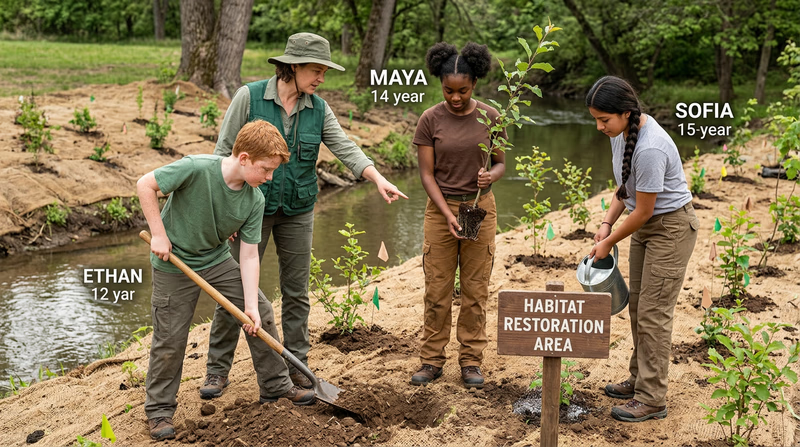
Option C: Habitat Restoration Site Visit
Finding a Habitat Restoration Project
This option gets you out into the real world to see conservation in action. Here is how to find a suitable project:
- Contact your local U.S. Fish & Wildlife Service office — They can point you to completed restoration projects in your area.
- Reach out to your state’s Department of Natural Resources — They manage many habitat restoration projects.
- Contact local conservation organizations — Groups like The Nature Conservancy, Audubon Society chapters, or local land trusts often manage restored habitats.
- Ask at nature centers or national wildlife refuges — Staff can direct you to restoration sites open to the public.
What to Look For During Your Visit
- What species is the project designed to help?
- What did the habitat look like before restoration?
- What changes were made (planting native species, removing invasive plants, restoring water flow, building nesting structures)?
- Are the target species using the restored habitat?
- What ongoing maintenance does the site need?
Species need healthy ecosystems. Healthy ecosystems need us to reduce pollution and use resources wisely.