Req 7 — Pollution Prevention & Conservation
Choose one of the three options below. Each focuses on how you can reduce waste, conserve resources, and protect the environment through everyday actions.
Option A: Conserving Resources
What Does Conservation Look Like in Daily Life?
Conservation is not just about protecting forests and rivers — it starts in your home. Every time you use less water, electricity, or materials, you are reducing the strain on natural resources and cutting down on pollution.
Here are categories to explore when identifying your five conservation methods:
Water Conservation
- Take shorter showers (aim for 5 minutes or less)
- Turn off the faucet while brushing your teeth
- Fix dripping faucets — a single drip can waste over 3,000 gallons per year
- Water plants in the early morning or evening to reduce evaporation
Energy Conservation
- Turn off lights when you leave a room
- Unplug chargers and electronics when not in use (they draw power even when off)
- Use natural light instead of artificial light during the day
- Adjust the thermostat — even 1–2 degrees makes a difference
Material Conservation
- Use reusable water bottles and lunch containers instead of disposable ones
- Print on both sides of paper
- Donate or swap items instead of throwing them away
- Bring reusable bags to stores
Food Waste Reduction
- Plan meals to avoid buying more than you need
- Compost food scraps instead of sending them to the landfill
- Learn to read expiration dates correctly — “best by” does not mean “unsafe after”
Option B: Resource Recovery and the Three Rs
What Is Resource Recovery?
Resource recovery is the process of extracting useful materials or energy from waste that would otherwise go to a landfill. Instead of treating trash as the end of the line, resource recovery treats it as a source of raw materials.
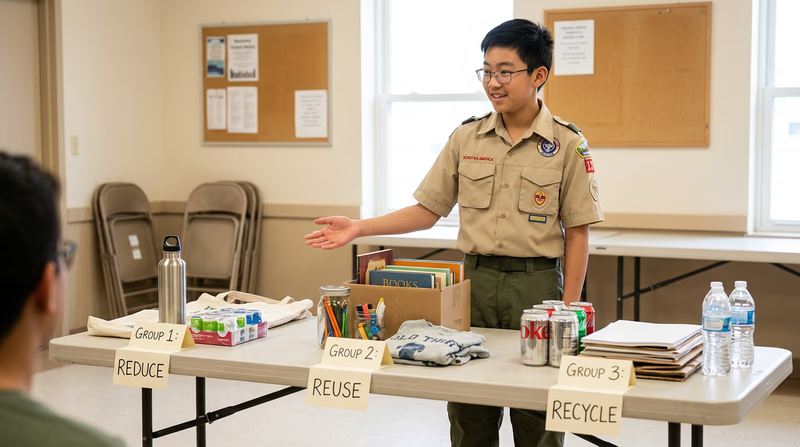
The three levels of resource recovery — Reduce, Reuse, Recycle — are listed in order of environmental impact:
- Reduce — The best option. Use less in the first place. A product that was never made created zero waste and zero pollution.
- Reuse — Use items again instead of discarding them. A glass jar can hold leftovers. An old T-shirt can become a cleaning rag. A sturdy box can be used for storage.
- Recycle — Process used materials into new products. Aluminum cans become new cans. Paper becomes new paper. Plastic bottles become fleece fabric or park benches.
Your Collection
Gather or photograph ten items that illustrate these principles. Try to include examples from all three categories. For each item, explain:
- What it is
- Which “R” it represents (Reduce, Reuse, or Recycle)
- How it is currently handled in your community
- How it could be handled better
Example items:
- A reusable water bottle (Reduce — replaces hundreds of disposable bottles)
- A glass jar repurposed for storage (Reuse)
- An aluminum can (Recycle — aluminum can be recycled infinitely)
- A cardboard box (Recycle or Reuse)
- A cloth shopping bag (Reduce — replaces plastic bags)
Option C: Household Hazardous Waste
What Is Household Hazardous Waste?
Household hazardous waste (HHW) includes products in your home that contain chemicals that can be dangerous to people and the environment if improperly stored, discarded, or mixed together. These items should never go in the regular trash or be poured down the drain.
Common Household Hazardous Items
Look around your home for items like these:
- Paints and stains — contain volatile organic compounds (VOCs) and heavy metals
- Batteries (especially lithium-ion and button cell) — contain toxic metals like lead, cadmium, and mercury
- Cleaning products — bleach, ammonia, oven cleaners, drain openers
- Pesticides and herbicides — leftover garden chemicals
- Motor oil and antifreeze — toxic to animals and contaminates water
- Compact fluorescent light bulbs (CFLs) — contain small amounts of mercury
- Electronics (old phones, computers, TVs) — contain lead, mercury, and other toxic materials
- Expired medications — can contaminate water supplies if flushed
- Nail polish and remover — contain acetone and other solvents
- Propane tanks and aerosol cans — pressurized and potentially explosive
Proper Disposal
Most communities offer hazardous waste disposal options:
- Household hazardous waste collection events — many cities hold periodic collection days
- Permanent drop-off facilities — some counties have year-round HHW drop-off sites
- Retailer take-back programs — many stores accept batteries, electronics, and paint for recycling
- Earth911.org — search by material type and zip code to find drop-off locations near you
From conserving resources, we turn to one of nature’s most essential processes.