Req 4a — Profile a Living Explorer
This option works best when you choose someone whose work is clear, specific, and recent enough that you can find interviews, articles, mission reports, or talks. You are not just making a biography. You are explaining what this person set out to do and what one expedition achieved.
What to Look For in a Good Explorer Profile
Choose a person with a mission, not just a famous name. A strong example usually has:
- a clear field of exploration
- one expedition or project you can describe in detail
- evidence of what was achieved
- enough trustworthy sources to support your report
Jane Goodall is a great choice if you want field science and animal behavior. Ranulph Fiennes fits if you want extreme endurance and leadership. Someone like Levison Wood can work if you want journey-based exploration with a strong storytelling side. You might also choose a scientist, marine explorer, astronaut, cave explorer, or polar researcher you discover on your own.
Build Your Report Around Four Questions
1. What was the explorer trying to accomplish?
Do not start with where they were born. Start with the mission. Were they trying to document chimpanzee behavior, cross a polar region, map a river system, or collect data from a remote ecosystem?
2. Why was the expedition difficult?
Every real expedition has obstacles. Those might include weather, distance, funding, permits, altitude, political boundaries, equipment limits, or physical danger. Explaining these challenges makes the achievement more meaningful.
3. What did the expedition achieve?
Be specific. Did it produce scientific observations, complete a route, collect samples, create images, inspire conservation, or answer an important question?
4. Why does the work matter?
This is the part many reports miss. Help your audience understand why the expedition was worth doing. Did it expand knowledge, change attitudes, improve methods, or open the door to later work?
A Strong Explorer Presentation Includes
Use this to organize your notes
- Explorer’s name and field
- One main expedition
- Mission objective
- Major obstacles
- Important achievements
- Why the work matters
- One or two details that make the story memorable
Presentation Formats That Work
You can meet this requirement in more than one way:
- Verbal talk: best if you like speaking and can keep your points organized.
- Written report: best if you want to explain details carefully with a clear beginning, middle, and end.
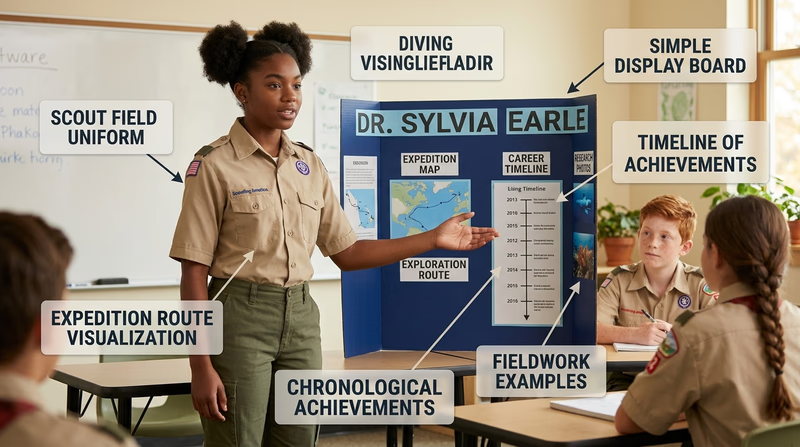
- Slide presentation: best if photos, maps, and timelines will help your audience follow the story.
Official Resources
These videos give you several very different kinds of living explorers to study.
🎬 Video: 50 Years of Discovery | Jane Goodall and The Leakey Foundation (video) — https://www.youtube.com/watch?v=I4ivrfIOKjw
🎬 Video: The World's Greatest Living Explorer | Ranulph Fiennes (video) — https://youtu.be/ePOa2OpRQ2g?si=uN7djyhK_Zylurjq
🎬 Video: Levison Wood / Walking the Nile / Himalayas / Americas / Arabia Badlands & Beyond (video) — https://youtu.be/MkOV5Ex6puA?si=aq81Mw_U2hC6LRnl
🎬 Video: Unsung Heroes of Everest | Nat Geo Live (video) — https://youtu.be/ihmfkdEcDyk?si=2aIG3YmL5YzTaVhC
Make the Achievement Easy to See
A simple timeline often helps:
- preparation and goal
- expedition itself
- biggest challenge
- main outcome
- long-term importance
That structure keeps your report focused on exploration, not random life details.
If you would rather focus on a mission than a person, the next page may be a better fit.