Req 6 — Plan an Expedition That Works
This requirement is the planning backbone of the badge. Each part covers a step that turns a vague idea into a real expedition. Think of it as a mission checklist built in the right order:
- set the objective
- build the plan
- budget the mission
- choose equipment
- organize communication and travel
- prepare for hazards
- select the right team
- decide how you will document and share results
Requirement 6a
A mission without a clear objective is just a trip. Your objective tells the team what success looks like. It also helps you decide where to go, what tools to bring, who needs to come, and how much time to allow.
Good objectives are specific. “Explore the creek” is weak. “Document three signs of erosion upstream from the bridge and photograph them from fixed points” is much better.
🎬 Video: EXPEDITIONS | How to Get Started! (video) — https://www.youtube.com/watch?v=80_ltIRYjd0
Requirement 6b
Mission schedule and agenda
A schedule turns objectives into action. It answers questions like: When do we travel? When do we collect data? When do we check in? What happens if weather or delays force a change?
Documents and permits
Some expeditions need permission before they begin. That might include park permits, landowner approval, museum access, school permission, medical forms, or transportation paperwork. If you ignore this step, your mission may stop before it starts.
Why this step matters
A written plan keeps the team organized and reduces confusion in the field. It also shows your counselor that you are thinking ahead instead of improvising everything on the spot.
🎬 Video: How to Plan an Expedition (video) — https://www.youtube.com/watch?v=qcLKcFrnzlk&t=8s
🎬 Video: Plan Your DREAM ADVENTURE: Expert Tips From a Pro Expedition Leader (video) — https://youtu.be/WahqTpIFAhs?si=lGt65nOwLExTvtbJ
🎬 Video: How to Plan an Adventure | Plan a Camping Trip (video) — https://youtu.be/79WYqkiExZU?si=eSNcCQUrJ53JlcRL
Requirement 6c
Budgeting the mission
Every expedition uses resources, even a local one. Transportation, entry fees, meals, replacement batteries, maps, printing, and safety gear all cost money. A simple budget helps you avoid surprises.
Why this step matters
Budgeting is not just about saving money. It helps you see whether the mission is realistic. A team that cannot afford a needed permit or proper safety equipment is not fully prepared.
🎬 Video: How to Plan for Permits and Reservations (video) — https://youtu.be/nup-uvbAfuU?si=CeutkSlZvOuJ81hU
Requirement 6d
Personal gear
Clothing, food, water, first aid items, sun protection, and weather layers support the people on the mission.
Mission gear
Notebooks, measuring tools, cameras, sample containers, batteries, charging gear, maps, and navigation tools support the objective.
Why this step matters
The wrong gear can ruin a mission. Too much gear slows a team down. Too little gear can make the mission unsafe or incomplete.
Requirement 6e
Transportation
How will you get there, move around on-site, and return safely? Transportation planning includes routes, drivers, timing, weather backup plans, and fuel or charging needs.
Communication
Explorers need both outside communication and on-site communication. Cell phones may work in town but fail in the backcountry. A group may need radios, prearranged meeting points, or check-in times.
Why this step matters
A team can be well supplied and still fail if it cannot coordinate or call for help.
Requirement 6f
Hazards and prevention
List real hazards, not vague ones. Heat, cold, slips, traffic, wildlife, lightning, contaminated water, allergic reactions, and fatigue are all examples depending on the expedition.
First aid and evacuation
If something goes wrong, who provides first aid? Where is the nearest help? How will the team get an injured person out? That is medical evacuation planning.
Why this step matters
Safety planning protects both people and the mission. It shows you are serious about responsible exploration.
🎬 Video: Wilderness Primary Care Kit Walkthrough | Essential Expedition Essentials Medical Kit Guide (video) — https://www.youtube.com/watch?v=A-pbC5aDBY0
Requirement 6g
Team roles
A small expedition may still need clear roles: leader, navigator, recorder, photographer, safety watcher, or gear manager. One person may hold more than one role, but the roles should still be named.
Leadership skills
An expedition leader needs more than enthusiasm. Good leaders make decisions, manage time, communicate clearly, watch for risk, and keep the team focused on the objective.
Why this step matters
The right people can solve problems before they grow. The wrong team mix can turn a simple outing into confusion.
🎬 Video: Flight of the Osprey Media Team Selection (video) — https://youtu.be/pDJHtE3BB_c?si=W6oyFePTcGnXQSM1
Requirement 6h
Recordkeeping
Decide in advance what you will record, who will record it, and how. Will you use a notebook, phone photos, voice memos, sketches, checklists, or a shared spreadsheet later?
Interpretation and sharing
Collecting information is not enough. You also need a plan for what happens afterward. How will you explain the results? Who needs to hear them? A counselor? Your unit? A teacher? A local group?
Why this step matters
Documentation is what turns an experience into exploration. Without records, discoveries are easy to forget, misremember, or lose.
The 7 Fundamentals of Documenting Your Travels (website) Offers practical ideas for recording what happens so you can share a clear story and useful evidence afterward. Link: The 7 Fundamentals of Documenting Your Travels (website) — https://matadornetwork.com/notebook/the-7-fundamentals-of-documenting-your-travels/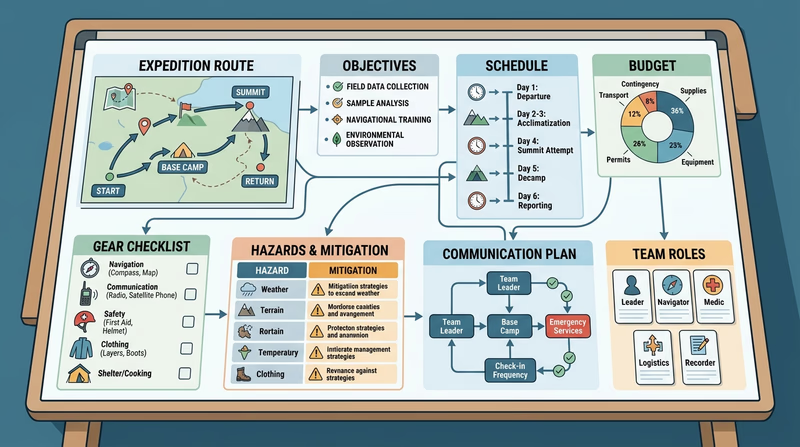
If Requirement 6 feels long, that is because real exploration depends on strong planning. The next requirement asks you to turn these ideas into preparations for your own expedition.