Req 7 — Prepare for the Real Thing
This requirement is where planning becomes real. You are no longer talking about a hypothetical expedition. You are preparing for one that you will actually carry out. That means adult supervision, practical decisions, and an honest look at whether your plan is safe and workable.
Requirement 7a
Choose a qualified adult
This person should know more than you do about the kind of expedition you are planning. That could be a science teacher, outdoor leader, park naturalist, museum educator, observatory staff member, or another adult with relevant experience.
Use their experience well
A qualified adult can help you notice weaknesses in your plan, spot hazards, and adjust your goal so it fits your team’s skill level.
Why this step matters
Exploration is safer and smarter when younger explorers learn from experienced people. Supervision is not a formality. It is part of responsible preparation.
Requirement 7b
This is your full preparation checkpoint. Every major planning step from Requirement 6 should now appear in your real expedition plan.
Build a useful gear list
Do not just make a long list. Organize it by purpose.
- Safety: first aid kit, water, weather layers, sun protection, flashlight
- Navigation and communication: map, compass, phone, radios, check-in plan
- Mission needs: notebook, pencils, camera, measuring tools, sample containers if approved
- Personal support: food, gloves, boots, rain gear
Explain each item’s value
Your counselor may ask, “Why are you bringing this?” Have a real answer. “Because it is on a camping list” is weak. “Because our objective includes fixed-point photos and this camera lets us compare locations later” is much stronger.
Determine who should go
Choose people who make the mission safer and more effective. That includes required adults, but it may also include Scouts with helpful skills, such as navigation, observation, photography, or note-taking.
Pre-Expedition Preparation Checklist
Make sure your plan is ready before you go
- Clear objective and route
- Adult supervision confirmed
- Gear list complete and checked
- Transportation and communication plan ready
- Team roles assigned
- Hazards reviewed
Requirement 7c
A pre-expedition check is your last chance to find weaknesses before they become problems. Treat it like a launch check, not a casual conversation.
What to review
Go back through the full plan:
- objectives
- schedule
- budget
- equipment
- transportation
- communication
- safety and first aid
- team roles
- documentation plan
If one part feels vague, fix it now.
Use the SAFE Checklist seriously
The SAFE Checklist helps you evaluate supervision, assessment, fitness, and skill. It is a useful way to test whether your expedition plan matches the team’s age, experience, and conditions.
Scouting America SAFE Checklist (PDF) A practical checklist for reviewing supervision, assessment, fitness, and skill before your expedition begins. Link: Scouting America SAFE Checklist (PDF) — https://www.scouting.org/wp-content/uploads/2021/06/680-11421_SAFE.pdf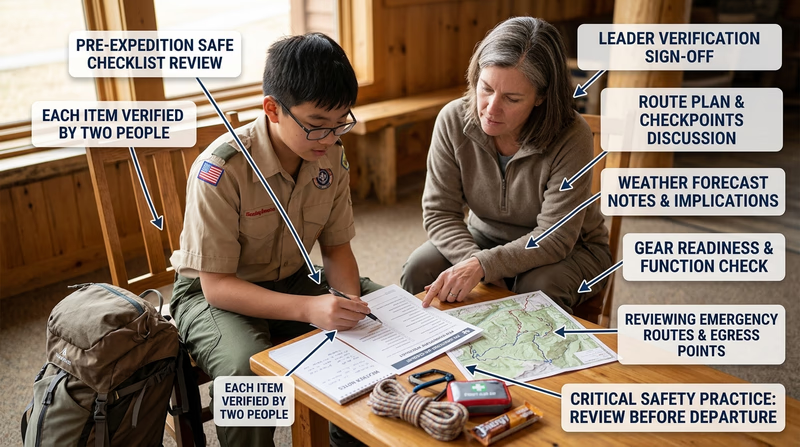
A strong pre-expedition check shows maturity. It proves you understand that good exploration depends on preparation, not luck.
The next requirement is the one you have been building toward: actually going on the expedition.