Req 8 — Carry Out the Expedition
This is where the badge becomes real. A plan on paper matters, but now you have to carry it out, make decisions in real conditions, practice outdoor ethics, and come home with useful records.
Requirement 8a
Your expedition does not have to be extreme to count. What matters is that it takes you to a place you have not previously explored and that you approach it with an explorer’s mindset. That means you have an objective, use a plan, gather observations, and work under proper supervision.
A nearby wetland, a new cave system, a research forest, a different shoreline, an observatory program, or a part of your community you have never carefully studied could all qualify if your counselor approves the plan.
What to do during the expedition
- follow the route or schedule unless changing it is safer
- keep notes as things happen, not only from memory later
- take photos, sketches, or measurements that support your objective
- pay attention to problems, surprises, and changes in conditions
Requirement 8b
Exploration should increase knowledge without carelessly damaging the place being explored. Outdoor ethics matter because discovery is not an excuse to leave a mess, disturb wildlife, damage habitat, or make the experience worse for other people.
Outdoor Code
The Outdoor Code reminds Scouts to be clean, careful, and conservation-minded. It shapes attitude as much as action.
Leave No Trace
Leave No Trace helps you reduce impact through route choice, waste management, respect for wildlife, and camp or travel habits.
Tread Lightly!
Tread Lightly! is especially helpful for travel and recreation involving roads, trails, and motorized access because it emphasizes protecting access, respecting property, and minimizing damage.
Apply ethics specifically
Do not tell your counselor only that you “followed Leave No Trace.” Explain what you actually did. Maybe you stayed on durable surfaces, packed out trash, avoided disturbing nests, kept noise down, or changed your route to protect a fragile area.
Leave No Trace Basics (video) A quick introduction to the habits that help explorers reduce their impact on the places they study and enjoy. Link: Leave No Trace Basics (video) — https://vimeo.com/1115216743/63b20c0b33?share=copy🎬 Video: Leave No Trace Outdoor Ethics (video) — https://youtu.be/jXO1uY0MvmQ?si=_UhIOYBkw69c87ug
Requirement 8c
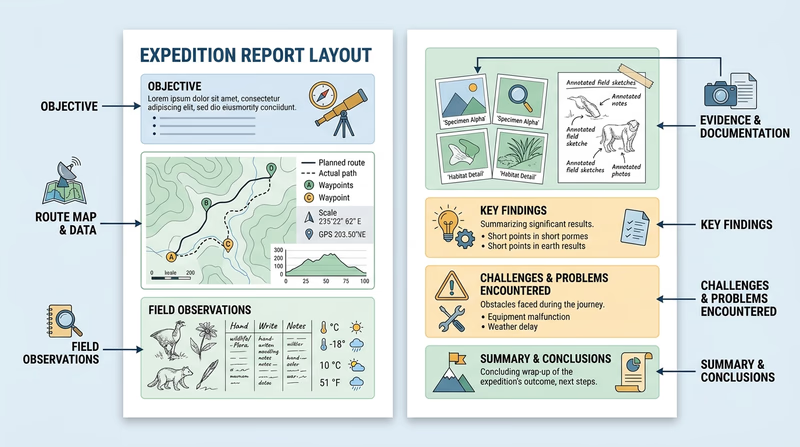
The report is where your expedition becomes a finished exploration project. A good report is honest, specific, and organized.
A Simple Report Structure
1. Objective
State what you set out to do.
2. Location and conditions
Say where you went, who supervised, and what conditions were like.
3. Findings and observations
Summarize what you saw, measured, or learned.
4. Problems or adverse events
This section matters. If weather changed, equipment failed, or the route had to change, say so.
5. Conclusion
Did you reach the objective fully, partly, or not yet? All three answers can be honest and acceptable if you explain them clearly.
Post-Expedition Report Must Include
Make sure your report covers every required element
- Statement of objectives
- Findings and observations
- Photos, graphs, or figures
- Any discoveries
- Problems or adverse events
- A conclusion about the objective
By the time you finish this requirement, you will have done something many people only talk about: planned, completed, and documented a real exploration activity.