 Getting Started
Introduction & Overview
Your family is the first team you ever joined. Before you had a patrol, a troop, or a school club, you had the people at home — the ones who taught you to tie your shoes, made sure you ate breakfast, and cheered you on when you tried something new. The Family Life merit badge helps you understand why that team matters, how to make it stronger, and how to step up as a contributing member of your household.
This is one of the merit badges required for Eagle Scout, and for good reason. The skills you build here — communication, responsibility, leadership, and empathy — are the foundation for everything else you will do in life.
Then and Now
Then — The Family as a Survival Unit
For thousands of years, families were the basic unit of survival. Everyone had a role. Children helped tend animals, harvest crops, and care for younger siblings as soon as they were old enough to walk. Grandparents passed down knowledge about medicine, weather, and storytelling. A family that worked well together ate well, stayed safe, and thrived.
- Structure: Large, multigenerational households were common. Everyone lived and worked under one roof — or at least within walking distance.
- Roles: Clearly defined by age and tradition. Children were expected to contribute meaningful labor from a young age.
- Communication: Face-to-face. There was no other option. Families talked during meals, around fires, and while working side by side.
Now — The Modern Family
Today, families come in many shapes and sizes. Some have two parents, some have one. Some include stepparents, foster parents, grandparents raising grandchildren, or guardians. Some families are spread across cities or even countries, staying connected through video calls and group chats.
- Structure: Nuclear, extended, blended, single-parent, multigenerational, foster, adoptive — all are families.
- Roles: More flexible. Everyone is encouraged to contribute, and roles are often shared rather than assigned by tradition.
- Communication: Happens in person, by text, on video calls, and through shared calendars. The tools have changed, but the need to talk and listen has not.
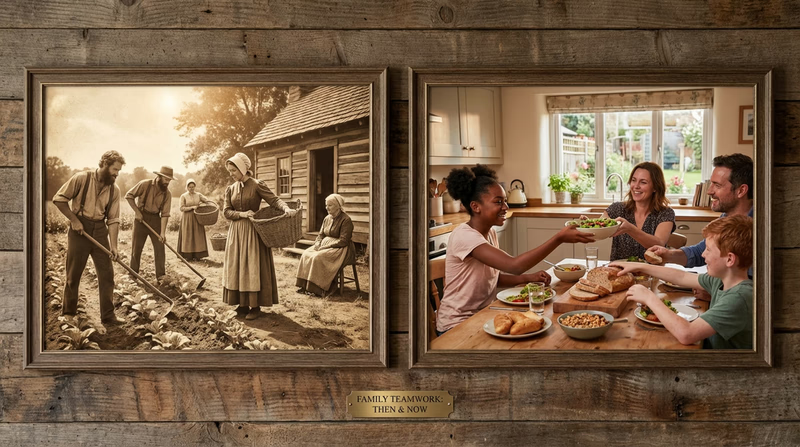
Get Ready! Whether your family is big or small, traditional or nontraditional, this badge will help you appreciate the people you live with and learn how to be the kind of family member everyone can count on.
Kinds of Families
Families are as unique as the people in them. Understanding the many forms a family can take helps you appreciate your own family and respect the families of others.
Nuclear Families
A nuclear family includes one or two parents and their children living together. This is the family structure many people think of first, but it is just one of many.
Extended Families
Extended families include grandparents, aunts, uncles, and cousins who play a regular role in daily life. In many cultures around the world, extended family members live together or nearby and share responsibilities like cooking, childcare, and decision-making.
Blended Families
When parents remarry or form new partnerships, they may bring children from previous relationships together into a blended family. Blended families involve building new relationships while honoring existing ones — a real exercise in patience and communication.
Single-Parent Families
In a single-parent family, one parent takes on the responsibilities of raising children. Single parents often rely on extended family, friends, and community support. Scouts in single-parent families may take on more household responsibilities, which builds independence and maturity.
Multigenerational Families
Multigenerational families have three or more generations living under one roof — children, parents, and grandparents (and sometimes great-grandparents). This arrangement is common in many cultures and offers built-in wisdom, childcare, and companionship.
Foster & Adoptive Families
Foster families provide temporary care for children who need a safe place to live. Adoptive families make a permanent commitment to a child. Both types of families are built on love and choice, and they remind us that family is about more than biology.
Military Families
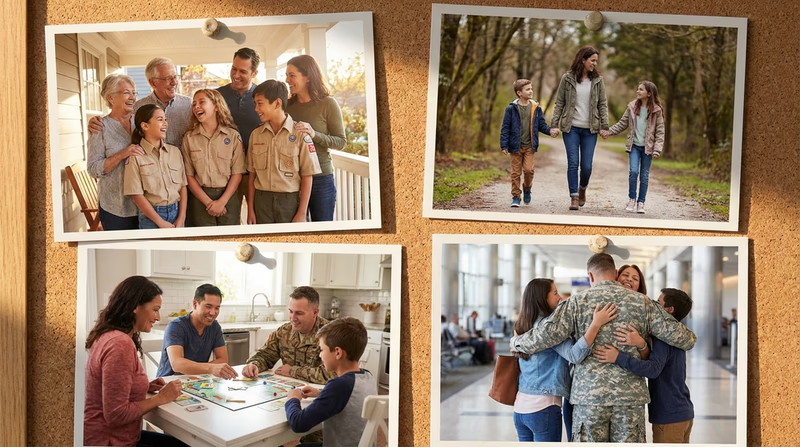
Military families face unique challenges: frequent moves, deployments, and long separations. These families develop remarkable resilience, adaptability, and a strong sense of service. If you are part of a military family, you already know a lot about flexibility and teamwork.
Now let’s start exploring the requirements for the Family Life merit badge!