
Family Life Merit Badge — Complete Digital Resource Guide
https://merit-badge.university/merit-badges/family-life/guide/
Introduction & Overview
Your family is the first team you ever joined. Before you had a patrol, a troop, or a school club, you had the people at home — the ones who taught you to tie your shoes, made sure you ate breakfast, and cheered you on when you tried something new. The Family Life merit badge helps you understand why that team matters, how to make it stronger, and how to step up as a contributing member of your household.
This is one of the merit badges required for Eagle Scout, and for good reason. The skills you build here — communication, responsibility, leadership, and empathy — are the foundation for everything else you will do in life.
Then and Now
Then — The Family as a Survival Unit
For thousands of years, families were the basic unit of survival. Everyone had a role. Children helped tend animals, harvest crops, and care for younger siblings as soon as they were old enough to walk. Grandparents passed down knowledge about medicine, weather, and storytelling. A family that worked well together ate well, stayed safe, and thrived.
- Structure: Large, multigenerational households were common. Everyone lived and worked under one roof — or at least within walking distance.
- Roles: Clearly defined by age and tradition. Children were expected to contribute meaningful labor from a young age.
- Communication: Face-to-face. There was no other option. Families talked during meals, around fires, and while working side by side.
Now — The Modern Family
Today, families come in many shapes and sizes. Some have two parents, some have one. Some include stepparents, foster parents, grandparents raising grandchildren, or guardians. Some families are spread across cities or even countries, staying connected through video calls and group chats.
- Structure: Nuclear, extended, blended, single-parent, multigenerational, foster, adoptive — all are families.
- Roles: More flexible. Everyone is encouraged to contribute, and roles are often shared rather than assigned by tradition.
- Communication: Happens in person, by text, on video calls, and through shared calendars. The tools have changed, but the need to talk and listen has not.
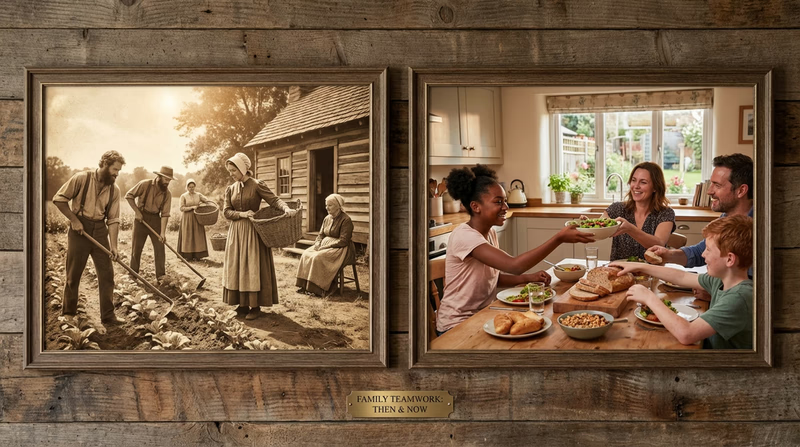
Get Ready! Whether your family is big or small, traditional or nontraditional, this badge will help you appreciate the people you live with and learn how to be the kind of family member everyone can count on.
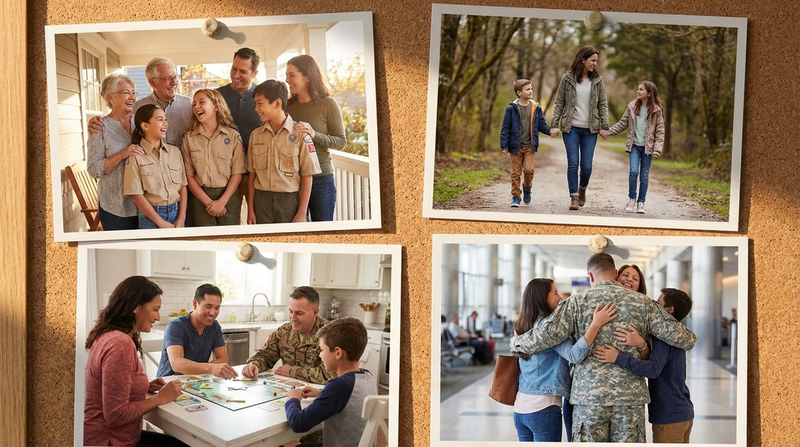
Kinds of Families
Families are as unique as the people in them. Understanding the many forms a family can take helps you appreciate your own family and respect the families of others.
Nuclear Families
A nuclear family includes one or two parents and their children living together. This is the family structure many people think of first, but it is just one of many.
Extended Families
Extended families include grandparents, aunts, uncles, and cousins who play a regular role in daily life. In many cultures around the world, extended family members live together or nearby and share responsibilities like cooking, childcare, and decision-making.
Blended Families
When parents remarry or form new partnerships, they may bring children from previous relationships together into a blended family. Blended families involve building new relationships while honoring existing ones — a real exercise in patience and communication.
Single-Parent Families
In a single-parent family, one parent takes on the responsibilities of raising children. Single parents often rely on extended family, friends, and community support. Scouts in single-parent families may take on more household responsibilities, which builds independence and maturity.
Multigenerational Families
Multigenerational families have three or more generations living under one roof — children, parents, and grandparents (and sometimes great-grandparents). This arrangement is common in many cultures and offers built-in wisdom, childcare, and companionship.
Foster & Adoptive Families
Foster families provide temporary care for children who need a safe place to live. Adoptive families make a permanent commitment to a child. Both types of families are built on love and choice, and they remind us that family is about more than biology.
Military Families
Military families face unique challenges: frequent moves, deployments, and long separations. These families develop remarkable resilience, adaptability, and a strong sense of service. If you are part of a military family, you already know a lot about flexibility and teamwork.
Now let’s start exploring the requirements for the Family Life merit badge!
Req 1 — What Is a Family?
This requirement asks you to think deeply about something you experience every day: your family. You probably don’t spend a lot of time defining what “family” means — it’s just the people around you. But when you stop and really think about it, the idea of family is rich, complex, and incredibly important.
Defining “Family”
There is no single definition that captures every family. At its core, a family is a group of people connected by love, commitment, and shared responsibility. That connection might come through birth, marriage, adoption, or simply choosing to care for one another.
Here are some elements that most families share:
- Emotional bonds — Family members care about each other’s well-being. They celebrate successes and support each other through hard times.
- Shared living or close contact — Most families live together or stay in regular contact, sharing meals, routines, and daily life.
- Mutual responsibilities — Family members depend on each other. Parents provide food, shelter, and guidance. Children contribute by helping at home and being part of the team.
- A sense of belonging — Your family is where you first learn who you are. It gives you roots and a place where you are accepted.
Why Families Matter to Individuals
Your family shapes who you are in ways you might not even notice. Consider what families provide:
- Identity — Your values, traditions, language, and culture often start at home. Whether it’s a holiday tradition, a family recipe, or a phrase only your family uses, these things become part of who you are.
- Security — Knowing that someone will be there for you — no matter what — gives you the confidence to take risks, try new things, and recover from setbacks.
- Life skills — From cooking and cleaning to managing money and resolving conflicts, your family is where you practice the skills you’ll need as an adult.
- Emotional support — When things get tough at school, in Scouting, or with friends, your family is often the first place you turn. That support network is irreplaceable.

Why Families Matter to Society
Families don’t just matter to the people in them — they matter to everyone. Strong families build strong communities. Here’s how:
- Raising responsible citizens — Families teach values like honesty, respect, and hard work. These values shape how people treat their neighbors, coworkers, and communities.
- Economic stability — Families pool resources, share expenses, and support members through job changes and tough financial times. Stable families contribute to stable economies.
- Social connection — Families connect to schools, religious organizations, sports teams, and volunteer groups. These connections weave the fabric of a community together.
- Passing down knowledge — Traditions, skills, and wisdom are passed from generation to generation within families. This keeps cultures alive and helps each new generation learn from the ones before.
The Ripple Effect: How One Person Affects the Whole Family
Think of your family like a mobile hanging from the ceiling — the kind with different pieces balanced on strings. If you pull one piece, every other piece moves too. That’s how families work. Your actions, attitude, and choices send ripples through the entire group.
Positive ripples:
- When you do your chores without being asked, your parent or guardian has less stress and more time for the family.
- When you encourage a sibling who is struggling, you build trust and strengthen your relationship.
- When you share good news about school or Scouting, it lifts everyone’s mood.
Negative ripples:
- When you argue or speak disrespectfully, it creates tension that everyone in the house can feel.
- When you ignore your responsibilities, someone else has to pick up the slack — and that can lead to resentment.
- When you withdraw and stop communicating, your family may worry about you even if nothing is wrong.
Explore More Resources
Why Family Matters in Shaping Teens' Passions and Identity (podcast) A podcast exploring how family relationships shape who you become as a teenager and beyond. Link: Why Family Matters in Shaping Teens' Passions and Identity (podcast) — https://youtu.be/Ag5jWg4QBUQ?si=WJVd1UyHAZVP_mgJ Introduction to Family Life (video) An overview video introducing the core ideas behind the Family Life merit badge. Link: Introduction to Family Life (video) — https://vimeo.com/1114227663 Child Welfare Information Gateway — What Is a Family? Resources from the U.S. Department of Health & Human Services about family-centered practices and what makes families work. Link: Child Welfare Information Gateway — What Is a Family? — https://www.childwelfare.gov/topics/famcentered/
Req 2 — Your Role in the Family
This requirement might feel a little awkward at first. It’s not easy to talk about why you matter — especially to the people you see every day. But this is one of the most meaningful exercises in the entire merit badge. Understanding your value to your family builds confidence, strengthens your relationships, and helps you see yourself as a contributor, not just a passenger.
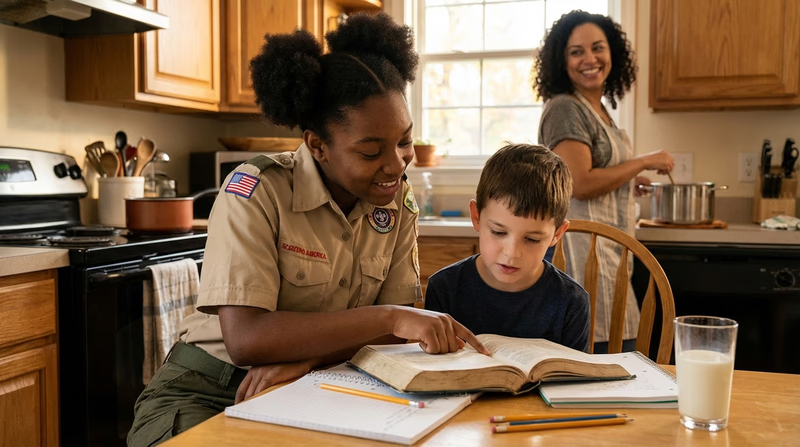
You Matter More Than You Think
You might not always feel like you make a big difference at home. Maybe you think your parents or guardians handle everything important, or that your siblings get more attention. But the truth is, every family member plays a role that nobody else can fill.
Here are some ways you might be important to your family — and you may not have even realized it:
- You bring energy and ideas. Your generation sees the world differently. You introduce your family to new music, new technology, and new perspectives. That keeps the whole family learning and growing.
- You provide companionship. For a single parent, a sibling, or a grandparent, your presence in the house matters. Simply being there — eating dinner together, watching a movie, or sitting in the same room — makes a home feel like a home.
- You help with real work. Whether it’s taking out the trash, watching a younger sibling, or helping with groceries, the tasks you do free up time and energy for other family members.
- You carry on traditions. When you participate in family traditions — holidays, recipes, game nights, annual trips — you help keep those traditions alive for the next generation.
- You give your family purpose. Parents and guardians are motivated by your success. When you do well in school, earn a merit badge, or show kindness to others, it gives them a deep sense of fulfillment.
How to Approach the Conversation
Talking about why you matter can feel strange, so here’s a framework to make it easier:
Before the conversation:
- Write down at least five reasons you think you’re important to your family. Be honest and specific. Think about everyday things, not just big accomplishments.
- Think about what your family members have told you. Have they ever thanked you for something? Told you they were proud of you? Those moments are clues.
- Consider what would change if you weren’t there. This isn’t meant to be sad — it’s a thought experiment. Would chores pile up? Would someone miss having a dinner companion? Would a sibling lose their closest friend?
During the conversation:
- Share your list with your parent or guardian first. Ask them if they agree, and invite them to add reasons you might not have thought of.
- Listen carefully to what they say. You might be surprised by what they value most about you.
- Take notes. You’ll want to share these insights with your counselor.
Common Roles You Might Play
As you think about your importance, consider which of these roles you fill in your family:
- The helper — You pitch in when things need to get done, often without being asked.
- The peacemaker — You calm things down when tensions rise between family members.
- The entertainer — You make people laugh, suggest fun activities, or lighten the mood.
- The tech expert — You help family members navigate devices, apps, and digital tools.
- The connector — You keep the family talking to each other and suggest group activities.
- The learner — Your schoolwork, Scouting achievements, and curiosity inspire your family to keep growing too.
You probably play more than one of these roles, and they might change depending on the day.
Explore More Resources
Families and Family Relationships (video) A video exploring the dynamics of family relationships and how each person contributes to the whole. Link: Families and Family Relationships (video) — https://www.youtube.com/watch?v=2SkuK8j54UE KidsHealth — Talking to Your Parents Practical tips for having meaningful conversations with your parents or guardians — even about tough topics. Link: KidsHealth — Talking to Your Parents — https://kidshealth.org/en/teens/talk-to-parents.html
Req 3 — Home Duties & Chores
This requirement is the longest one in the badge — not because it’s the hardest, but because it takes 90 days of consistent effort. That’s about three months of showing up, doing the work, and proving that you can be counted on. By the end, you’ll have built habits that serve you for the rest of your life.
Why Chores Matter
Chores aren’t punishment. They’re practice for adulthood. Every time you do a load of laundry, take out the trash, or wash the dishes, you’re learning responsibility, time management, and the satisfaction of a job well done.
Chores also help your family run smoothly. A household is like a troop — when everyone does their part, things work. When someone slacks off, others have to pick up the extra weight, and that builds resentment.
Choosing Your Chores
The requirement says “at least five.” Choose chores that are real, regular tasks — things your family genuinely needs done. Here are some categories to consider:
Kitchen duties:
- Washing dishes or loading/unloading the dishwasher
- Setting or clearing the table
- Helping prepare meals
- Wiping counters and cleaning the kitchen after meals
Cleaning and organizing:
- Vacuuming or sweeping floors
- Dusting furniture and surfaces
- Cleaning bathrooms
- Organizing shared spaces (living room, garage, mudroom)
Outdoor tasks:
- Mowing the lawn or raking leaves
- Taking out the trash and recycling
- Shoveling snow or clearing walkways
- Watering plants or maintaining the garden
Laundry and personal care:
- Doing your own laundry (washing, drying, folding, putting away)
- Helping with family laundry
- Making your bed daily
- Keeping your room clean
Family care:
- Caring for family pets (feeding, walking, cleaning)
- Helping younger siblings with homework or getting ready
- Running errands with a parent or guardian
- Checking on elderly family members
Tracking Your Chores for 90 Days
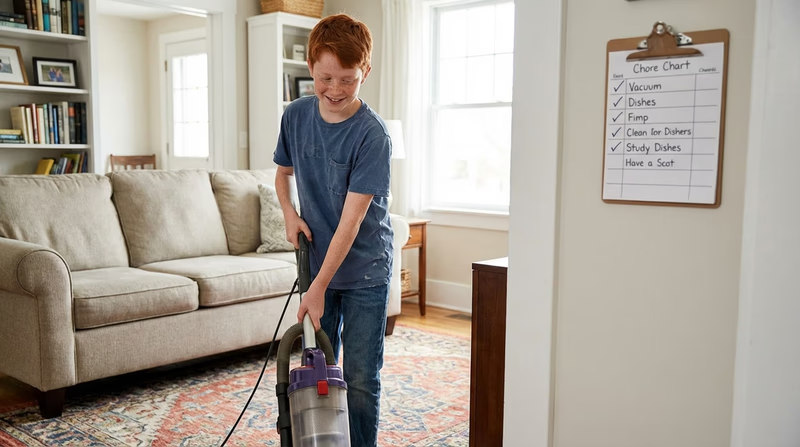
The requirement says to “keep a record.” This is important — your counselor will want to see documentation, not just a verbal report. Here are some tracking methods:
Paper tracker: Print out a chart with your chores listed down the side and dates across the top. Check off each chore as you do it. Simple and effective.
Digital tracker: Use a spreadsheet, a notes app, or a chore-tracking app on your phone. Some families use shared apps so everyone can see who did what.
Calendar method: Mark each chore on a physical or digital calendar. Color-code different chores for easy visual tracking.
Whichever method you choose, be honest. If you miss a day, don’t fake it — just note that you missed it and get back on track the next day. Your counselor will respect honesty more than a perfect record.
90-Day Chore Tracking Log Resource: 90-Day Chore Tracking Log — /merit-badges/family-life/guide/chore-tracking-log/Building the Habit
Ninety days is long enough to turn a chore into a habit. Here’s how to make it stick:
Habit-Building Strategies
Tips for staying consistent over 90 days- Set a routine: Do certain chores at the same time every day (dishes after dinner, bed made before school).
- Pair it with something you enjoy: Listen to music or a podcast while you clean.
- Start small: If a chore feels overwhelming, break it into smaller steps.
- Track your streak: Seeing a row of checkmarks on your tracker is motivating.
- Don’t aim for perfection: Missing one day doesn’t erase all your progress. Just pick it back up.
Discussing the Effect on Your Family
At the end of your 90 days, your counselor will ask you how your chores affected your family. Think about these questions:
- Did your parent or guardian notice a difference? Did they have more free time or less stress?
- Did the house run more smoothly? Were there fewer arguments about who does what?
- Did your attitude toward chores change over the 90 days?
- Did other family members start doing their chores more consistently because of your example?
- What did you learn about yourself — your discipline, your preferences, your limits?
Explore More Resources
10 Chores for Teens That Teach Them to Be Responsible Lifelong (video) A video exploring which chores are most valuable for building lifelong responsibility. Link: 10 Chores for Teens That Teach Them to Be Responsible Lifelong (video) — https://www.youtube.com/watch?v=1Hqchiy7qW4 Family Chores (video) An overview of how chores contribute to a healthy family dynamic. Link: Family Chores (video) — https://vimeo.com/1114227688 Create a Household Chore Checklist in Word (video) A tutorial for creating your own digital chore tracking checklist. Link: Create a Household Chore Checklist in Word (video) — https://www.youtube.com/watch?v=XmA6tCO_3MM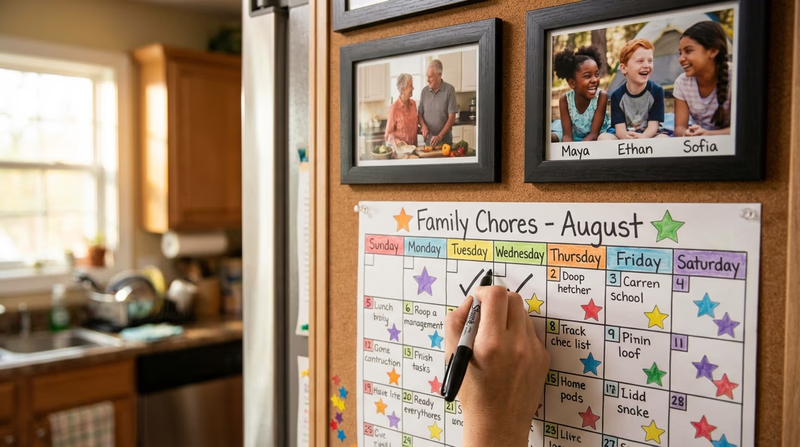
90-Day Chore Tracking Log
Back to Requirement 390-Day Chore Tracking Log
Family Life Merit Badge — Requirement 3
Scout Information
My Chores
List at least five regular home duties or chores you will track for 90 days.
Monthly Tracking — Month 1
Print multiple copies of this page. Check off each chore on the day you complete it.
| Day | Chore 1 | Chore 2 | Chore 3 | Chore 4 | Chore 5 | Notes |
|---|---|---|---|---|---|---|
| 1 | ||||||
| 2 | ||||||
| 3 | ||||||
| 4 | ||||||
| 5 | ||||||
| 6 | ||||||
| 7 | ||||||
| 8 | ||||||
| 9 | ||||||
| 10 | ||||||
| 11 | ||||||
| 12 | ||||||
| 13 | ||||||
| 14 | ||||||
| 15 | ||||||
| 16 | ||||||
| 17 | ||||||
| 18 | ||||||
| 19 | ||||||
| 20 | ||||||
| 21 | ||||||
| 22 | ||||||
| 23 | ||||||
| 24 | ||||||
| 25 | ||||||
| 26 | ||||||
| 27 | ||||||
| 28 | ||||||
| 29 | ||||||
| 30 | ||||||
| 31 |
End-of-Month Reflection
Parent / Guardian Verification
Req 4 — Individual Home Project
This is your chance to step up and take ownership of something meaningful. Unlike daily chores, this is a one-time project that you plan, execute, and complete on your own. It should make a real, visible difference in your home or your family’s life.
What Makes a Good Home Project?
A good project has three qualities:
- It benefits your family. The result should improve your home, save time, reduce stress, or solve a real problem that your family faces.
- It requires planning. This isn’t a 15-minute task. You should need to think through materials, steps, and a timeline.
- You do it yourself. Your family can advise and support you, but the work is yours. This is about initiative and follow-through.
Project Ideas
Every home is different, so your project should address a genuine need in your household. Here are some categories to spark ideas:
Organization projects:
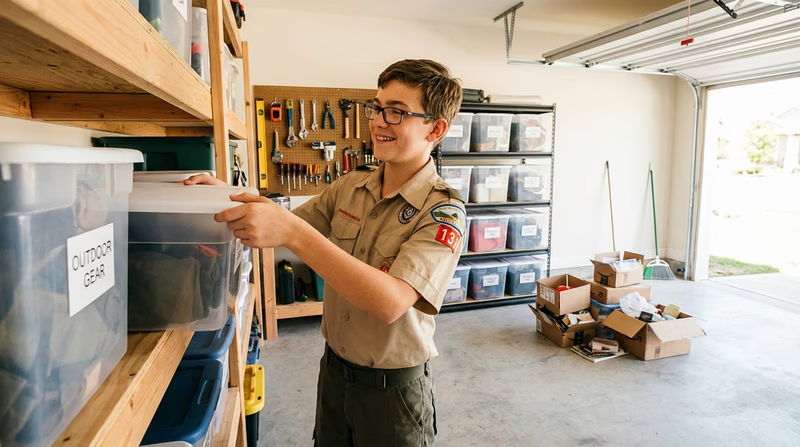
- Organize the garage, basement, or storage area so your family can find things easily
- Build or install shelving for a cluttered room
- Create a family command center (calendar, mail sorter, key hooks) near the front door
- Sort through and donate outgrown clothes and unused items
Home improvement projects:
- Paint a room that needs refreshing
- Build a raised garden bed for growing vegetables or herbs
- Install weather stripping to reduce drafts and save on heating costs
- Create a composting system for the kitchen and yard
Functional projects:
- Set up a family recycling station with labeled bins
- Create a household emergency kit with first-aid supplies, flashlights, and water
- Organize the family’s digital photos into albums
- Build a bookshelf, toy chest, or storage bench
Yard and outdoor projects:
- Clear and mulch garden beds
- Build or repair a fence section
- Create a backyard fire pit area (with proper safety measures)
- Plant shade trees or a pollinator garden
Planning Your Project
Once you’ve chosen a project, create a simple plan before you begin. You’ll need approval from both your parent or guardian and your counselor, so having a clear plan shows you’ve thought it through.
Project Planning Steps
Map out your project before you start- Define the goal: What will be different when you’re done? Be specific.
- List materials needed: What supplies, tools, or purchases are required?
- Estimate the time: How long will the project take? One afternoon? A full weekend?
- Identify help needed: Will you need an adult to supervise power tools or help lift heavy items?
- Set a deadline: When will you complete the project?
- Get approval: Present your plan to your parent or guardian and your counselor before starting.
Carrying Out the Project
Here are some practical tips for executing your project well:
- Take “before” photos. You’ll want them for your discussion with your counselor, and they’ll show just how much you accomplished.
- Work safely. Use proper tools for the job. Wear safety glasses, gloves, or other protection as needed. Ask for help with anything involving heights, electricity, or heavy materials.
- Stay organized. Clean up as you go. A messy work area slows you down and can be dangerous.
- Adapt if needed. Projects rarely go exactly as planned. If you hit a snag, problem-solve. That’s part of the learning.
- Take “after” photos. The comparison will make you proud.
Discussing the Results
After you finish, you’ll discuss the project with your family first, then with your counselor. Be ready to talk about:
- The objective: What were you trying to accomplish? Why did you choose this project?
- The process: What steps did you take? What went well? What was harder than expected?
- The results: Did you achieve your goal? How has the project benefited your family?
- What you learned: What skills did you develop? What would you do differently next time?
Explore More Resources
How to Start a Project (video) A helpful guide for planning and starting any kind of project from scratch. Link: How to Start a Project (video) — https://www.youtube.com/watch?v=h1ooM4vaOaU Handy Teen Finishes House (video) An inspiring video about a teen who tackled a major home improvement project. Link: Handy Teen Finishes House (video) — https://www.youtube.com/watch?v=q9mhk1wPefA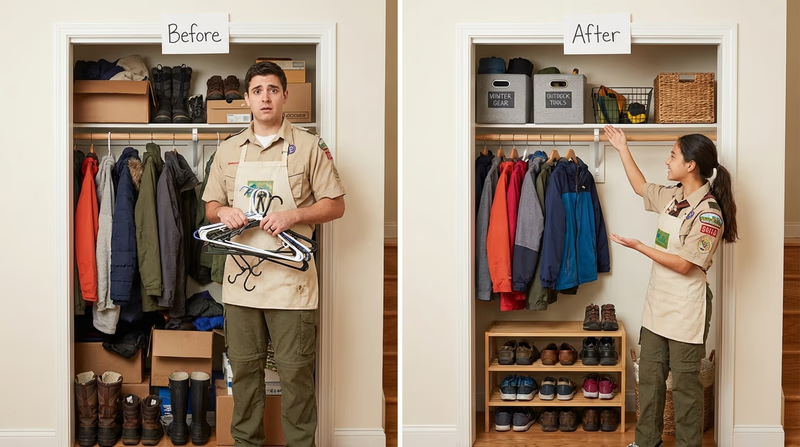
Req 5 — Family Project
Requirement 4 was about what you could do for your family. This requirement flips the script — it’s about what your family can do together. You’re the planner and organizer, but everyone participates. Think of yourself as the project leader for a team that happens to share your last name.
What Makes This Different from Requirement 4?
The key difference is participation. In Requirement 4, you did the work yourself. Here, every family member should have a meaningful role. The project should be something that brings your family together and requires teamwork.
Family Project Ideas
Choose something that fits your family’s interests, abilities, and schedule. The project should be large enough that it genuinely requires multiple people, but manageable enough that it can be completed.
Service projects:
- Volunteer together at a food bank, animal shelter, or community garden
- Organize a neighborhood cleanup day
- Prepare and deliver meals to a homebound neighbor or family in need
- Collect donations for a local charity drive
Home and yard projects:
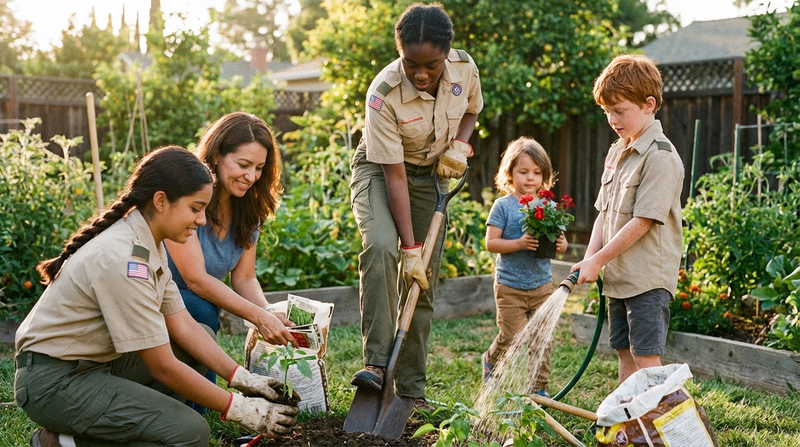
- Plan and plant a family vegetable or flower garden
- Cook a special meal together for extended family or neighbors
- Deep-clean and reorganize a shared space (kitchen, living room, yard)
- Build something together — a birdhouse, a bookshelf, a picnic table
Experience projects:
- Plan and carry out a family day trip to a new place
- Create a family time capsule to open in five or ten years
- Put together a family photo album or scrapbook
- Research your family history and create a family tree
Community projects:
- Participate in a charity walk or run as a family
- Host a block party or neighborhood gathering
- Assemble care packages for deployed military members
- Help set up or participate in a community event
Planning the Project
As the organizer, you need to plan the project so everyone knows what to do. Here’s a framework:
Family Project Planning Checklist
Steps to get your family organized- Choose the project: Get family input and pick something everyone can participate in.
- Define the goal: What does success look like? Be specific.
- Assign roles: Give each family member a task that matches their ability and interest.
- Gather materials: Make a list of everything you need and collect it in advance.
- Set a date and timeline: When will you do the project? How long will it take?
- Execute the plan: Work together, adjust as needed, and have fun.
- Discuss the results: Talk as a family about what went well and what you’d do differently.
Getting Everyone Involved
The trickiest part of a family project is making sure everyone participates meaningfully — especially younger siblings or family members who might not be enthusiastic at first.
- Match tasks to abilities. A five-year-old can’t use a saw, but they can hand you nails or water the plants. A teenager can lead a subproject. A grandparent might be the best person to share stories for a family history project.
- Make it fun. Play music, take breaks for snacks, or turn part of the project into a friendly competition.
- Celebrate the teamwork. After the project, acknowledge what each person contributed. This reinforces that every role mattered.
Preparing for the Counselor Discussion
Your counselor will ask about three specific things. Be ready:
The objective or goal (5a):
- What were you trying to accomplish?
- Why did you choose this project?
- How did you define success?
How individual members participated (5b):
- What role did each family member play?
- How did you assign tasks?
- Did anyone take on a role you didn’t expect?
- How did the team work together?
The results (5c):
- Did you achieve your goal?
- What was the biggest challenge?
- What was the most rewarding part?
- Would your family do a project like this again?
Explore More Resources
Time Management (video) A video about managing your time effectively — useful for planning family projects. Link: Time Management (video) — https://vimeo.com/1114227585 VolunteerMatch — Find Volunteer Opportunities Search for volunteer opportunities in your area that your whole family can participate in. Link: VolunteerMatch — Find Volunteer Opportunities — https://www.volunteermatch.org/
Req 6a — Planning Family Meetings
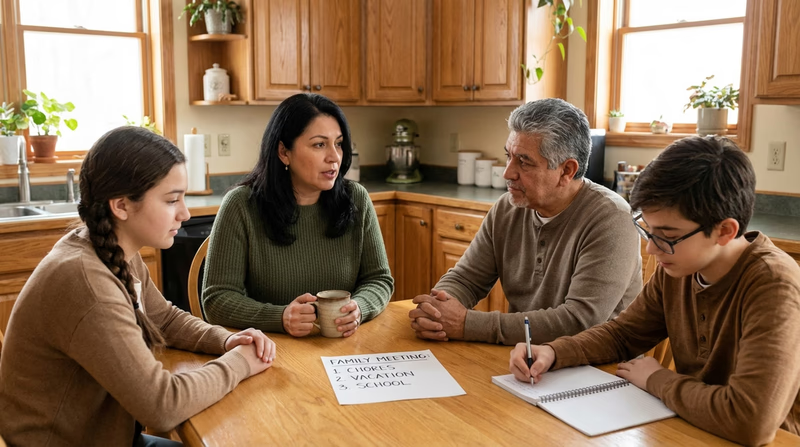
Family meetings might sound formal — like something from a boardroom, not a living room. But a family meeting is simply a time when your family sits down together, on purpose, to talk about things that matter. No screens, no distractions — just real conversation.
Many families never do this. They talk at dinner, in the car, or in passing, but they rarely sit down with an actual plan for what to discuss. This requirement teaches you how to make that happen, and the results can be powerful.
Why Family Meetings Work
Family meetings give every member a voice. In the normal rush of daily life, it’s easy for important topics to get buried under homework, work schedules, and screen time. A meeting creates space for:
- Solving problems before they become arguments
- Making decisions that affect everyone (vacations, schedules, rules)
- Sharing good news and celebrating achievements
- Discussing tough topics in a safe, structured environment
- Building communication skills that benefit every relationship in your life
How to Plan a Family Meeting
Planning is the difference between a productive family meeting and an awkward silence around the table. Here’s how to set it up for success:
1. Choose the right time. Pick a time when everyone can be present and nobody is rushed. After dinner on a weeknight or a weekend morning can work well. Avoid scheduling it when someone is tired, hungry, or stressed.
2. Set expectations. Let your family know in advance that you’d like to hold a meeting. Explain that it’s for your merit badge, but also that it’s a chance for everyone to share what’s on their mind. This is not an ambush — it’s an invitation.
3. Prepare an agenda. Write down the topics you want to cover. An agenda keeps the meeting focused and ensures you don’t forget anything important. Share it with your parent or guardian before the meeting so they can add items or suggest changes.
4. Keep it short. Aim for 20–40 minutes. Anything longer and attention will wander, especially for younger family members. You can always schedule another meeting for additional topics.
5. Set ground rules. Before you start, agree on a few basic rules:
Meeting Ground Rules
Keep the conversation respectful and productive- One person talks at a time — no interrupting.
- Everyone gets a chance to speak. No one is forced to, but everyone is invited.
- Listen to understand, not just to respond.
- No phones or screens during the meeting.
- Disagreements are okay, but disrespect is not.
- What is said in the meeting stays in the family.
Running the Meeting
You don’t have to be the “boss” of the meeting — think of yourself as the facilitator. Your job is to keep things moving and make sure everyone is heard.
- Open with something positive. Start by sharing a highlight from the week or thanking a family member for something they did. This sets a warm, collaborative tone.
- Go through the agenda. Cover each topic one at a time. Ask questions to get the conversation going: “What does everyone think about…?” or “How do you feel about…?”
- Take notes. Jot down key points, decisions, or action items. This shows your family (and your counselor) that the meeting was productive.
- Close with a plan. End by summarizing what was discussed and any decisions that were made. If a topic needs more time, schedule a follow-up.
What to Discuss with Your Counselor
Your counselor will want to hear about your plan for the family meeting — not just what you discussed, but how you organized it. Be ready to talk about:
- How you chose the time and place
- How you prepared the agenda
- What ground rules you set
- How you handled the meeting flow
- What you would do differently next time
Explore More Resources
Family Meeting (video) A video guide to planning and conducting effective family meetings. Link: Family Meeting (video) — https://vimeo.com/1114227645 How to Hold a Family Meeting (video) Practical tips for families who are new to holding structured meetings. Link: How to Hold a Family Meeting (video) — https://youtu.be/PsIHViDoi80?si=S_ul6VtJsaydr5si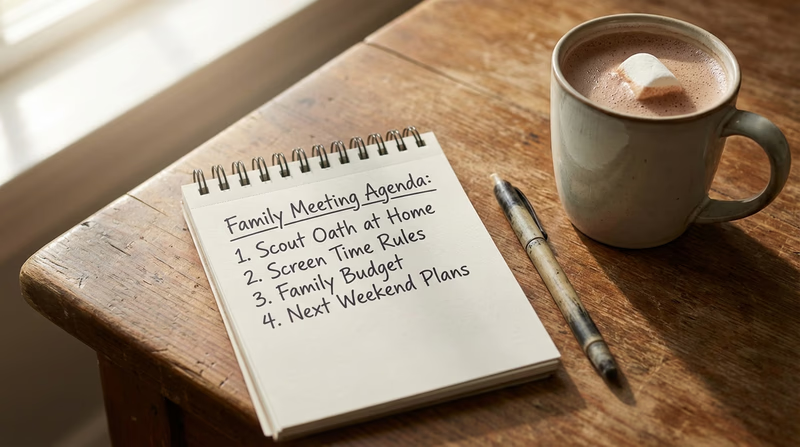
Family Meeting Agenda Template
Back to Requirement 6aFamily Meeting Agenda
Family Life Merit Badge — Requirement 6
Meeting Details
Ground Rules
Agenda Topics
Check the topics you plan to cover in this meeting. You may spread topics across multiple meetings.
Opening — Start with Something Positive
Topic 1 Discussion Notes
Topic 2 Discussion Notes
Topic 3 Discussion Notes
Closing — Summary & Action Items
Parent / Guardian Review
Req 6b — Meeting Agenda Topics
This requirement asks you to cover seven specific topics in your family meetings. You don’t have to tackle all seven in a single meeting — in fact, spreading them across two or three meetings is often better. Some of these topics are personal and sensitive. Take your time with them.
Topic 1: Scout Oath and Scout Law in Family Life
You already live by the Scout Oath and Scout Law at troop meetings and campouts. But how do those same principles show up at home?
Think about it:
- Trustworthy — When your family can trust you to do what you say, everything runs more smoothly. Trust is the foundation of any strong family.
- Loyal — Loyalty to your family means supporting each other, even when it’s not convenient or easy.
- Helpful — Helping around the house without being asked is one of the simplest ways to live the Scout Law at home.
- Friendly — Being pleasant to live with matters. A kind word or a smile can change the tone of the whole house.
- Kind — Small acts of kindness — making a sibling’s lunch, letting someone else pick the movie — build a culture of generosity.
- Obedient — Following house rules and respecting your parent’s or guardian’s authority, even when you disagree, shows maturity.
- Thrifty — Turning off lights, not wasting food, and taking care of your belongings save your family money and resources.
- Brave — It takes courage to admit when you’re wrong, to apologize, or to have a difficult conversation with a family member.
- Clean — Keeping your space tidy and taking care of shared areas shows respect for your family and your home.
- Reverent — Respecting your family’s beliefs, traditions, and values — even as you form your own — keeps the family connected.
Topic 2: Dangers and Addictions Facing Youth
This is one of the most important conversations you can have with your family. The dangers facing young people today are real, but they are also manageable when you have good information and a support system.
Mental health challenges are more recognized today than ever before. Anxiety, depression, and stress affect millions of teenagers. These are not signs of weakness — they are conditions that can be understood and treated. If you or someone you know is struggling, talking to a trusted adult is the most important step you can take.
Substance use — including tobacco, vaping, alcohol, and drugs — is a risk that many young people face. Nicotine in e-cigarettes is highly addictive and can harm developing brains. Alcohol and drugs impair judgment and can lead to dangerous situations. The best protection is understanding the risks and having the confidence to make your own choices.
Social media can be a great tool for staying connected, but it also has a dark side. Cyberbullying, comparison culture, and screen addiction are real issues. Setting boundaries around screen time and being intentional about what you consume online makes a big difference.
Financial pitfalls — spending beyond your means, accumulating debt, or falling for online scams — can start in the teen years. Learning to manage money now protects you later.
Topic 3: Growing Up and Changing
Your body and brain are changing — and those changes affect how you think, feel, and make decisions. This is a conversation to have privately with your parent or guardian, not necessarily in the full family meeting.
Here’s what’s helpful to know going in:
- Hormonal changes affect your mood, energy, and emotions. Feeling irritable, emotional, or restless is normal. Understanding that these feelings are partly biological helps you manage them.
- Brain development is ongoing throughout your teenage years. The part of your brain responsible for planning, impulse control, and understanding consequences (the prefrontal cortex) isn’t fully developed until your mid-20s. This is why teenagers sometimes make impulsive decisions — it’s literally how the brain works at this stage.
- Physical changes affect how you see yourself and how others see you. Body image, self-confidence, and social dynamics all shift during adolescence.
The goal of this conversation isn’t to be embarrassed — it’s to understand yourself better so you can make good choices even when your body and brain are sending confusing signals.
Topic 4: Personal and Family Finances
Money is one of the most common sources of stress in families, but it doesn’t have to be. Understanding how money works — earning, saving, spending, and sharing — is a life skill that serves you forever.
Budgeting basics: A budget is simply a plan for where your money goes. One popular approach is the 50-30-20 rule:
- 50% goes to needs (food, housing, transportation)
- 30% goes to wants (entertainment, hobbies, dining out)
- 20% goes to savings and paying off debt
Even if you don’t have a regular income yet, you can practice this with allowance, gift money, or earnings from odd jobs.
Family finances: Every family has a budget, even if it’s informal. Understanding that your family’s income has limits helps you make thoughtful requests and appreciate what you have. During your family meeting, you might discuss:
- How does our family decide what to spend money on?
- What are our biggest expenses?
- How can we save money together?
- What financial goals does our family have?
Topic 5: Family Crisis Situations
Every family faces difficult times — job loss, illness, divorce, the death of a loved one, natural disasters, or other unexpected events. A crisis doesn’t mean your family is broken. It means your family is being tested, and how you respond makes all the difference.
Before a crisis happens, it helps to know:
- Who can you call? Make a list of trusted adults outside your immediate family — grandparents, aunts, uncles, family friends, religious leaders, school counselors, or Scout leaders.
- What resources are available? Community organizations, hotlines, and support groups exist for almost every type of crisis.
- How does your family communicate during emergencies? Do you have a family communication plan?
During a crisis:
- Stay calm and focus on what you can control.
- Be honest about your feelings. It’s okay to be scared, sad, or confused.
- Help where you can — sometimes the most valuable thing you do is take care of everyday tasks so your parent or guardian can focus on the crisis.
- Ask for help when you need it. Reaching out is a sign of strength, not weakness.
Family Support Network
People and resources to know before you need them- Trusted relative (name and phone number)
- Family friend or neighbor
- School counselor
- Scout leader or merit badge counselor
- Religious leader (if applicable)
- Local crisis hotline number
- Family doctor or pediatrician
Topic 6: Technology’s Effect on Your Family
Technology connects us to the world, but it can also disconnect us from the people sitting right next to us. This topic asks you to look honestly at how devices, apps, and screens affect your family’s relationships.
The positives:
- Video calls let you stay connected with distant family members
- Shared calendars keep everyone organized
- Group chats make quick communication easy
- Educational tools and entertainment bring families together
The challenges:
- Screen time can replace face-to-face conversation
- Social media can create comparison and conflict
- Constant notifications interrupt family time
- Different comfort levels with technology can cause tension between generations
During your family meeting, have an honest conversation about your family’s relationship with technology. Some discussion starters:
- How much screen time does each of us have on a typical day?
- Are there times when devices should be put away (meals, bedtime, family outings)?
- Has technology ever caused a misunderstanding or conflict in our family?
- What’s one rule we could all agree on to improve our relationship with technology?
Topic 7: Etiquette and Manners
Etiquette might sound old-fashioned, but it’s really just about showing respect for the people around you. Good manners make your home more pleasant, your relationships stronger, and your life outside the home more successful.
At home:
- Say “please,” “thank you,” and “excuse me” — even with your own family
- Clean up after yourself in shared spaces
- Knock before entering someone’s room
- Listen when someone is talking to you
- Offer to help without being asked
At the table:
- Wait for everyone to be served before eating
- Keep your phone off the table
- Use napkins, not your sleeve
- Ask to be excused when you’re finished
In the community:
- Hold doors for people behind you
- Make eye contact and greet people politely
- Write thank-you notes for gifts and kindnesses
- Be on time — it shows respect for other people’s time
Online:
- Think before you post — would you say it to someone’s face?
- Respond to messages in a reasonable time
- Don’t share other people’s personal information
- Be kind in comments and group chats
Explore More Resources
Scout Oath and Law The official Scouting America page with the full Scout Oath and Scout Law. Link: Scout Oath and Law — https://www.scouting.org/about/faq/question10/ What Causes Addiction, and Why Is It So Hard to Treat? (video) A clear, science-based explanation of how addiction works in the brain. Link: What Causes Addiction, and Why Is It So Hard to Treat? (video) — https://youtu.be/hBC7i-vHWsU?si=wpVHlg5gMVe_RLhe The 50-30-20 Rule (video) A simple explanation of budgeting basics that works for teens and adults alike. Link: The 50-30-20 Rule (video) — https://youtu.be/OZQQMYfaBT4?si=1f9kNb_OVcyxd4NB Digital Safety and Online Scouting Activities Scouting America's guide to staying safe online. Link: Digital Safety and Online Scouting Activities — https://www.scouting.org/health-and-safety/safety-moments/digital-safety-and-online-scouting-activities/ Bullying Awareness Resources from Scouting America for recognizing, preventing, and responding to bullying. Link: Bullying Awareness — https://www.scouting.org/training/youth/bullying/ Evolving Technology: Will Family Life Ever Be the Same Again? (video) A thought-provoking look at how technology is changing family dynamics. Link: Evolving Technology: Will Family Life Ever Be the Same Again? (video) — https://www.youtube.com/watch?v=sFc_q9-KD8c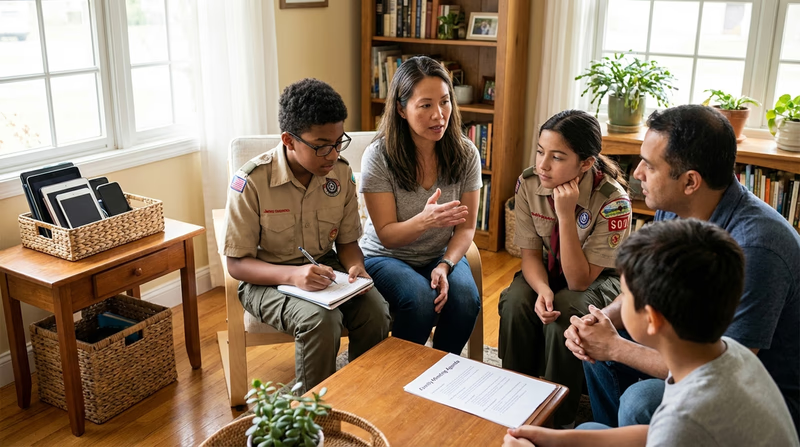
Req 7 — Understanding Parenthood
This might be the most thought-provoking requirement in the entire badge. You’ve spent your whole life being parented — now you’re being asked to think about what that actually involves. What makes a parent or guardian effective? What are their responsibilities? And what can you learn from observing the adults who raised you?
The Job Nobody Trains For
Here’s something most adults will tell you: parenting is the most important job they’ve ever had, and the one they had the least training for. There is no class, no certification, and no instruction manual. Parents and guardians learn on the job, make mistakes, adjust, and try again — just like you do in Scouting.
Understanding this doesn’t mean excusing poor parenting. It means recognizing that parents and guardians are human beings doing their best with the tools and knowledge they have.
Qualities of an Effective Parent or Guardian
Effective parenting isn’t about being perfect. It’s about being present, consistent, and caring. Here are qualities that researchers and family experts agree make a real difference:
Love and emotional support. An effective parent or guardian makes their child feel loved, valued, and safe. This doesn’t mean agreeing with everything you do — it means caring about you no matter what.
Consistency. Rules, expectations, and consequences should be fair and predictable. When you know what to expect, you feel more secure and can make better decisions.
Communication. Effective parents listen — really listen — when their children talk. They ask questions, validate feelings, and share their own thoughts honestly. Communication goes both ways.
Setting boundaries. Rules aren’t about control. They’re about safety, structure, and teaching you how to navigate the world. An effective parent sets boundaries and explains why they exist.
Modeling behavior. Children learn more from watching than from being told. A parent who demonstrates honesty, kindness, hard work, and respect is teaching those values every day — without saying a word.
Encouraging independence. As you grow, an effective parent gradually gives you more freedom and responsibility. They let you make mistakes, learn from them, and develop the confidence to handle life on your own.
Adaptability. What works for a five-year-old doesn’t work for a fifteen-year-old. Effective parents adjust their approach as their children grow and change. This is harder than it sounds.

Roles and Responsibilities of a Parent or Guardian
Being a parent or guardian involves many roles. Think of it as wearing multiple hats throughout the day:
- Provider — Ensuring the family has food, shelter, clothing, and healthcare. This takes significant time, energy, and sacrifice.
- Protector — Keeping children safe from physical harm, emotional damage, and dangerous situations.
- Teacher — Passing on values, life skills, and knowledge. Much of this teaching happens informally — through daily conversations and shared experiences.
- Disciplinarian — Setting and enforcing rules. This is one of the hardest parts of parenting because it often means being the “bad guy” in the short term for the child’s long-term benefit.
- Advocate — Standing up for their children at school, in the community, and in the healthcare system.
- Emotional anchor — Being the person a child can always count on, even when everything else feels uncertain.
- Role model — Demonstrating the kind of person they hope their child will become.
What You Can Learn from This
This requirement isn’t about judging your parents or guardians. It’s about understanding the complexity of their role so you can:
- Appreciate what they do. Once you see all the responsibilities involved, you may find a new respect for the effort they put in every day.
- Communicate better. Understanding that your parent is balancing many roles helps you be more patient when they’re stressed or distracted.
- Prepare for your future. Someday, you may be a parent or guardian yourself. Thinking about these qualities now gives you a head start.
- Recognize your own influence. You already practice many of these qualities in Scouting — leadership, consistency, empathy, and teaching. You’re building the skills you’ll need.
Preparing for the Discussion
Your counselor will want to hear your own thoughts — not a textbook answer. Consider these questions as you prepare:
- What qualities do you most admire in the adults who raised you?
- What do you think is the hardest part of being a parent or guardian?
- How do the Scout Oath and Scout Law connect to good parenting?
- If you become a parent someday, what is one thing you’d want to make sure you do?
- What is one thing your parent or guardian does that you didn’t appreciate until now?
Explore More Resources
What Makes a Good Parent (video) A thoughtful exploration of the qualities and habits that make parenting effective. Link: What Makes a Good Parent (video) — https://www.youtube.com/watch?v=wZkYTSFB5Dw How to Parent a Teen From a Teen's Perspective (video) A teenager shares what they wish their parents understood — a great perspective piece. Link: How to Parent a Teen From a Teen's Perspective (video) — https://youtu.be/0vdPxLfAsqo?si=sWQl5BCmV-KKourD Being a Parent (video) A video exploring the joys and challenges of the parenting journey. Link: Being a Parent (video) — https://vimeo.com/1114227774
Extended Learning
A. Introduction
Congratulations — you’ve completed the Family Life merit badge! You’ve explored what family means, contributed to your household through chores and projects, led family meetings on important topics, and thought deeply about parenting. These aren’t just merit badge skills — they’re life skills that will shape every relationship you build from here on out.
B. Deep Dive: Communication That Actually Works
The biggest difference between families that thrive and families that struggle often comes down to one thing: communication. Not just talking — real communication, where everyone feels heard and understood. Mastering this skill now will benefit you in every relationship for the rest of your life.
Active listening is the foundation. Most people listen while thinking about what they’re going to say next. Active listening means focusing entirely on the other person — their words, their tone, and their body language. When they finish, you reflect back what you heard before responding. “It sounds like you’re frustrated because…” is a powerful phrase. It tells the speaker that you genuinely understood them, and it often de-escalates tense situations immediately.
“I” statements are your best tool for expressing difficult feelings without starting a fight. Instead of “You never listen to me,” try “I feel unheard when I’m talking and you’re looking at your phone.” The first version attacks. The second version shares a feeling and describes a specific behavior. The difference in how people respond is dramatic.
Timing matters more than most people realize. Bringing up a sensitive topic when someone is tired, hungry, or stressed almost guarantees a bad outcome. Wait for a calm moment. Say, “Can we talk about something when you have a minute?” This shows respect for the other person’s state of mind and increases the chances of a productive conversation.
Nonverbal communication accounts for more than half of what we actually communicate. Eye contact, facial expressions, posture, and tone of voice all carry meaning. Crossed arms, eye-rolling, and sighing send messages just as clearly as words do — sometimes more clearly. Being aware of your own body language helps you communicate more effectively.
C. Deep Dive: Conflict Resolution at Home
Every family has conflict. It’s not a sign that something is wrong — it’s a natural result of different people with different needs living together. What matters is how you handle it. Scouts who learn conflict resolution at home become leaders who can handle disagreements anywhere.
The difference between healthy and unhealthy conflict is important to understand. Healthy conflict stays focused on the issue, treats everyone with respect, and moves toward a solution. Unhealthy conflict involves personal attacks, yelling, bringing up old grievances, and trying to “win” instead of resolve. You can disagree passionately while still being respectful.
The cool-down period is one of the most underused tools in family conflict. When emotions run high, your brain shifts into fight-or-flight mode, and rational thinking goes out the window. Taking a break — even ten minutes — lets your heart rate return to normal and your prefrontal cortex come back online. Saying “I need a few minutes to think before we continue” is not running away from the problem. It’s the smartest move you can make.
Finding common ground is the key to resolution. In almost every family argument, both sides want the same underlying thing — respect, fairness, safety, or connection. When you identify that shared goal, the specific disagreement becomes much easier to resolve. “We both want the weekend to be fun — let’s figure out a plan that works for everyone” reframes the conversation from adversarial to collaborative.
Apologizing and forgiving are skills, not weaknesses. A genuine apology has three parts: acknowledging what you did, expressing regret for its impact, and committing to do better. “I’m sorry I snapped at you. That wasn’t fair, and I’ll work on handling my frustration differently.” Forgiveness doesn’t mean forgetting or condoning — it means choosing to move forward rather than holding a grudge.
D. Deep Dive: Building Family Traditions
Family traditions are the glue that holds generations together. They create a sense of identity, belonging, and continuity. You don’t have to wait for your parents to create traditions — you can start them yourself.
Why traditions matter: Traditions give families a shared history and something to look forward to. Children who grow up with family traditions report a stronger sense of identity and emotional security. Traditions can be as elaborate as an annual vacation or as simple as pizza night every Friday.
Everyday traditions are just as powerful as holiday rituals. A bedtime routine, a weekend breakfast tradition, a monthly game night, or a Sunday phone call with grandparents — these small, repeated moments create the fabric of family life. They become the things you remember most fondly when you look back.
Creating new traditions is a great way to put your Family Life merit badge skills into practice. Talk to your family about starting something new. It could be tied to a season (planting a garden every spring), a milestone (a special dinner for every report card), or just a regular rhythm (hiking together on the first Saturday of each month). The best traditions are ones everyone enjoys and looks forward to.
Honoring old traditions is equally important. Ask your grandparents or older family members about traditions from their childhood. Some may have been lost over the generations. Reviving an old tradition — whether it’s a recipe, a game, or a way of celebrating — connects you to your family’s history in a meaningful way.

E. Real-World Experiences
Family Volunteer Day
Intergenerational Interview Project
Family Budget Challenge
Tech-Free Weekend
Family Heritage Meal
F. Organizations
The nation’s largest grassroots mental health organization, offering education, support groups, and advocacy for individuals and families affected by mental illness.
Organization: National Alliance on Mental Illness (NAMI) — https://www.nami.org/
Provides programs and services for young people to help them reach their full potential, with a focus on academic success, healthy lifestyles, and character development.
Organization: Boys & Girls Clubs of America — https://www.bgca.org/
A nonpartisan professional organization focused on understanding and strengthening families through research, education, and practice.
Organization: National Council on Family Relations (NCFR) — https://www.ncfr.org/
Works to build a brighter future for children and families through research, policy, and community initiatives focused on child well-being.
Organization: StrongFamilies / Annie E. Casey Foundation — https://www.aecf.org/
A federal agency providing resources, treatment locators, and information about mental health and substance use prevention for individuals and families.
Organization: SAMHSA (Substance Abuse and Mental Health Services Administration) — https://www.samhsa.gov/