Req 5 — Family Project
Requirement 4 was about what you could do for your family. This requirement flips the script — it’s about what your family can do together. You’re the planner and organizer, but everyone participates. Think of yourself as the project leader for a team that happens to share your last name.
What Makes This Different from Requirement 4?
The key difference is participation. In Requirement 4, you did the work yourself. Here, every family member should have a meaningful role. The project should be something that brings your family together and requires teamwork.
Family Project Ideas
Choose something that fits your family’s interests, abilities, and schedule. The project should be large enough that it genuinely requires multiple people, but manageable enough that it can be completed.
Service projects:
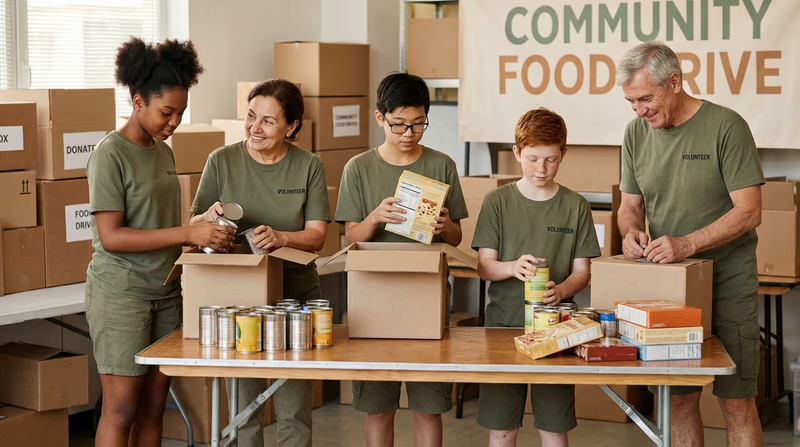
- Volunteer together at a food bank, animal shelter, or community garden
- Organize a neighborhood cleanup day
- Prepare and deliver meals to a homebound neighbor or family in need
- Collect donations for a local charity drive
Home and yard projects:
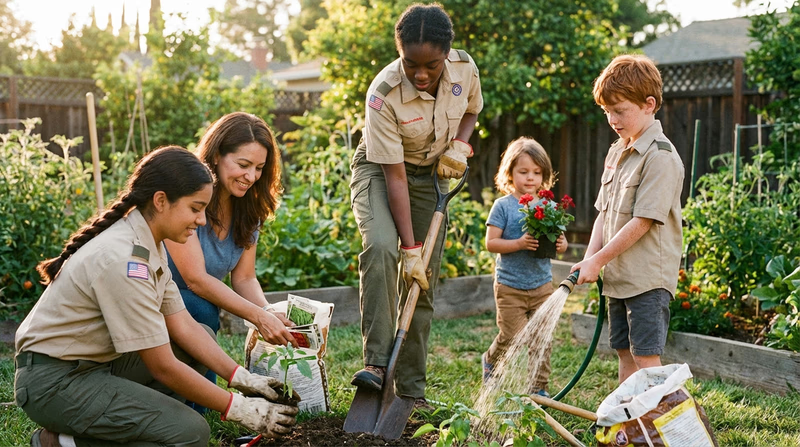
- Plan and plant a family vegetable or flower garden
- Cook a special meal together for extended family or neighbors
- Deep-clean and reorganize a shared space (kitchen, living room, yard)
- Build something together — a birdhouse, a bookshelf, a picnic table
Experience projects:
- Plan and carry out a family day trip to a new place
- Create a family time capsule to open in five or ten years
- Put together a family photo album or scrapbook
- Research your family history and create a family tree
Community projects:
- Participate in a charity walk or run as a family
- Host a block party or neighborhood gathering
- Assemble care packages for deployed military members
- Help set up or participate in a community event
Planning the Project
As the organizer, you need to plan the project so everyone knows what to do. Here’s a framework:
Family Project Planning Checklist
Steps to get your family organized
- Choose the project: Get family input and pick something everyone can participate in.
- Define the goal: What does success look like? Be specific.
- Assign roles: Give each family member a task that matches their ability and interest.
- Gather materials: Make a list of everything you need and collect it in advance.
- Set a date and timeline: When will you do the project? How long will it take?
- Execute the plan: Work together, adjust as needed, and have fun.
- Discuss the results: Talk as a family about what went well and what you’d do differently.
Getting Everyone Involved
The trickiest part of a family project is making sure everyone participates meaningfully — especially younger siblings or family members who might not be enthusiastic at first.
- Match tasks to abilities. A five-year-old can’t use a saw, but they can hand you nails or water the plants. A teenager can lead a subproject. A grandparent might be the best person to share stories for a family history project.
- Make it fun. Play music, take breaks for snacks, or turn part of the project into a friendly competition.
- Celebrate the teamwork. After the project, acknowledge what each person contributed. This reinforces that every role mattered.
Preparing for the Counselor Discussion
Your counselor will ask about three specific things. Be ready:
The objective or goal (5a):
- What were you trying to accomplish?
- Why did you choose this project?
- How did you define success?
How individual members participated (5b):
- What role did each family member play?
- How did you assign tasks?
- Did anyone take on a role you didn’t expect?
- How did the team work together?
The results (5c):
- Did you achieve your goal?
- What was the biggest challenge?
- What was the most rewarding part?
- Would your family do a project like this again?
Explore More Resources
Time Management (video) A video about managing your time effectively — useful for planning family projects. VolunteerMatch — Find Volunteer Opportunities Search for volunteer opportunities in your area that your whole family can participate in.