Req 6a — Planning Family Meetings
Family meetings might sound formal — like something from a boardroom, not a living room. But a family meeting is simply a time when your family sits down together, on purpose, to talk about things that matter. No screens, no distractions — just real conversation.
Many families never do this. They talk at dinner, in the car, or in passing, but they rarely sit down with an actual plan for what to discuss. This requirement teaches you how to make that happen, and the results can be powerful.
Why Family Meetings Work
Family meetings give every member a voice. In the normal rush of daily life, it’s easy for important topics to get buried under homework, work schedules, and screen time. A meeting creates space for:
- Solving problems before they become arguments
- Making decisions that affect everyone (vacations, schedules, rules)
- Sharing good news and celebrating achievements
- Discussing tough topics in a safe, structured environment
- Building communication skills that benefit every relationship in your life
How to Plan a Family Meeting
Planning is the difference between a productive family meeting and an awkward silence around the table. Here’s how to set it up for success:
1. Choose the right time. Pick a time when everyone can be present and nobody is rushed. After dinner on a weeknight or a weekend morning can work well. Avoid scheduling it when someone is tired, hungry, or stressed.
2. Set expectations. Let your family know in advance that you’d like to hold a meeting. Explain that it’s for your merit badge, but also that it’s a chance for everyone to share what’s on their mind. This is not an ambush — it’s an invitation.
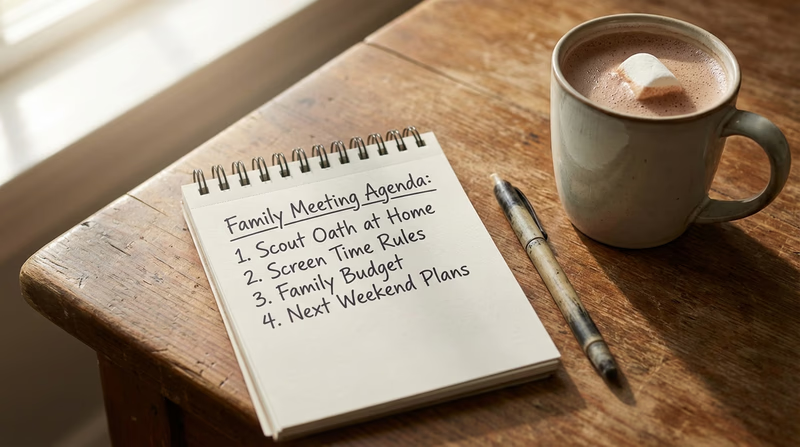
3. Prepare an agenda. Write down the topics you want to cover. An agenda keeps the meeting focused and ensures you don’t forget anything important. Share it with your parent or guardian before the meeting so they can add items or suggest changes.
4. Keep it short. Aim for 20–40 minutes. Anything longer and attention will wander, especially for younger family members. You can always schedule another meeting for additional topics.
5. Set ground rules. Before you start, agree on a few basic rules:
Meeting Ground Rules
Keep the conversation respectful and productive
- One person talks at a time — no interrupting.
- Everyone gets a chance to speak. No one is forced to, but everyone is invited.
- Listen to understand, not just to respond.
- No phones or screens during the meeting.
- Disagreements are okay, but disrespect is not.
- What is said in the meeting stays in the family.
Running the Meeting
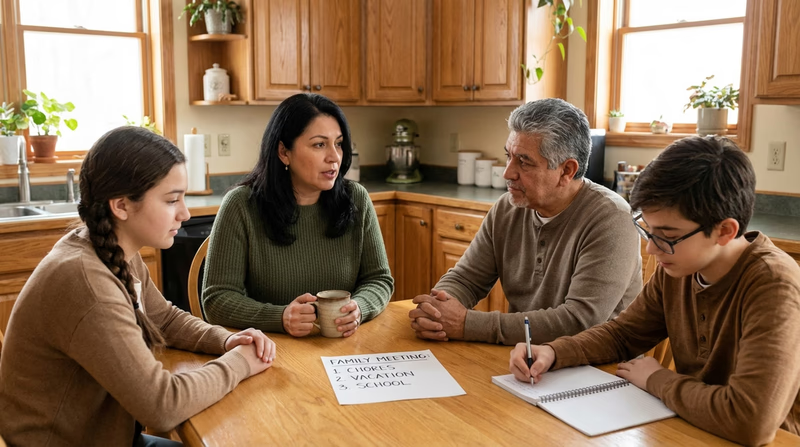
You don’t have to be the “boss” of the meeting — think of yourself as the facilitator. Your job is to keep things moving and make sure everyone is heard.
- Open with something positive. Start by sharing a highlight from the week or thanking a family member for something they did. This sets a warm, collaborative tone.
- Go through the agenda. Cover each topic one at a time. Ask questions to get the conversation going: “What does everyone think about…?” or “How do you feel about…?”
- Take notes. Jot down key points, decisions, or action items. This shows your family (and your counselor) that the meeting was productive.
- Close with a plan. End by summarizing what was discussed and any decisions that were made. If a topic needs more time, schedule a follow-up.
What to Discuss with Your Counselor
Your counselor will want to hear about your plan for the family meeting — not just what you discussed, but how you organized it. Be ready to talk about:
- How you chose the time and place
- How you prepared the agenda
- What ground rules you set
- How you handled the meeting flow
- What you would do differently next time
Explore More Resources
Family Meeting (video) A video guide to planning and conducting effective family meetings. How to Hold a Family Meeting (video) Practical tips for families who are new to holding structured meetings.