Req 7 — Understanding Parenthood
This might be the most thought-provoking requirement in the entire badge. You’ve spent your whole life being parented — now you’re being asked to think about what that actually involves. What makes a parent or guardian effective? What are their responsibilities? And what can you learn from observing the adults who raised you?
The Job Nobody Trains For
Here’s something most adults will tell you: parenting is the most important job they’ve ever had, and the one they had the least training for. There is no class, no certification, and no instruction manual. Parents and guardians learn on the job, make mistakes, adjust, and try again — just like you do in Scouting.
Understanding this doesn’t mean excusing poor parenting. It means recognizing that parents and guardians are human beings doing their best with the tools and knowledge they have.
Qualities of an Effective Parent or Guardian
Effective parenting isn’t about being perfect. It’s about being present, consistent, and caring. Here are qualities that researchers and family experts agree make a real difference:
Love and emotional support. An effective parent or guardian makes their child feel loved, valued, and safe. This doesn’t mean agreeing with everything you do — it means caring about you no matter what.
Consistency. Rules, expectations, and consequences should be fair and predictable. When you know what to expect, you feel more secure and can make better decisions.
Communication. Effective parents listen — really listen — when their children talk. They ask questions, validate feelings, and share their own thoughts honestly. Communication goes both ways.
Setting boundaries. Rules aren’t about control. They’re about safety, structure, and teaching you how to navigate the world. An effective parent sets boundaries and explains why they exist.
Modeling behavior. Children learn more from watching than from being told. A parent who demonstrates honesty, kindness, hard work, and respect is teaching those values every day — without saying a word.
Encouraging independence. As you grow, an effective parent gradually gives you more freedom and responsibility. They let you make mistakes, learn from them, and develop the confidence to handle life on your own.
Adaptability. What works for a five-year-old doesn’t work for a fifteen-year-old. Effective parents adjust their approach as their children grow and change. This is harder than it sounds.
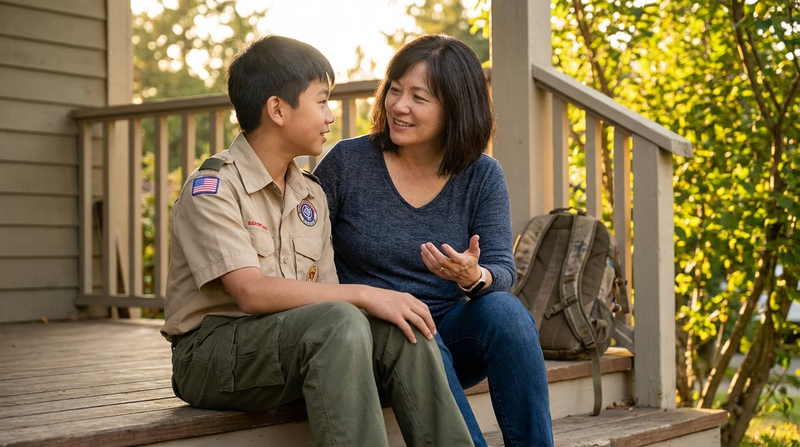
Roles and Responsibilities of a Parent or Guardian
Being a parent or guardian involves many roles. Think of it as wearing multiple hats throughout the day:
- Provider — Ensuring the family has food, shelter, clothing, and healthcare. This takes significant time, energy, and sacrifice.
- Protector — Keeping children safe from physical harm, emotional damage, and dangerous situations.
- Teacher — Passing on values, life skills, and knowledge. Much of this teaching happens informally — through daily conversations and shared experiences.
- Disciplinarian — Setting and enforcing rules. This is one of the hardest parts of parenting because it often means being the “bad guy” in the short term for the child’s long-term benefit.
- Advocate — Standing up for their children at school, in the community, and in the healthcare system.
- Emotional anchor — Being the person a child can always count on, even when everything else feels uncertain.
- Role model — Demonstrating the kind of person they hope their child will become.
What You Can Learn from This
This requirement isn’t about judging your parents or guardians. It’s about understanding the complexity of their role so you can:
- Appreciate what they do. Once you see all the responsibilities involved, you may find a new respect for the effort they put in every day.
- Communicate better. Understanding that your parent is balancing many roles helps you be more patient when they’re stressed or distracted.
- Prepare for your future. Someday, you may be a parent or guardian yourself. Thinking about these qualities now gives you a head start.
- Recognize your own influence. You already practice many of these qualities in Scouting — leadership, consistency, empathy, and teaching. You’re building the skills you’ll need.
Preparing for the Discussion
Your counselor will want to hear your own thoughts — not a textbook answer. Consider these questions as you prepare:
- What qualities do you most admire in the adults who raised you?
- What do you think is the hardest part of being a parent or guardian?
- How do the Scout Oath and Scout Law connect to good parenting?
- If you become a parent someday, what is one thing you’d want to make sure you do?
- What is one thing your parent or guardian does that you didn’t appreciate until now?
Explore More Resources
What Makes a Good Parent (video) A thoughtful exploration of the qualities and habits that make parenting effective. How to Parent a Teen From a Teen's Perspective (video) A teenager shares what they wish their parents understood — a great perspective piece. Being a Parent (video) A video exploring the joys and challenges of the parenting journey.