 Getting Started
Introduction & Overview
Imagine you are on a camping trip when a fellow Scout trips on a rock and goes down hard. Their ankle is twisted at a strange angle and they are in serious pain. Everyone looks around — and then they look at you. Do you know what to do?
First aid is the immediate care you give to someone who is sick or injured before professional medical help arrives. It can be as simple as cleaning a scrape or as critical as performing CPR. The First Aid merit badge teaches you the skills and confidence to act when it matters most — and as an Eagle-required badge, it is one of the most important badges you will earn.
Then and Now
Then — From Battlefields to the Boy Scouts
Organized first aid has roots on the battlefield. During the Civil War, Clara Barton rushed to the front lines to bandage wounds and comfort soldiers — earning the nickname “Angel of the Battlefield.” She later founded the American Red Cross in 1881. Around the same time, the St. John Ambulance organization in England began teaching first aid to civilians, factory workers, and police officers.
When Scouting began in 1910, first aid was one of the original merit badges. Scouts were expected to know how to stop bleeding, splint a broken bone, and carry an injured person to safety — all skills that remain at the heart of the badge today.
- Purpose: Saving lives on battlefields, in factories, and in communities with no ambulances or hospitals nearby
- Mindset: Learn a few critical skills and hope you never need them
Now — First Aid for Everyone
Today, first aid education is everywhere. The American Red Cross trains millions of people each year. Public places have automated external defibrillators (AEDs) mounted on walls. The national Stop the Bleed campaign teaches ordinary people how to control life-threatening bleeding in minutes. Smartphone apps can guide you through CPR in real time and pinpoint the nearest AED.
Modern first aid is faster, smarter, and more accessible than ever — but the most important tool is still the same: a trained person who is willing to help.
- Purpose: Bridging the gap between an emergency and professional medical care
- Mindset: Be prepared, stay calm, and take action — anyone can make a difference
Get Ready! You are about to learn skills that could genuinely save a life — maybe even the life of someone you love. That is not an exaggeration. Let’s get started.
Kinds of First Aid
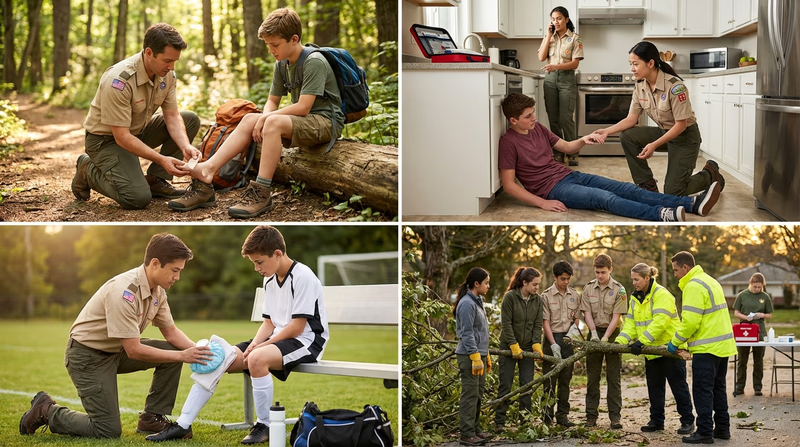
First aid is not one-size-fits-all. The situation you are in — and the resources available — shape how you respond. Here are the main types of first aid you should know about.
Wilderness First Aid
When you are miles from the nearest road, help might be hours away. Wilderness first aid focuses on improvisation — using what you have, stabilizing injuries for longer periods, and making tough decisions about when to evacuate. Scouting trips, backpacking, and summer camp are all places where wilderness first aid skills shine.
Community & Home First Aid
Most injuries and medical emergencies happen at home, at school, or in your neighborhood — not in the wilderness. Kitchen burns, sports injuries, allergic reactions, and falls are all everyday situations where first aid knowledge makes a real difference.
Sports & Activity First Aid
Athletes deal with a specific set of injuries — sprains, strains, concussions, heat exhaustion, and dehydration. Sports first aid emphasizes quick assessment, the R.I.C.E. method (Rest, Ice, Compression, Elevation), and knowing when an injury is serious enough to stop playing.
Disaster & Mass Casualty First Aid
Natural disasters, severe weather, and large-scale accidents can injure many people at once. In these situations, first responders may be overwhelmed. That is where triage comes in — sorting patients by the severity of their injuries so the most critical get help first. You will learn about triage in this badge.
Now let’s dive into the first requirement — learning how to assess and handle a first aid emergency.