Req 13 — Miscellaneous Conditions
These are conditions that do not fit neatly into the other categories but are still important to recognize and treat. Some — like a foreign object in the eye — are minor. Others — like stroke — are medical emergencies where minutes matter.
Object in the Eye
A speck of dust, an eyelash, a wood chip, or an insect can become trapped in the eye, causing pain, tearing, and redness.
First aid:
- Do not rub the eye. This can scratch the cornea or push the object deeper.
- Wash your hands before touching the eye area.
- Try to flush it out. Tilt the head so the affected eye is down. Pour clean water gently across the open eye from the inner corner (nose side) outward.
- Pull the upper lid over the lower lid. The lower lashes may brush the object off the inside of the upper lid.
- If you can see the object on the white part of the eye or inside the lid, gently touch it with the wet corner of a clean cloth or cotton swab.
- If the object is embedded in the eye, on the iris (colored part), or cannot be removed, cover both eyes loosely with a bandage (covering both eyes prevents sympathetic movement) and seek medical attention immediately.
Prevention: Wear safety glasses or goggles during woodworking, metalworking, and windy outdoor activities. Wear sunglasses on dusty trails.
Dental Injuries
Dental injuries are common in sports and outdoor activities. Knowing what to do — especially with a knocked-out permanent tooth — can mean the difference between saving and losing the tooth.
Broken or Chipped Tooth
First aid: Rinse the mouth with warm water. Apply a cold pack to the outside of the cheek to reduce swelling. Save any tooth fragments — a dentist may be able to reattach them. See a dentist as soon as possible.
Loosened Tooth
First aid: Have the person bite down gently on a piece of gauze to stabilize the tooth. Do not try to push it back into place. Apply a cold pack. See a dentist immediately.
Knocked-Out Tooth (Avulsed Tooth)
First aid — permanent tooth:
- Find the tooth. Handle it by the crown (the white part you normally see) — never touch the root.
- Rinse gently with water if it is dirty. Do not scrub, scrape, or remove any attached tissue.
- Try to replant it. Gently push it back into the socket, facing the correct direction. Have the person bite down on gauze to hold it in place.
- If you cannot replant it, keep it moist. The best options, in order: a tooth preservation kit (like Save-A-Tooth), milk, the person’s saliva (have them hold it in their cheek). Do not store it in water.
- Get to a dentist within 30 minutes. The sooner the tooth is replanted professionally, the better the chance of saving it.
Baby tooth: Do not replant baby teeth. Apply gauze for bleeding and see a dentist.
Food Poisoning
Food poisoning results from eating food contaminated with bacteria, viruses, parasites, or toxins. It is common at camping events where food storage and preparation may not meet ideal standards.
Signs and symptoms: Nausea, vomiting, diarrhea, abdominal cramps, fever, weakness. Symptoms usually appear 2–6 hours after eating contaminated food but can take up to 72 hours.
First aid:
- Rest. The body needs time to fight the infection and recover.
- Stay hydrated. Vomiting and diarrhea cause rapid fluid loss. Sip water, clear broth, or an oral rehydration solution. Avoid dairy, caffeine, and sugary drinks.
- Eat bland foods when able — crackers, toast, rice, bananas (the BRAT diet).
- Do not take anti-diarrheal medications for the first few hours — the body is trying to expel the toxin.
- Seek medical help if symptoms include bloody stool, fever over 101.5°F, vomiting that prevents keeping fluids down for more than 24 hours, or signs of severe dehydration.
Prevention: Follow safe food handling practices. Keep cold food cold (below 40°F) and hot food hot (above 140°F). Wash hands before preparing food. Cook meats to proper internal temperatures. When in doubt at camp — throw it out.
Abdominal Pain
Abdominal pain has many possible causes — from indigestion to appendicitis. As a first aider, your role is to assess the severity and determine whether the person needs professional medical care.
Red flags — call 911 or seek immediate medical care if:
- Severe, sudden pain
- Pain that gets worse over time
- A rigid, hard abdomen
- Blood in vomit or stool
- High fever with abdominal pain
- Pain after an injury or blow to the abdomen (possible internal bleeding)
- Signs of shock
First aid for mild abdominal pain:
- Have the person rest in a comfortable position (many people prefer lying on their side with knees drawn up).
- Do not give food or drink until the cause is identified — the person may need surgery.
- Do not give laxatives or pain medications without medical guidance.
- Monitor for worsening symptoms.
Common causes in Scouting settings: Overeating, dehydration, constipation, food poisoning, anxiety, menstrual cramps, urinary tract infections.
Stroke
A stroke occurs when blood flow to part of the brain is interrupted — either by a clot (ischemic stroke) or a burst blood vessel (hemorrhagic stroke). Brain cells begin to die within minutes. Stroke is a leading cause of death and disability in adults, but it can also occur in young people.
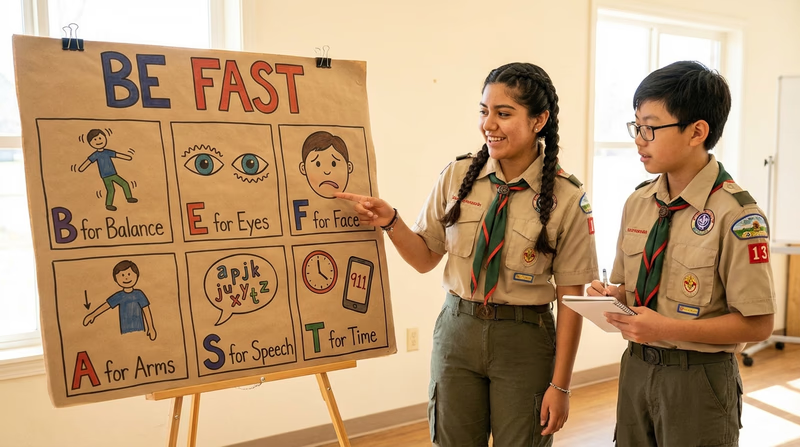
Recognizing a Stroke: BE FAST
Use the BE FAST acronym to recognize stroke symptoms:
| Letter | Sign | What to Look For |
|---|---|---|
| B | Balance | Sudden loss of balance or coordination |
| E | Eyes | Sudden vision changes in one or both eyes |
| F | Face | Ask the person to smile. Does one side of the face droop? |
| A | Arms | Ask the person to raise both arms. Does one arm drift downward? |
| S | Speech | Ask the person to repeat a simple sentence. Is their speech slurred or strange? |
| T | Time | Time to call 911! Note the time symptoms started. |
First aid:
- Call 911 immediately. Stroke treatment is time-critical — clot-busting drugs work best within 3 hours.
- Note the time symptoms started. Tell the dispatcher.
- Have the person sit or lie down in a comfortable position. If they are vomiting or unconscious, place in the recovery position.
- Do not give them anything to eat or drink — swallowing may be impaired.
- Do not give aspirin — you do not know if the stroke is caused by a clot or bleeding. Aspirin could worsen a hemorrhagic stroke.
- Monitor breathing and be prepared to perform CPR.