Req 15 — EMS Careers
This is a choose-one requirement. Pick the option that interests you most — each one is a valid path to completing this requirement. This page provides guidance and resources for all four options.
Option A: Visit a Station House or Training Center
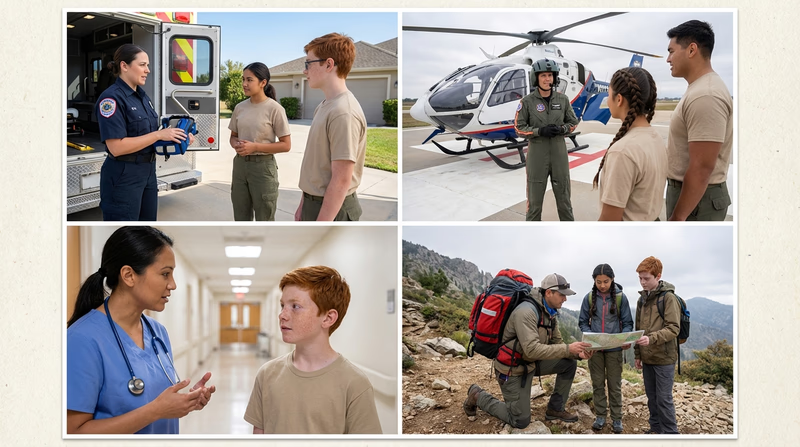
This option gives you a first-hand look at how EMS professionals work. Contact your local fire department, ambulance service, or hospital to arrange a visit.
Planning Your Visit
Visit Preparation
Steps to arrange a successful visit
- Contact the station: Call the non-emergency number for your local fire department or EMS agency and ask about ride-alongs, tours, or career day events.
- Ask your counselor: They may have contacts in the local EMS community.
- Prepare questions: Write down 5–10 questions before you go (see suggestions below).
- Bring a notebook: Take notes during the visit so you can discuss your experience with your counselor later.
- Dress appropriately: Clean, neat clothing. Closed-toe shoes are usually required in station houses.
Questions to Ask
- What does a typical shift look like?
- What is the most common type of call you respond to?
- What training and certifications are required?
- What is the most rewarding part of the job?
- What is the most challenging part?
- How do you take care of your own mental health after difficult calls?
- What advice would you give to a young person interested in EMS?
Option B: Interview an EMS Professional
If a visit is not possible, you can interview an EMS professional in person, over the phone, or via video call.
Finding Someone to Interview
- Your local fire department
- Hospital emergency department staff (nurses, doctors, EMTs)
- Event medical teams at Scout camps or sporting events
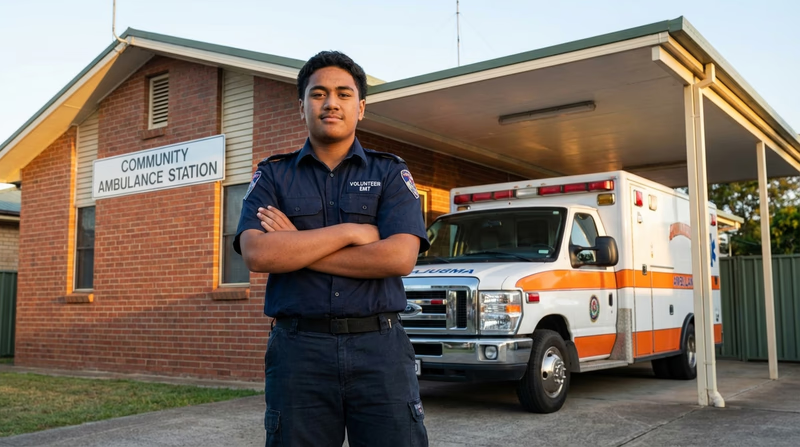
- Community volunteer ambulance companies
- Your family doctor or pediatrician (ask about their emergency medicine experience)
- Search and rescue team members
Interview Tips
- Introduce yourself and explain that you are working on the First Aid merit badge.
- Be respectful of their time — aim for 15–20 minutes.
- Listen more than you talk.
- Take notes or (with permission) record the conversation.
- Follow up with a thank-you note or email.
Option C: Research EMS Careers
Emergency medical services offer a range of career paths — from entry-level to advanced specializations. Here are some careers to consider:
EMS Career Overview
| Career | Training | Typical Salary Range | Description |
|---|---|---|---|
| Emergency Medical Responder (EMR) | 40–60 hours | Volunteer or $25,000–$35,000 | Basic emergency care. Many volunteer fire departments. |
| Emergency Medical Technician (EMT) | 120–150 hours | $30,000–$45,000 | Ambulance care, vital signs, basic life support. Most common entry point. |
| Advanced EMT (AEMT) | 150–300 additional hours | $35,000–$50,000 | Can start IVs, give some medications. Bridge between EMT and Paramedic. |
| Paramedic | 1,200–1,800 hours (often an associate degree) | $40,000–$65,000 | Advanced life support, cardiac monitoring, medications, intubation. |
| Flight Paramedic / Critical Care | Paramedic + 1–2 years experience + specialty training | $55,000–$85,000 | Helicopter and fixed-wing medical transport. Critically ill patients. |
| Registered Nurse (RN) — Emergency | BSN degree (4 years) | $60,000–$100,000+ | Emergency department nursing. Combines nursing skills with emergency medicine. |
| Physician Assistant (PA) — Emergency | Master’s degree (6–7 years total) | $100,000–$140,000 | Diagnoses, prescribes, and treats patients in the ED. |
| Emergency Physician (MD/DO) | Medical school + residency (11–15 years total) | $250,000–$400,000+ | Board-certified emergency medicine doctor. Leads the ED team. |
Where EMS Professionals Work
EMS careers are not limited to ambulances. Professionals with emergency medical training work in:
- Fire departments and ambulance services
- Hospital emergency departments
- Helicopter air ambulance programs
- Wilderness search and rescue teams
- Sports medicine and event medical teams
- Industrial and corporate safety
- Military and law enforcement tactical medicine
- Disaster relief organizations (FEMA, Red Cross)
- Theme parks, cruise ships, and outdoor adventure companies
Option D: Personal Hobby or Healthy Lifestyle
First aid skills enhance many personal interests and activities. Here are some ideas:
Outdoor adventure: Wilderness first aid certification (WFR or WFA) makes you a safer hiker, climber, paddler, and camper. Organizations like NOLS and SOLO offer courses.
Community service: Become a certified first aid or CPR instructor through the Red Cross or American Heart Association and teach in your community.
Volunteer emergency services: Many communities have volunteer fire departments, ambulance corps, or search and rescue teams that accept members starting at age 14–16.
Event medical support: Provide medical standby at Scout events, sporting events, or community festivals.
Fitness and health: Understanding the body’s response to exertion, heat, cold, and injury makes you a smarter athlete and helps you train more safely.