Req 1a — Assessing an Emergency
When you come upon an emergency, your natural instinct might be to rush in and help immediately. That instinct is admirable — but it can get you hurt or make things worse. The key to effective first aid is a calm, systematic approach that keeps you safe while giving the victim the best possible care.
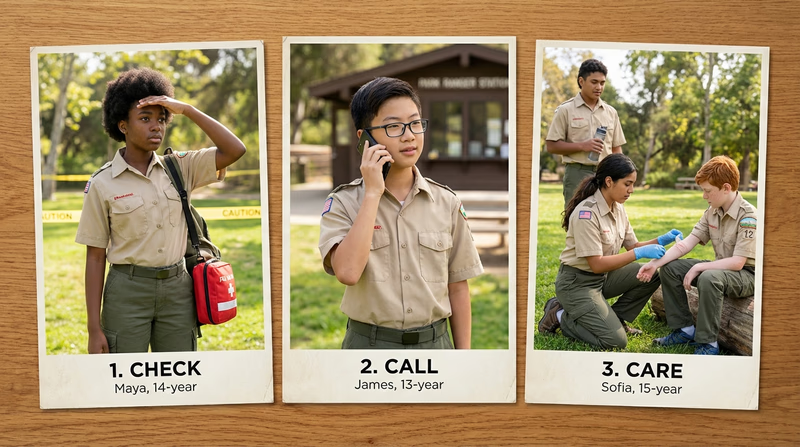
Check, Call, Care
The three-word framework Check, Call, Care gives you a simple way to remember the correct order of actions in any emergency.
Step 1: Check the Scene
Before you touch anyone, stop and look around. Ask yourself:
- Is the scene safe? Look for dangers like traffic, fire, downed power lines, unstable structures, chemical spills, or aggressive animals. If the scene is not safe, do not enter — you will only add another victim.
- What happened? Look for clues. A fallen ladder, an overturned pot on the stove, or a bicycle in the road can tell you a lot about how the person was injured.
- How many people are hurt? There may be more than one victim.
- Are bystanders available to help? Other people can call 911, get supplies, or direct traffic.
Step 2: Check the Victim
Once the scene is safe, approach the victim and check their condition:
- Tap and shout. Gently tap the person’s shoulder and ask loudly, “Are you okay?” This tells you whether they are conscious.
- Look for life-threatening conditions. Is the person breathing? Are they bleeding severely? Are they choking?
- Get consent. If the person is conscious, introduce yourself and ask permission to help. Say something like, “Hi, I’m a Scout trained in first aid. Can I help you?” If the person is unconscious or unable to respond, consent is implied — you can and should help.
Step 3: Call for Help
If the situation is serious, call 911 (or your local emergency number) right away — or have a bystander do it. You will learn more about this in the next requirement.
Step 4: Care for the Victim
Provide first aid based on what you find. Always address the most life-threatening conditions first:
- Breathing — Is the airway open? Is the person breathing?
- Bleeding — Is there severe, uncontrolled bleeding?
- Shock — Is the person showing signs of shock?
The ABCDE Assessment
Medical professionals use the ABCDE framework to quickly evaluate a patient. You can use a simplified version:
- A — Airway: Is the airway clear? Is anything blocking it?
- B — Breathing: Is the person breathing normally? How fast? How deep?
- C — Circulation: Is there a pulse? Is there severe bleeding?
- D — Disability: Is the person alert? Can they move their arms and legs?
- E — Exposure: Are there injuries you cannot see? Do you need to look under clothing (while maintaining dignity and privacy)?

Putting It All Together
Here is how a real scenario might play out:
American Red Cross — First Aid Steps Learn more about assembling first aid supplies and responding to common emergencies.