Req 1b — Getting Help
1b.
Tell how you would obtain emergency medical assistance from your home and from a remote location on a wilderness camping trip.
Knowing first aid is only part of the equation. You also need to know how to get professional help on the way — fast. The method you use depends entirely on where you are.
Getting Help from Home
When an emergency happens at home or in your community, the process is straightforward:
Call 911
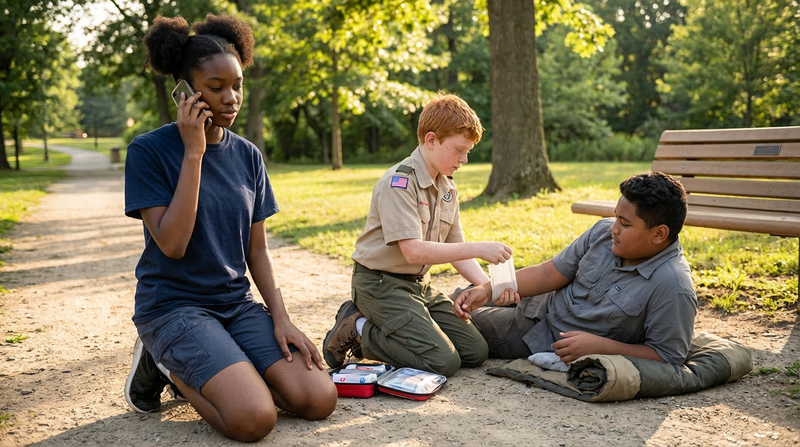
Pick up any phone — landline or cell — and dial 911. When the dispatcher answers, stay calm and be ready to provide:
- Your location. Give your full address, including apartment number. If you are not at home, describe where you are as specifically as possible (intersection, landmark, building name).
- What happened. “Someone fell down the stairs” or “A person is having chest pains.”
- How many people are hurt.
- The victim’s condition. Are they conscious? Breathing? Bleeding?
- What you are doing. “I am applying pressure to stop the bleeding.”
Other Ways to Get Help Nearby
- Text 911. Many communities now support texting 911. This is helpful if you cannot speak (dangerous situation) or are deaf or hard of hearing.
- Smart devices. You can tell Siri, Google Assistant, or Alexa to “call 911.”
- Emergency apps. Apps like the Red Cross First Aid app and What3words can help you communicate your location precisely.
Getting Help in the Wilderness
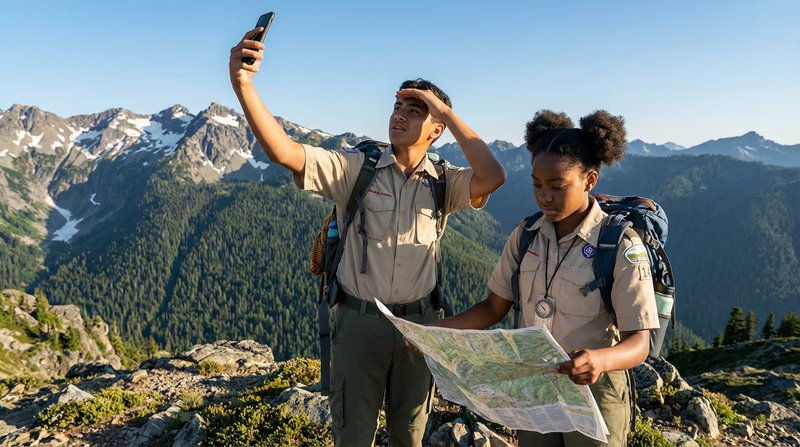
Getting help from a remote location is much harder. Cell service may be spotty or nonexistent, and you could be hours from the nearest road. Planning ahead is everything.
Before You Go
Wilderness Communication Plan
Prepare these before every backcountry trip
- Trip plan filed: Leave a detailed plan with a responsible adult — where you are going, your route, and when you expect to return.
- Emergency contacts listed: Write down the phone numbers for the nearest ranger station, county sheriff, and hospital.
- Communication devices packed: Fully charged cell phone in a waterproof bag, plus a backup option (see below).
- Group medical info shared: Know each person’s allergies, medications, and medical conditions.
Communication Options in Remote Areas
| Device | Range | Pros | Cons |
|---|---|---|---|
| Cell phone | Varies | Already have one; can call/text 911 | No signal in many backcountry areas |
| Satellite messenger (e.g., Garmin inReach) | Global | Works anywhere with sky view; SOS button | Requires subscription; cannot make voice calls |
| Personal locator beacon (PLB) | Global | One-button SOS; no subscription needed | Sends SOS only — no two-way communication |
| Satellite phone | Global | Full voice calls anywhere | Expensive; bulky |
| Whistle | ~1 mile | No batteries; lightweight; universal distress signal | Short range; depends on people being nearby |
When Someone Is Hurt in the Backcountry
If an emergency happens and you cannot call for help from your location:
- Stabilize the victim. Provide first aid and make them as comfortable as possible.
- Try higher ground. Even a small increase in elevation can sometimes reach a cell tower.
- Send for help. If your group has at least four people, send two for help while two stay with the victim. The pair going for help should carry written information: the victim’s name, injury, location (GPS coordinates if possible), and what first aid was given.
- Stay put if alone. If you are alone with a victim and cannot get a signal, stay with them. Use your whistle or signal mirror. Searchers will come looking when you do not return on time — if you filed a trip plan.