Req 1f — Shock & Triage
Understanding Shock
Shock is not an emotion — it is a life-threatening medical condition. In first aid, shock (also called hypovolemic shock or circulatory shock) happens when the body’s organs and tissues are not getting enough blood and oxygen to function. If untreated, shock can cause organ failure and death — even if the original injury was survivable.
Why Shock Is an Emergency
Think of your circulatory system like a water pump. The heart is the pump, blood is the water, and blood vessels are the pipes. Shock happens when something goes wrong with this system:
- Not enough fluid: Severe bleeding, burns, or dehydration reduce blood volume.
- Pump failure: A heart attack weakens the heart so it cannot pump effectively.
- Pipe failure: A severe allergic reaction (anaphylaxis) or spinal cord injury causes blood vessels to dilate so wide that blood pressure drops dangerously.
No matter the cause, the result is the same: vital organs — especially the brain and kidneys — start to shut down because they are not receiving enough oxygen.
Recognizing Shock
Signs and Symptoms of Shock
Look for these warning signs in any injured person
- Pale, cool, clammy skin (the body is redirecting blood to vital organs)
- Rapid, weak pulse
- Rapid, shallow breathing
- Nausea or vomiting
- Confusion, anxiety, or restlessness
- Weakness or dizziness
- Thirst
- Dilated pupils
- Blue or gray lips and fingernails (late sign)
- Loss of consciousness (late sign)
First Aid for Shock
- Call 911 immediately. Shock requires professional medical treatment — you cannot fix it in the field, but you can slow it down.
- Control the cause if possible. Stop severe bleeding. Treat burns. Support broken bones.
- Position the victim. Lay them on their back and elevate the legs about 12 inches (unless there is a head, neck, back, or leg injury). This helps blood flow back to the heart and brain.
- Keep them warm. Cover the victim with a blanket or coat. The body loses heat quickly in shock.
- Do not give food or drink. The victim may need surgery, and a full stomach creates complications.
- Monitor and reassure. Stay with the victim. Talk to them calmly. Check breathing and pulse regularly.

Understanding Triage
Triage (pronounced “tree-AHZH”) is a French word meaning “to sort.” In first aid, triage is the process of quickly evaluating multiple victims and deciding who gets help first based on the severity of their condition.
When Triage Is Needed
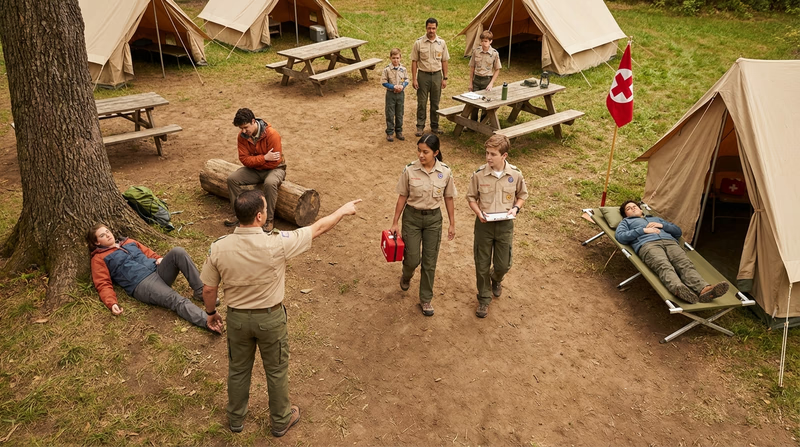
Triage becomes necessary when the number of victims exceeds the number of rescuers — meaning you cannot help everyone at the same time. Examples you might encounter:
- A bus accident at a Scout event with multiple injured passengers
- A severe weather event (tornado, lightning strike) at camp
- A building collapse or structure failure
- A multi-person fall on a hiking trail
How Triage Works
The most common triage system uses four categories, often identified by colors:
| Category | Color | Meaning | Examples |
|---|---|---|---|
| Immediate | Red | Life-threatening; needs help NOW | Not breathing (but airway can be opened), severe bleeding, shock |
| Delayed | Yellow | Serious but can wait a short time | Broken bones, moderate burns, large wounds without severe bleeding |
| Minor | Green | “Walking wounded” — can wait | Sprains, minor cuts, bruises, small burns |
| Deceased / Expectant | Black | Dead or injuries incompatible with survival | No breathing after two attempts to open airway |
The START Triage System
The START method (Simple Triage and Rapid Treatment) is the most widely taught civilian triage system. It lets you assess each person in under 60 seconds:
- Can they walk? If yes → Green (Minor).
- Are they breathing? If not, open the airway. If they still do not breathe → Black. If they start breathing → Red (Immediate).
- Respiratory rate? Greater than 30 breaths per minute → Red.
- Pulse / circulation? No radial pulse or capillary refill greater than 2 seconds → Red.
- Mental status? Cannot follow simple commands → Red. Otherwise → Yellow (Delayed).
Triage in Your World
You probably will not face a mass casualty disaster, but smaller-scale triage decisions happen more often than you think: