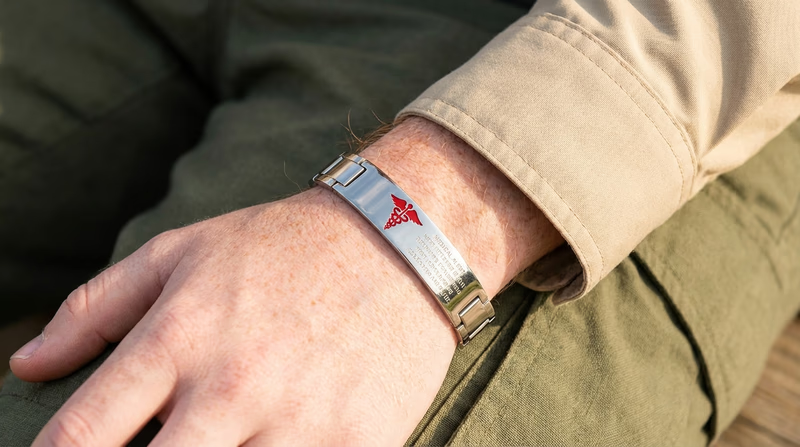
Req 2a — Health & Medical Records
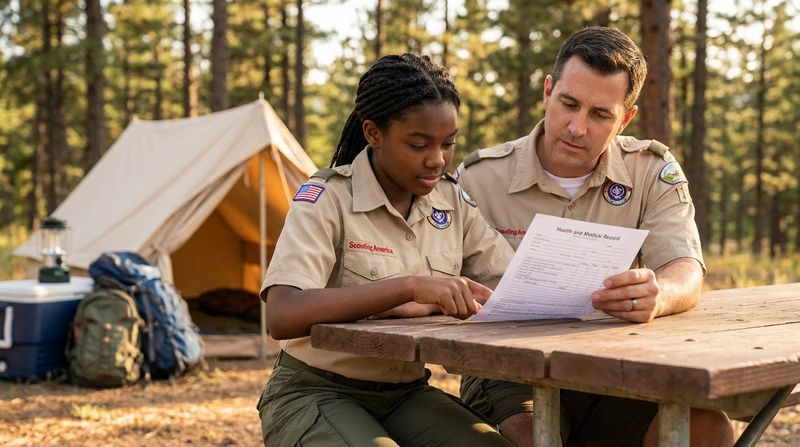
Before you head out on any Scouting event — from a weekend campout to a week at summer camp — every participant fills out a form called the Annual Health and Medical Record (AHMR). You have probably filled one out before without thinking much about it. But as a first aider, this form becomes one of your most valuable tools.
What Is the AHMR?
The Annual Health and Medical Record is a standardized form required by Scouting America for all participants in Scouting activities. It has multiple parts depending on the type of activity:
| Part | What It Covers | When It Is Required |
|---|---|---|
| Part A | Informed consent and hold harmless agreement | All Scouting events |
| Part B | General health history, allergies, medications, immunizations | Events lasting less than 72 hours |
| Part C | Pre-participation physical exam (completed by a doctor) | Events lasting 72 hours or more, or high-adventure activities |
Why the AHMR Matters for First Aid
When someone gets hurt at a Scouting event, the AHMR gives you critical information — fast. Here is why each section matters:
Allergies
Knowing a person’s allergies can save their life. If a Scout is stung by a bee and goes into anaphylactic shock, knowing they have a bee allergy and carry an epinephrine auto-injector means you can act immediately instead of guessing what is happening.
Common allergies documented on the AHMR include:
- Insect stings (bees, wasps, hornets)
- Foods (peanuts, tree nuts, shellfish, dairy, eggs)
- Medications (penicillin, aspirin, ibuprofen)
- Latex (affects glove choice during first aid)
- Environmental (poison ivy, pollen)
Medications
The medications section tells you what conditions a person is managing. If a Scout collapses and you find they take insulin, you immediately consider a diabetic emergency. If they take an inhaler, you think asthma. Medications are clues that help you figure out what is going on.
Immunization History
Immunization records matter most for wound care. The biggest question: Is the person’s tetanus shot current? Tetanus bacteria enter the body through puncture wounds, deep cuts, and animal bites. If a Scout’s last tetanus booster was more than five years ago and they have a deep or dirty wound, they may need a booster at the hospital.
Health History
Past medical conditions affect how you respond to emergencies:
- Asthma → Keep their inhaler accessible; watch for breathing difficulty during physical activities
- Diabetes → Watch for signs of low blood sugar (confusion, shakiness, sweating)
- Seizure disorder → Know what to do if a seizure occurs; know if they take medication
- Heart conditions → Be ready for cardiac-related emergencies
- Mental health conditions → Be aware of anxiety, depression, or other conditions that may affect the Scout during stressful activities
Medical Examination (Part C)
The physical exam from a doctor confirms that a participant is healthy enough for the planned activity. It may also flag conditions the Scout may not have mentioned — like a heart murmur or high blood pressure.
How the AHMR Helps You as a First Aider
Think of the AHMR as a cheat sheet. When you perform a SAMPLE history on a conscious victim, you are gathering the same kind of information this form already contains. For an unconscious person, the AHMR may be the only source of critical medical information available to you.
Getting Your Own Copy
To complete this requirement, obtain a copy of the current AHMR form. You can download it from Scouting America’s website or ask your Scoutmaster for a blank copy. Review each section and be prepared to discuss why the information matters for providing first aid.
Scouting America — Annual Health and Medical Record Download the current AHMR form and read Scouting America's guidelines for health and medical documentation at events.