Req 3a — Closed Wounds & Burns
For each condition on this page, you need to describe the symptoms and signs, show first aid, and explain how to prevent it. These are injuries where the skin may not be broken — but serious damage can still happen underneath.
Closed Wounds: Bruises and Hematomas
A contusion (bruise) happens when a blow or impact damages blood vessels beneath the skin without breaking the surface. Blood leaks into the surrounding tissue, causing the familiar discoloration.
A hematoma is a more serious version — a larger collection of blood that pools under the skin, forming a firm, swollen lump. Hematomas can occur in muscles, organs, or even inside the skull.
Signs and symptoms: Pain and tenderness at the site, swelling, discoloration (red → purple → blue → green → yellow as it heals), warmth, limited range of motion if near a joint.
First aid:
- Apply a cold pack or ice wrapped in cloth for 20 minutes on, 20 minutes off.
- Elevate the injured area if possible.
- Rest the injured area.
- For a large hematoma or one that does not improve, seek medical attention — it may indicate a deeper injury like a fracture.
Prevention: Wear protective gear during sports and activities. Be aware of your surroundings to avoid bumps and falls.
Thermal (Heat) Burns and Scalds
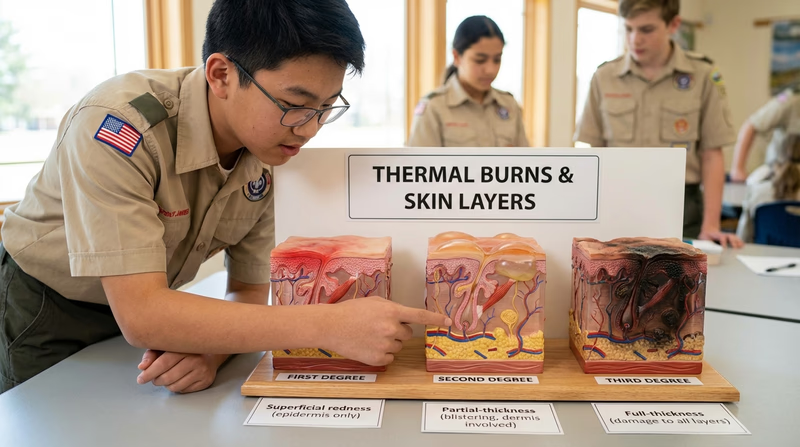
Burns are classified by depth. Understanding the three levels helps you determine how serious the injury is.
Superficial Burns (First-Degree)
Affects only the outer layer of skin (epidermis). The skin is red, dry, and painful — like a mild sunburn. These heal on their own in 3–5 days.
Partial-Thickness Burns (Second-Degree)
Extends into the second layer of skin (dermis). The skin is red, blistered, swollen, and very painful. Blisters may weep clear fluid. These take 2–3 weeks to heal and may scar.
Full-Thickness Burns (Third-Degree)
Destroys all layers of skin and may damage muscle, fat, or bone beneath. The skin may look white, brown, black, or waxy. Surprisingly, full-thickness burns may not be painful because the nerve endings are destroyed. These always require professional medical treatment.
First aid for thermal burns:
- Stop the burning. Remove the person from the heat source. If clothing is on fire: Stop, Drop, and Roll.
- Cool the burn. Run cool (not cold) water over the burn for at least 10 minutes. Do not use ice — it can cause further tissue damage.
- Remove jewelry and clothing near the burn before swelling starts — but do not pull away anything stuck to the burn.
- Cover the burn loosely with a sterile, non-stick bandage or clean cloth.
- Do not pop blisters. They protect the wound underneath.
- Seek medical help for any burn larger than the victim’s palm, any full-thickness burn, burns on the face, hands, feet, genitals, or joints, and any burn that circles a limb.
Prevention: Use oven mitts and pot holders when cooking. Keep hot liquids away from the edges of tables and counters. Never leave a campfire unattended. Wear shoes around campfires.
Chemical Burns
Chemical burns happen when strong acids, bases (alkalis), or other caustic substances contact the skin, eyes, or airways. Common causes include battery acid, bleach, drain cleaners, pool chemicals, and industrial solvents.
Signs and symptoms: Redness, pain, blistering, or blackening of the skin at the contact site. The person may feel a burning sensation even before visible damage appears.
First aid:
- Protect yourself. Wear gloves and avoid contact with the chemical.
- Remove contaminated clothing and jewelry.
- Flush with water for at least 20 minutes. Use a gentle stream — do not blast the area, which can spread the chemical.
- Do not neutralize. Do not try to counteract an acid with a base or vice versa — this can generate heat and make the burn worse.
- Cover with a loose, sterile bandage.
- Call 911 or Poison Control (1-800-222-1222) for guidance.
Prevention: Wear protective gloves and eye protection when handling chemicals. Read labels before using any chemical product. Store chemicals properly and out of reach of children.
Electrical Burns
Electrical burns are caused by contact with an electrical current — from household outlets, power lines, lightning, or electrical equipment. Electrical burns are deceptive: the skin wound may look small, but the current can cause severe internal damage as it travels through the body.
Signs and symptoms: Entry and exit wounds (the current enters the body at one point and exits at another), numbness or tingling, muscle contractions, cardiac arrest, difficulty breathing, burns along the current’s path.
First aid:
- Do not touch the victim until you are certain the electrical source is turned off or the victim is no longer in contact with it.
- Call 911 immediately. All electrical burns need professional medical evaluation because of the risk of internal damage and heart rhythm problems.
- Check breathing and pulse. Be prepared to perform CPR.
- Treat visible burns with cool water and a sterile covering.
- Treat for shock — lay the person down, elevate legs, keep warm.
Prevention: Never touch electrical equipment with wet hands. Stay away from downed power lines. Use outlet covers around small children. Inspect cords for damage before use.
Sunburn
Sunburn is a radiation burn caused by overexposure to ultraviolet (UV) rays from the sun. It is the most common burn injury you will encounter as a Scout.
Signs and symptoms: Red, warm, tender skin (appears 2–6 hours after exposure). In severe cases: blistering, swelling, fever, chills, nausea, and headache (sun poisoning).
First aid:
- Get out of the sun immediately.
- Cool the skin with cool (not cold) water or damp cloths.
- Hydrate. Sunburn draws fluid to the skin surface. Drink plenty of water.
- Apply aloe vera or moisturizer to soothe the skin (no petroleum-based products — they trap heat).
- Do not pop blisters. Cover them loosely with a bandage.
- Take ibuprofen (with parent/guardian approval) to reduce pain and swelling.
- Seek medical help for extensive blistering, fever, or signs of heat illness.
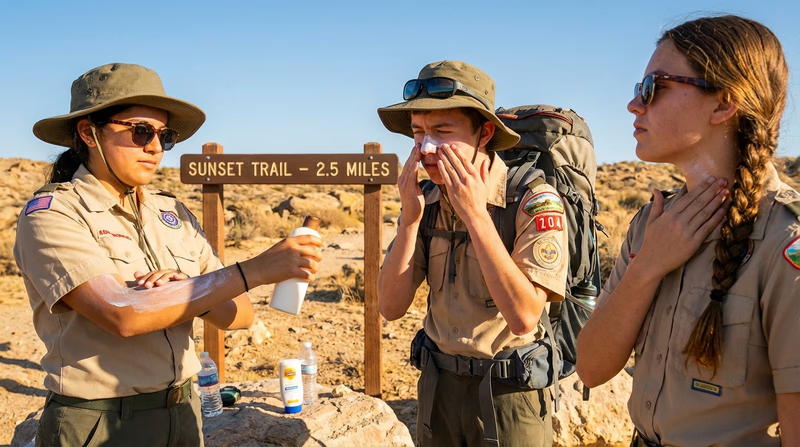
Prevention: Apply SPF 30+ sunscreen 15 minutes before going outside. Reapply every 2 hours and after swimming or sweating. Wear a wide-brimmed hat, sunglasses, and lightweight long-sleeved clothing. Avoid peak UV hours (10 a.m. to 4 p.m.) when possible.