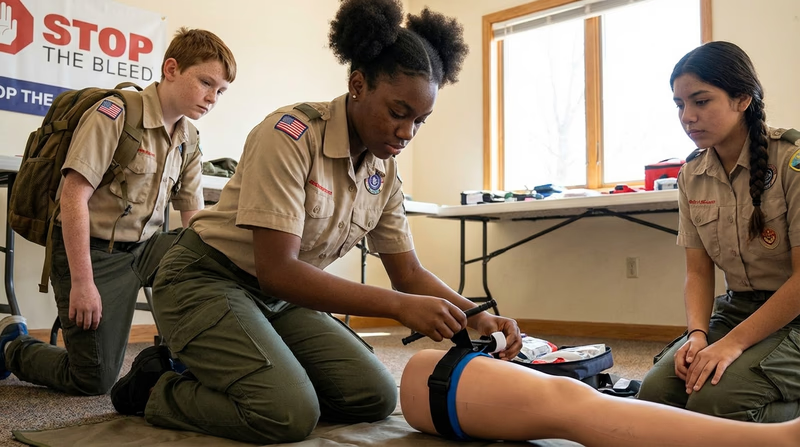
Req 4b — Severe Bleeding & Tourniquets
Severe bleeding is a life-threatening emergency. A person can bleed to death from a major wound in as little as five minutes. The skills on this page — direct pressure, wound packing, and tourniquet use — are among the most important things you will learn in this entire merit badge.
Recognizing Severe Bleeding
Severe bleeding looks different from a scrape or minor cut:
- Blood flows steadily and rapidly — it may soak through bandages quickly
- Blood may spurt in rhythm with the heartbeat (this means an artery is involved)
- The victim may become pale, dizzy, confused, or lose consciousness — signs of shock
- A pool of blood forms on the ground or soaks through clothing
First Aid for Severe Bleeding
Step 1: Call 911
Call 911 immediately or have someone else call. Severe bleeding requires professional medical treatment.
Step 2: Apply Direct Pressure
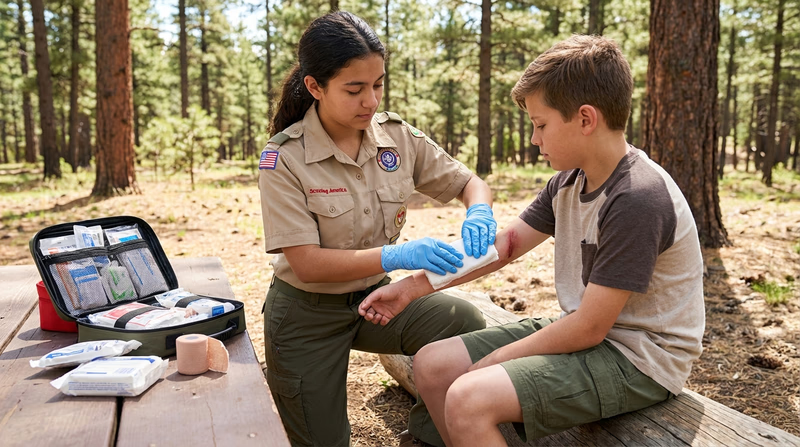
- Place a thick sterile gauze pad or the cleanest cloth available directly over the wound.
- Press hard with both hands. Use your body weight if needed.
- Do not lift the dressing to check — this disrupts clot formation. If blood soaks through, add more gauze on top of the first layer and keep pressing.
- Maintain pressure for at least 10 minutes or until EMS arrives.
Step 3: Wound Packing (If Direct Pressure Is Not Enough)
For deep wounds — especially in areas where a tourniquet cannot be applied (neck, groin, armpit) — wound packing may be necessary:
- Pack sterile gauze tightly into the wound cavity using your fingers.
- Apply firm direct pressure on top of the packed gauze.
- Hold until bleeding stops or EMS arrives.
Step 4: Elevate and Position
If possible without causing more pain, elevate the injured limb above the level of the heart. This uses gravity to slow blood flow to the wound.
If the victim shows signs of shock, lay them flat with legs elevated about 12 inches.
Tourniquets
A tourniquet is a device that wraps tightly around a limb to completely stop blood flow below the point of application. Once considered a last resort, tourniquets are now recognized as a front-line treatment for severe, life-threatening limb bleeding.
The national Stop the Bleed campaign has trained millions of civilians — including teens — to use tourniquets. This is a skill that saves lives.
When to Use a Tourniquet
A tourniquet is appropriate when:
- Direct pressure has not stopped the bleeding after 10 minutes
- The bleeding is so severe that direct pressure is clearly insufficient (blood pooling rapidly, spurting)
- A limb has been partially or completely amputated
- You cannot reach the wound to apply direct pressure (trapped limb, debris)
- There are multiple victims and you need to control one person’s bleeding quickly so you can help others (triage situation)
- The scene is unsafe and you need to control bleeding fast before moving the victim
A tourniquet is NOT appropriate when:
- The wound is on the head, neck, or torso (a tourniquet can only be used on arms and legs)
- The bleeding is mild or moderate and can be controlled with direct pressure
- The wound is on a joint (neck, groin, armpit) — use wound packing instead
Benefits of Tourniquets
- Speed: A tourniquet can stop life-threatening bleeding in seconds
- Effectiveness: Studies from military and civilian use show they are highly effective at saving lives
- One person can apply one: Even to themselves, with one hand, in some designs
- Buys time: Keeps the victim alive until they reach a surgeon
Dangers and Risks
- Tissue damage: A tourniquet cuts off all blood flow. If left on too long (more than 2 hours without medical oversight), nerves and muscles below the tourniquet can be damaged.
- Pain: A properly applied tourniquet is very painful — this is normal and expected
- Improper placement: If placed too loosely, it can actually increase bleeding by blocking venous return without stopping arterial flow
- Premature removal: Once applied, a tourniquet should only be removed by medical professionals at a hospital
How to Apply a Tourniquet
For this requirement, you will demonstrate tourniquet application without tightening it. Here is the correct technique using a commercial windlass tourniquet (such as a CAT or SOFT-T):
- Place it high and tight — as high on the limb as possible, above the wound. Never place over a joint.
- Pull the strap tight and secure it through the buckle.
- Turn the windlass rod (the stick-like piece) until the bleeding stops.
- Secure the windlass by locking it into the clip or holder.
- Note the time of application. Write it on the tourniquet, the victim’s forehead, or a piece of tape — this tells the hospital how long blood flow has been cut off.
- Do not cover it. EMS needs to see it immediately.
Improvised Tourniquets
If you do not have a commercial tourniquet, you can improvise one from a wide strip of cloth (bandanna, belt, shirt sleeve) and a stick or pen as a windlass. However, improvised tourniquets are less reliable and harder to apply effectively. If your troop or patrol does not carry a commercial tourniquet, consider adding one to your first-aid kit.