Req 9 — Head & Spine Injuries
Head and spinal injuries are among the most dangerous injuries you can encounter. The brain and spinal cord control everything your body does — and unlike bones or skin, nerve tissue has very limited ability to heal. Improper handling of a head or spine injury can cause permanent paralysis or death.
Head, Neck, and Back Injuries
How They Are Related
The head, neck, and back are connected by the spinal column — a chain of bones (vertebrae) that protects the spinal cord. The spinal cord is a bundle of nerves that carries signals between the brain and the rest of the body.
An injury to the head often involves the neck, and vice versa. A force strong enough to fracture the skull can also damage the cervical spine (neck). A blow to the back can affect the thoracic or lumbar spine. This is why you should always suspect a spinal injury when you see a head injury — and treat accordingly.
When to Suspect a Spine Injury
Suspect a head, neck, or back injury whenever the victim:
- Has fallen from a significant height
- Was in a car, bicycle, or motorcycle crash
- Dove into shallow water
- Was struck by a heavy or fast-moving object
- Has a head wound or is unconscious after an impact
- Complains of neck or back pain, tingling, numbness, or weakness in the extremities
Signs and Symptoms
- Headache, dizziness, or confusion
- Neck or back pain
- Tingling, numbness, or weakness in arms or legs
- Inability to move arms or legs (paralysis)
- Loss of bladder or bowel control
- Deformity of the head, neck, or spine
- Bruising on the head, neck, or back
- Clear fluid from the ears or nose (may indicate skull fracture)
Possible Complications
- Paralysis — temporary or permanent, partial or complete
- Brain swelling — increased intracranial pressure can be fatal
- Internal bleeding — within the skull or spinal canal
- Respiratory failure — high spinal cord injuries can affect breathing
- Chronic pain and disability
Prevention
Wear helmets during cycling, climbing, skating, and contact sports. Use proper diving technique — never dive into water of unknown depth. Wear seatbelts. Follow safety rules at high-adventure activities. Practice safe climbing and rappelling techniques.
Concussions
A concussion is a traumatic brain injury caused by a blow, bump, or jolt to the head — or a hit to the body that causes the head to move rapidly back and forth. The brain is shaken inside the skull, temporarily disrupting normal function.
Signs and symptoms:
- Headache or pressure in the head
- Confusion or feeling “foggy”
- Dizziness, balance problems
- Nausea or vomiting
- Blurred or double vision
- Sensitivity to light or noise
- Slurred speech
- Delayed response to questions
- Memory loss about the event
- Mood changes (irritability, sadness, anxiety)
- Loss of consciousness (this happens in less than 10% of concussions)
First aid:
- Remove the person from activity immediately. “When in doubt, sit them out.”
- Call 911 if the person lost consciousness, has worsening symptoms, has a seizure, or has clear fluid from the ears or nose.
- Monitor closely for the next 24–48 hours. Symptoms can worsen over time.
- Rest. Limit physical and mental activity. No screens, reading, or schoolwork until symptoms improve (as directed by a doctor).
- Do not give aspirin or ibuprofen — they can increase bleeding risk. Acetaminophen (Tylenol) is usually safe with doctor approval.
- Do not let the person return to activity until cleared by a medical professional.
First Aid for an Open Head Wound
An open head wound bleeds heavily because the scalp has an excellent blood supply. While the bleeding can look alarming, your priorities are controlling the bleeding and protecting against infection — while being careful not to press on a possible skull fracture.
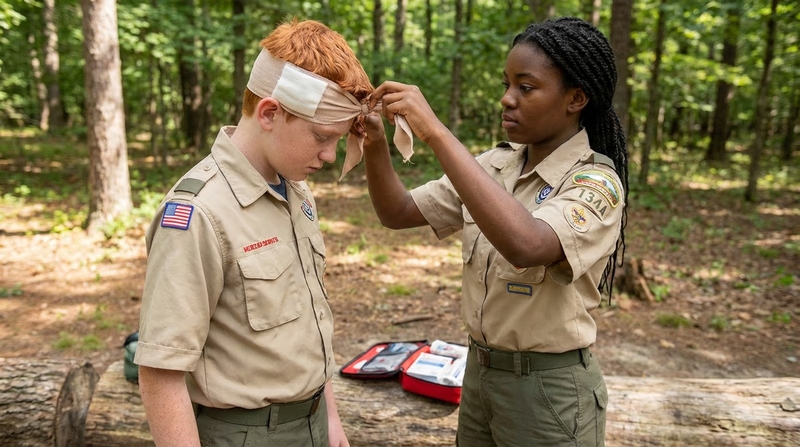
Using a triangular bandage:
- Put on gloves.
- Control bleeding with gentle direct pressure using a sterile gauze pad. If you feel a depression or soft area in the skull, do not press on it — apply pressure around the wound edges instead.
- Fold the triangular bandage into a narrow band about 2 inches wide.
- Place the center of the band over the gauze pad on the wound.
- Wrap the ends around the head.
- Tie the bandage at the side of the head (not over the wound).
- Ensure the bandage is snug enough to hold the dressing in place but not so tight it increases intracranial pressure.
First Aid for Suspected Neck or Back Injury
Manual In-Line Stabilization
If you suspect a spinal injury, your primary job is to prevent any movement of the head and neck:
- Approach the victim from the direction they are facing so they do not turn their head to see you.
- Kneel at the victim’s head. Place your hands on both sides of the head, covering the ears.
- Hold the head in a neutral position — eyes facing forward, head not tilted or rotated.
- Tell the victim not to move. Speak calmly: “I’m holding your head still. Try not to move.”
- Do not release until EMS arrives and takes over.
- If the victim is wearing a helmet (bicycle, climbing), leave it on unless it prevents airway management.
If the victim is not breathing and you need to open the airway, use the jaw-thrust maneuver instead of the head-tilt, chin-lift — this opens the airway without moving the neck (see Req 1d).