Req 1c — Removing a Barbed Hook
A barbed hook is designed not to back out easily. That is great when you are fighting a fish, but terrible when the hook is in a person’s arm. This is one of the most memorable fishing safety topics because it feels very specific, very real, and very important.
First, Slow Everything Down
If someone gets hooked, panic makes the situation worse. The injured person may jerk, the line may still be attached, and other hooks may still be swinging around. Start by making the area safe.
- Stop casting immediately.
- Set the rod down securely.
- Cut or control any line that is pulling on the hook.
- Help the person stay still.
Then look at the hook carefully. Is it shallow or deeply embedded? Is it in a simple area like the fleshy part of the arm, or somewhere dangerous like the eye, face, hand tendon area, neck, or near a major joint?
The Basic Idea
For a hook lodged in someone’s arm, the usual idea is to avoid simply yanking it backward through the barb. That tears tissue. Instead, you either remove it using a technique that controls the barb, or you get medical help if the hook is too deep, the location is unsafe, or you are not trained to do it.
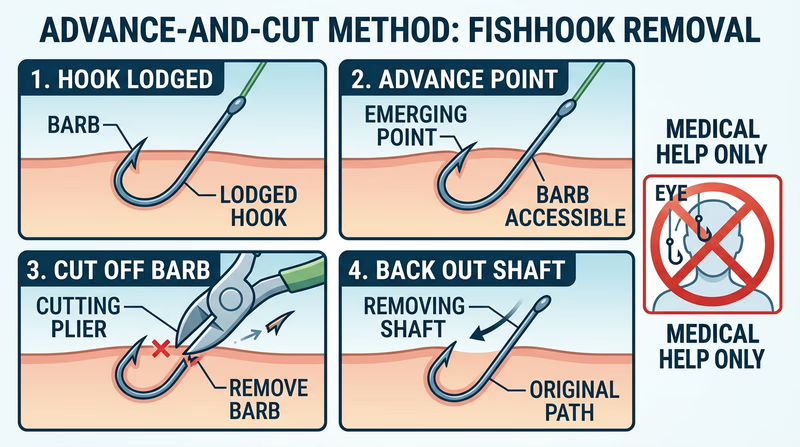
For discussion with your counselor, you should understand the advance-and-cut method because it shows why the barb matters.
Advance-and-Cut Method
- Clean the area as best you can. Use clean water and antiseptic if available.
- Push the hook point forward through the skin until the barb comes out the other side.
- Cut off the barb with proper cutting pliers or wire cutters.
- Back the remaining shaft out through the original entry path.
- Clean the wound again, apply pressure if needed, and bandage it.
This method makes sense because once the barb is removed, the hook can slide back without catching more tissue.
When Not to Try It Yourself
Even if the hook is in an arm, there are times when the right answer is still medical help.
- The hook is very deep.
- You cannot clearly see the point and barb.
- The person is a small child or is panicking badly.
- The wound is bleeding heavily.
- More than one hook point is embedded.
- You do not have the right tools.
- The person may need tetanus follow-up or additional wound care.
After the Hook Is Out
Hook removal is not the end of the job.
- Wash the wound thoroughly.
- Apply an antibiotic ointment if appropriate.
- Cover it with a clean bandage.
- Watch for infection.
- Make sure the person knows to ask about tetanus protection if needed.
If the person feels faint, sits down suddenly, or looks pale, treat that seriously too. Sometimes the injury itself is minor, but the person’s reaction is the bigger issue.
What Your Counselor Wants to Hear
Your counselor is not looking for you to act like an emergency room doctor. They want to know that you understand the safety logic.
A strong explanation includes these points:
- A barbed hook should not usually be ripped backward through tissue.
- You first decide whether the location is safe for field removal.
- In a simple arm location, you can explain the advance-and-cut method.
- Dangerous locations or deep hooks need professional care.
- After removal, the wound must be cleaned and monitored.
That answer shows judgment, which matters as much as the technique itself.
Mayo Clinic — Fishhook Removal Medical guidance on when fishhook removal can be handled simply and when professional care is the better choice.You have now covered one of the most specific fishing injuries. Next, zoom back out and lock in the safety habits every angler should follow on every trip.