Req 2 — Fishing Outfits & Equipment Care
Walking into a tackle shop for the first time can feel like walking into a different language. Spinning reel. Baitcaster. Drag. Spool. Rod power. Rod action. The good news is that most fishing outfits follow a few clear patterns, and once you understand those patterns, the gear starts making sense fast.
Two Common Fishing Outfits
The two outfits most Scouts are likely to compare are spinning and baitcasting.
Spinning Outfit
A spinning outfit uses a spinning rod and a spinning reel mounted below the rod. The spool stays fixed, and the line peels off during the cast.
Why it is popular: Spinning gear is easy to learn, handles light lures well, and works for many freshwater situations.
When to use it: Shore fishing, panfish, trout, bass, and general-purpose fishing. It is often the best choice for beginners.
Baitcasting Outfit
A baitcasting outfit uses a reel mounted on top of the rod. The spool turns during the cast, which gives more control and power but also creates the chance of backlash if the reel is not adjusted well.
Why anglers like it: It offers strong control, accuracy, and power for heavier lures and bigger fish.
When to use it: Bass fishing with heavier lures, target casting near cover, and situations where line control matters.
Parts of a Rod
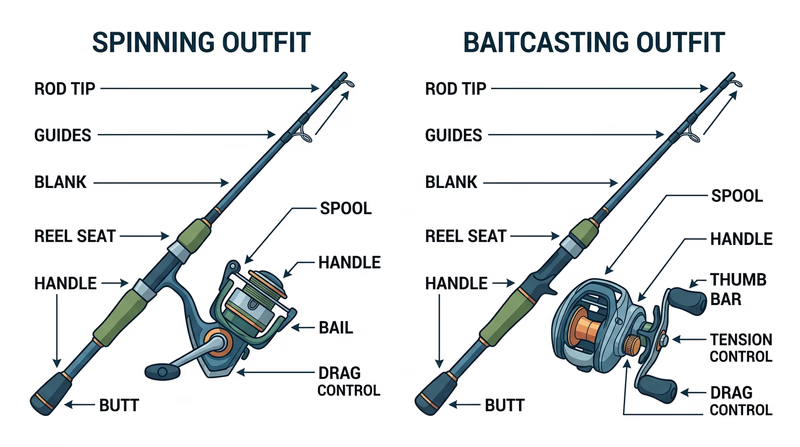
Most rods share the same basic parts:
- Tip — the thin end of the rod
- Guides — rings that direct the line down the rod
- Blank — the main body of the rod
- Handle or grip — where you hold it
- Reel seat — where the reel attaches
- Butt — the bottom end of the rod
You may also hear about power and action.
- Power describes how strong the rod is: ultralight, light, medium, medium-heavy, and so on.
- Action describes where the rod bends: fast, moderate, or slow.
A light, fast rod may be great for trout or panfish. A medium-heavy rod may be better for larger bass lures or stronger fish around cover.
Parts of a Spinning Reel
A spinning reel usually includes:
- Spool — holds the line
- Bail — flips open for casting and closes for retrieve
- Handle — turns the reel
- Drag knob — adjusts resistance when a fish pulls line
- Body and rotor — support the moving parts
Parts of a Baitcasting Reel
A baitcasting reel includes:
- Spool — rotates during the cast
- Handle — retrieves line
- Drag star — adjusts drag pressure
- Thumb bar or spool release — disengages spool for casting
- Braking/tension controls — help manage spool speed and prevent backlash
How and When Each Is Used
A Scout should be able to explain this in real-world terms, not just definitions.
A spinning outfit is great when you want to cast light baits, fish from shore, or keep things simple. It is forgiving and versatile.
A baitcasting outfit shines when you need stronger line, heavier lures, better control around docks or weeds, or extra power for pulling fish away from cover.
If you discuss a third type, you could mention a spincast outfit, which is beginner-friendly and often used by younger anglers, or a fly outfit, which is specialized for presenting flies.
Caring for Fishing Equipment
Good care keeps your equipment smooth, reliable, and safe.
Basic Gear Care
What smart anglers do after a trip
- Rinse and wipe down gear: Especially after saltwater use.
- Check line for damage: Frayed line should be cut back or replaced.
- Inspect guides and reel parts: Cracks or rough spots damage line.
- Loosen drag before storage: This helps protect drag washers.
- Store rods and reels carefully: Avoid crushing, bending, or leaving them in extreme heat.
Saltwater adds an extra step. Salt left on gear attracts moisture and speeds corrosion, so rinsing is essential.
What to Say to Your Counselor
A strong discussion might sound like this: “A spinning outfit is easier for beginners and better for light lures. A baitcasting outfit gives more control and power for heavier lures. On a rod, I can point out the tip, guides, reel seat, handle, and butt. On reels, I can identify the spool, drag, handle, and casting controls. I would care for them by rinsing, drying, checking the line, and storing them properly.”
That covers the requirement clearly and practically.
Take Me Fishing — Rods and Reels Basics A beginner-friendly overview of common rod and reel types and how they are used.Now that you understand the parts and purposes of common outfits, it is time to put equipment into action and think about how to use it correctly.