Req 3 — Using Fishing Equipment
This requirement is about action. Your counselor wants to see that you can actually handle equipment correctly, not just talk about it. The best way to prepare is to choose two types of gear and practice the basic motions until they feel controlled and safe.
What Counts as Different Types?
Different types of fishing equipment could mean different rod-and-reel setups, such as spinning and baitcasting, or different tools such as a rod outfit and a landing net. Most Scouts complete this requirement by demonstrating two different fishing outfits.
A strong pair is:
- Spinning outfit
- Baitcasting outfit
If baitcasting gear is not available, a spinning outfit and a spincast outfit can still let you show the differences in setup and use.
Proper Use Starts Before the Cast
Using equipment properly begins with setup.
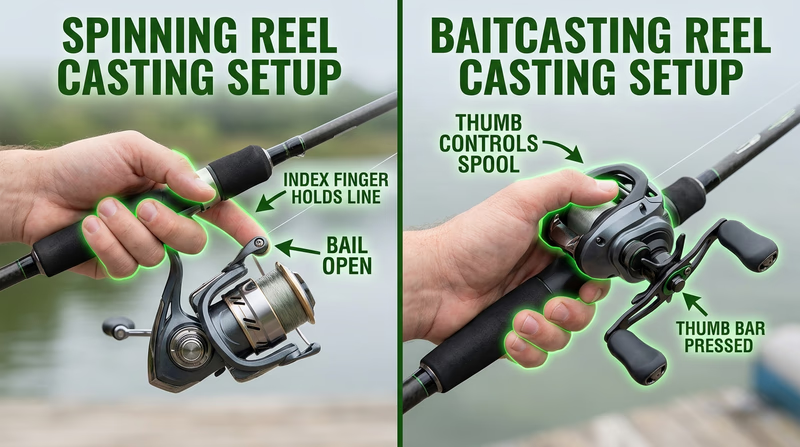
For a Spinning Outfit
- Check that the line is threaded through every guide.
- Make sure the bail is working smoothly.
- Hold the line lightly against the rod with your finger.
- Open the bail by hand.
- Cast in a controlled motion.
- Release the line at the right moment.
- Close the bail by hand after the cast.
Closing the bail by hand instead of cranking it shut helps reduce twist and wear.
For a Baitcasting Outfit
- Set spool tension and braking for the lure you are using.
- Keep your thumb lightly on the spool.
- Press the spool release.
- Make a smooth cast — not a wild power throw.
- Feather the spool with your thumb during flight.
- Stop the spool as the lure lands.
That thumb control is what keeps the line from exploding into a backlash.
Demonstrating Retrieval and Fish Control
Proper use is not just about casting. It also includes what happens after the lure lands.
- Keep slight tension on the line so you can detect strikes.
- Use the rod tip intentionally, not randomly.
- Reel smoothly.
- Set the hook appropriately for the lure and species.
- Let the drag work instead of trying to win every fish by brute force.
In Req 2, you learned about drag and outfit differences. Here, you show that you can use those ideas under control.
Other Equipment You May Demonstrate
You can also strengthen your discussion by mentioning other fishing tools and how they should be used.
- Landing net: Scoop head-first when possible, and avoid chasing the fish wildly.
- Pliers: Use them to remove hooks safely from fish and keep hands away from teeth or spines.
- Stringer or livewell tools: Use only where legal and appropriate.
- Tackle storage: Handle lures carefully and return them safely after use.
Common Mistakes
Common Beginner Errors
What to avoid during your demonstration
- Casting without checking behind you
- Snapping the rod too hard instead of making a smooth motion
- Closing a spinning reel bail by cranking
- Ignoring baitcaster spool tension and thumb control
- Holding the rod awkwardly so you cannot react to a strike
Practice Plan Before Meeting Your Counselor
What Your Counselor Is Looking For
The demonstration does not have to be flashy. It should be safe, controlled, and purposeful. You want your counselor to see that you can:
- handle the outfit correctly,
- cast safely,
- explain what you are doing,
- and use equipment without creating danger for yourself or others.
That is much more impressive than one long cast with poor control.
Take Me Fishing — Learn How to Cast Simple casting basics for beginners using common fishing outfits.The next skill is one every angler depends on: tying knots that hold when the fish is finally on.