Req 4 — Essential Fishing Knots
Fish do not care how expensive your rod is if your knot fails. A good knot transfers strength from line to hook, lure, swivel, or reel spool. A bad knot slips, cuts into itself, or weakens the line so badly that even a small fish can break it.
Why Knot Choice Matters
Different knots solve different problems.
- Some tie your line to a hook or lure.
- Some join two lines together.
- One secures line to the reel spool.
That is why this requirement includes five knots instead of just one “best” knot.
Improved Clinch Knot
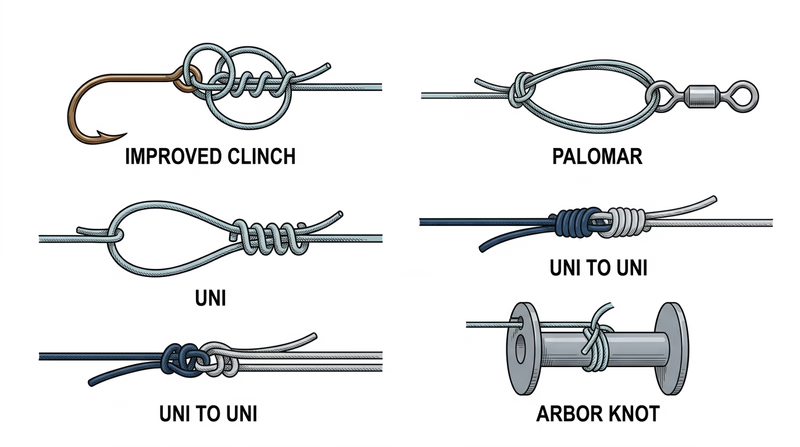
The improved clinch knot is a classic knot for tying line to a hook, lure, or swivel. Many anglers learn it first.
How it is used: Pass the tag end through the eye, wrap it around the standing line several times, pass it through the small loop near the eye, then back through the larger loop that forms, moisten, and tighten.
When to use it: Light to medium line, common terminal tackle, and simple general fishing situations.
Palomar Knot
The Palomar knot is known for strength and simplicity, especially with braided line.
How it is used: Double the line, pass the loop through the eye, tie an overhand knot with the doubled line, pass the lure or hook through the loop, moisten, and tighten evenly.
When to use it: Hooks, lures, and swivels when you want a strong, reliable knot with minimal fuss.
Uni Knot
The uni knot is one of the most versatile fishing knots around.
How it is used: Pass the line through the eye, form a loop alongside the standing line, wrap the tag end through the loop several times, moisten, and snug it down.
When to use it: Tying line to terminal tackle. Many anglers also use variations of it in other line-connection jobs.
Uni to Uni Knot
This knot joins two fishing lines together, often lines of different materials or diameters.
How it is used: Overlap the two lines, tie a uni knot with one tag end around the other line, repeat from the other side, then pull the standing lines so the two knots slide together.
When to use it: Connecting main line to leader, such as braid to fluorocarbon or mono.
Arbor Knot
This knot attaches fishing line to the reel spool.
How it is used: Wrap the line around the spool, tie an overhand knot in the tag end, tie another overhand knot in the standing part area as a stopper, and tighten so the knot cinches onto the spool.
When to use it: When loading new line onto a reel.
What Each Knot Does
Match the knot to the job
- Improved clinch: Tie line to hook, lure, or swivel.
- Palomar: Strong line-to-hook or line-to-lure knot.
- Uni: Versatile line-to-terminal-tackle knot.
- Uni to uni: Join two lines together.
- Arbor: Attach line to the reel spool.
Tips for Stronger Knots
No matter which knot you tie, the same quality habits matter.
- Moisten the knot before tightening. This reduces heat and friction.
- Tighten evenly instead of jerking suddenly.
- Trim the tag end neatly, but not so close that it slips.
- Test the knot with a firm pull before you cast.
Preparing for the Demonstration
Your counselor will likely want to see more than one knot in real time. That means repetition matters.
How to Explain “How and When”
Your counselor will not just ask for the names. Be ready with a one-sentence purpose for each knot.
Example: “I would use an arbor knot when putting new line on a reel spool. I would use a uni to uni knot when connecting main line to a leader. I would use a Palomar or improved clinch knot to attach a hook or lure.”
That shows that you understand the job each knot performs.
Animated Knots — Fishing Knots Clear step-by-step knot animations that are useful for practice before demonstrating knots to your counselor.Once your knots are solid, you can start thinking about what goes on the end of the line — natural bait, artificial lures, and why baitfish should never be released carelessly.