Req 5 — Lures, Baits, and Baitfish
The bait or lure you choose sends a message to the fish: “This looks like food.” Sometimes that message is a natural smell and taste. Sometimes it is flash, movement, vibration, or color. Understanding the difference between natural bait and artificial lures is one of the biggest steps from beginner fishing to intentional fishing.
Artificial Lures
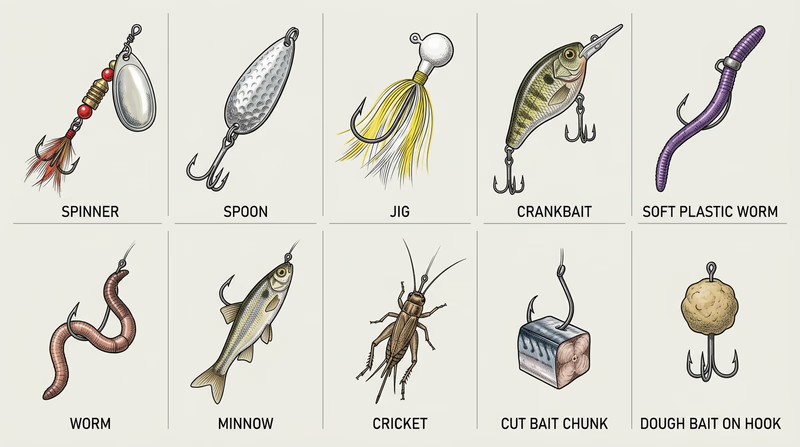
Artificial lures are designed to imitate prey or trigger a strike. You do not have to use exactly these five examples when talking to your counselor, but you should be able to identify five basic types and explain how they work.
Spinner
A spinner uses a metal blade that flashes and vibrates as it moves through the water.
How to fish it: Cast and retrieve steadily. Change speed until you find what the fish want.
Spoon
A spoon is curved metal that wobbles and flashes like an injured baitfish.
How to fish it: Cast and retrieve, jig it up and down, or troll it depending on the setting.
Jig
A jig is a weighted hook, often dressed with hair, rubber, or soft plastic.
How to fish it: Bounce it along the bottom, hop it, or swim it slowly.
Crankbait
A crankbait is a hard-bodied lure with a diving lip that makes it wobble when retrieved.
How to fish it: Cast and reel so it runs at the depth you want. It is great for covering water and locating active fish.
Soft Plastic Worm or Creature Bait
These imitate worms, crawfish, or other prey.
How to fish it: Rig it in a way that matches the habitat and retrieve it slowly, with pauses and subtle movement.
Natural Baits
Natural bait is real food that fish recognize by scent, taste, and appearance.
Worms
A classic bait for many freshwater species.
How to fish it: Use under a bobber, on the bottom, or lightly weighted depending on depth and species.
Minnows
Small live baitfish can be effective for predators.
How to fish it: Hook them carefully so they stay lively and natural in the water.
Crickets or Grasshoppers
Good for sunfish, trout, and other species that eat insects.
How to fish it: Present naturally near the surface or just below it.
Cut Bait
Pieces of fish used to attract catfish or other scent-feeding species.
How to fish it: Fish it on the bottom where scent can spread through the water.
Dough Bait or Prepared Bait
Common for species like trout or catfish depending on the formula.
How to fish it: Mold it securely to the hook and fish it where the target species feeds.
Artificial vs. Natural
How anglers think about the choice
- Artificial lures: Cover water faster and imitate movement or vibration.
- Natural baits: Offer real scent and taste that fish recognize.
- Lures often need more technique: Retrieve speed, rod movement, and depth matter.
- Bait often needs more patience: Presentation and keeping it natural matter.
Why Baitfish Should Not Be Released
This is one of the most important conservation ideas in the badge.
Released baitfish can create real ecological problems. They may:
- spread diseases or parasites,
- compete with native fish,
- become invasive if they are not native to that water,
- or mix species between waters in ways that harm ecosystems.
Even if the baitfish looks healthy, releasing it where it did not come from can damage the fishery you are trying to enjoy.
How to Talk About Fishing With Each One
Your counselor will want you to explain not just what these are, but how you would fish them.
That means talking about things like retrieve speed, depth, whether the bait should drift naturally, and what type of fish or habitat matches each choice. A spinner worked steadily along a weed edge is very different from a worm fished quietly below a bobber.
In Req 4, you learned the knots that attach these choices to your line. Here, you are learning why you might choose one presentation over another.
Take Me Fishing — Fishing Bait and Lures Guide A simple overview of common bait and lure types, including when to use them.You now understand what goes on the end of the line. Next, shift from catching fish to protecting the waters and habitats that make fishing possible.