 Getting Started
Introduction & Overview
A trout rises just once, sips something from the surface, and disappears. If you were holding a spinning rod, you might cast a lure into the same spot and hope. A fly angler tries to answer a more interesting question first: What did that fish just eat?
Fly fishing is a style of fishing that uses a weighted line and an artificial fly to imitate insects, baitfish, and other food. It blends science, observation, knot tying, casting skill, patience, and outdoor ethics. Scouts who learn fly fishing discover that success is not just about catching fish. It is about reading water, noticing small details, and treating streams, lakes, and shorelines with care.
Then and Now
Then — Fur, Feathers, and Craftsmanship
People have been tying simple artificial flies for centuries. Early anglers in Europe and Asia used hooks dressed with feathers, fur, and thread to imitate insects that fish were already eating. By the 1800s, fly fishing had become especially popular on trout and salmon rivers in Britain, where anglers carefully matched local insects and developed classic casting styles and fly patterns.
In North America, fly fishing spread into mountain streams, warmwater ponds, and coastal flats. Bamboo rods, silk lines, and handmade flies demanded patience and care. Learning the sport meant practicing knots, casting in open fields, and spending long hours beside the water watching fish behavior.
- Purpose: Present a lifelike food item to fish with a lightweight fly
- Mindset: Observe first, cast second
Now — More Waters, Better Gear, Same Curiosity
Today, fly anglers still rely on observation and skill, but the equipment is lighter, stronger, and easier to maintain. Graphite rods replaced most bamboo. Modern fly lines float, sink, or hover at different depths. Leaders and tippets are made from precise materials that help flies move naturally in the water.
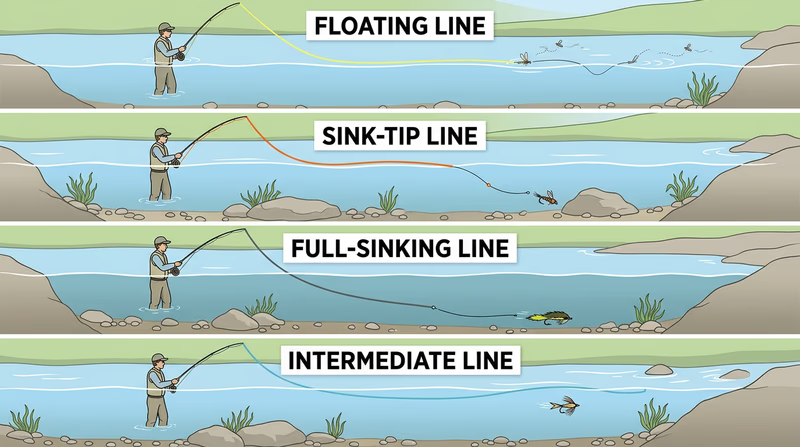
Fly fishing is also broader than many people expect. People use it for trout in cold streams, bass in ponds, carp in city lakes, redfish on saltwater flats, and panfish close to home. Modern anglers also think more seriously about conservation, habitat protection, and catch-and-release practices so fish populations stay healthy.
- Purpose: Combine fishing skill with observation, ethics, and stewardship
- Mindset: Learn the water, respect the fish, leave the place better than you found it
Get Ready! This guide will help you understand the gear, insects, fish behavior, and outdoor skills behind the Fly Fishing merit badge. You do not need to be an expert yet. You just need curiosity, patience, and a willingness to practice.
Kinds of Fly Fishing
Fly fishing is not one single style. The place you fish, the species you target, and the flies you use all change the experience.
River and Stream Fly Fishing
This is what many people picture first: standing in moving water and casting to trout in riffles, runs, and pools. Stream fly fishing rewards careful reading of current seams, underwater structure, and insect activity. A short drift in exactly the right place often matters more than a long cast.
Lake and Pond Fly Fishing
Stillwater fly fishing often means longer casts, slower retrieves, and close attention to depth. Fish in lakes and ponds may cruise weed edges, drop-offs, or shoreline cover. Fly anglers often use nymphs, streamers, poppers, and bass bugs here.
Warmwater Fly Fishing
Bass, bluegill, and other warmwater fish are exciting targets for Scouts because they often live close to home. Poppers that chug across the surface and streamers stripped near weeds can create explosive strikes. Warmwater fly fishing is a great way to practice the sport without needing a mountain trout stream.
Saltwater Fly Fishing
Saltwater fly fishing targets species like redfish, bonefish, striped bass, and other coastal fish. The gear is usually tougher because salt corrodes equipment and many saltwater fish are powerful. Wind, tides, and sunlight angle matter a lot.
Tying Flies at the Bench
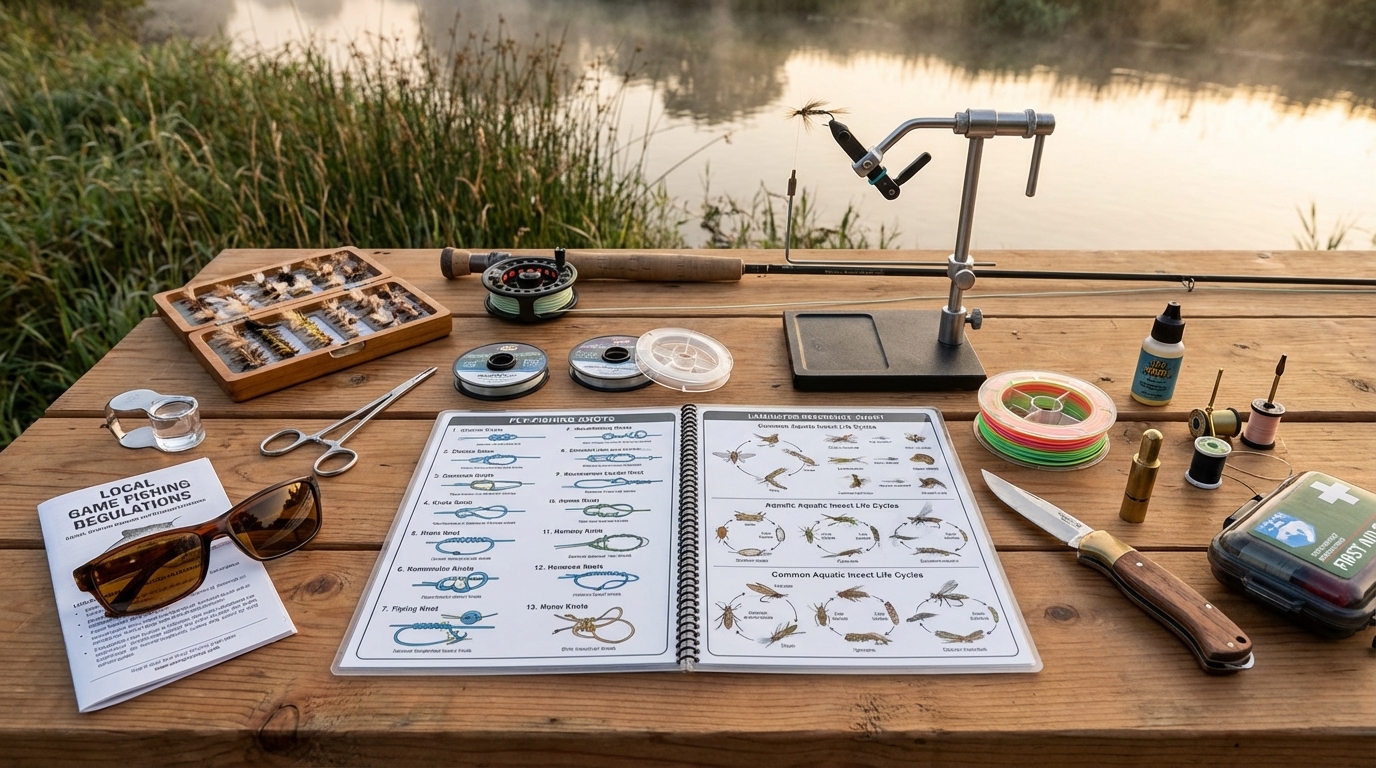
Not every part of fly fishing happens on the water. Many anglers tie their own flies using hooks, thread, feathers, fur, flash, foam, and synthetic materials. Fly tying helps you understand why certain patterns work and what they are trying to imitate.
Now you are ready to start with the most important part of the badge: staying safe around hooks, water, weather, and the outdoors.