Req 3a — Backing to the Reel
When a fish makes a long run, the extra line that saves the day is called backing. It is the thin line stored under your fly line on the reel. Before it can help, though, it has to be attached securely to the reel spool, also called the arbor.
What the Arbor Knot Does
The arbor knot attaches line to the spool itself. It is simple, compact, and strong enough for this job because the backing stays under steady tension around the arbor instead of taking shock the way some other knots do.
The knot works by creating a stopper around the standing line after the first wrap around the spool. When tension comes on the backing, the knot tightens against the arbor and holds in place.
Step-by-Step
- Wrap the backing around the reel arbor one full turn.
- Tie an overhand knot in the tag end around the standing line.
- Tie a second overhand knot in the very end of the tag as a stopper knot.
- Pull on the standing line until the first knot slides down and jams against the stopper knot at the arbor.
- Trim the tag neatly.
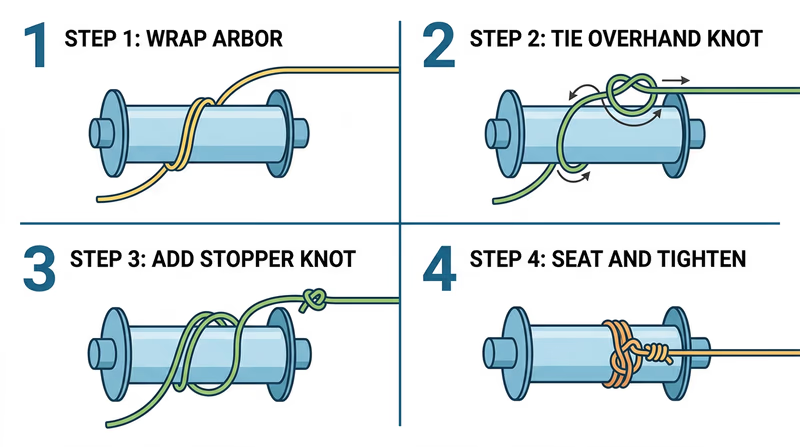
That is the basic sequence your counselor will want to see. Practice it a few times off the reel first so the steps feel automatic.
Why Backing Matters
For smaller fish, you may never see your backing leave the reel. But it still matters because it fills the spool to the right diameter and provides reserve line for stronger fish. Without backing, your fly line would sit too deep on the reel and retrieve more slowly.
Backing is usually made from braided dacron or gel-spun materials. Dacron is common for beginners because it is easy to handle and works well for many freshwater situations.
Practice Advice
When tying knots for this requirement, focus on clean steps rather than speed. A rushed knot is often crossed, twisted, or poorly seated. If the wraps do not look neat, untie it and start again.
What Your Counselor May Look For
Demonstration details that matter
- Correct wrap around the arbor: The backing must actually go around the spool, not just itself.
- Two distinct overhand knots: One knot around the standing line and one stopper knot in the tag end.
- Proper tightening: The knot should seat snugly at the arbor.
- Neat finish: Tag end trimmed without cutting too close.
In Req 2, you learned how each part of the tackle system depends on the others. This page starts building that system from the inside out.
Animated Knots — Arbor Knot Step-by-step visuals for tying an arbor knot correctly and understanding how it seats on the spool.Once backing is on the reel, the next connection is between backing and fly line.