Req 3c — Leader to Fly Line
By the time energy reaches the end of your fly line, it still needs one more job done: turning over the fly gently enough that it lands naturally. That is the leader’s job. This requirement asks you to connect the leader to the fly line using one of two common methods.
Option 1: Nail Knot
A nail knot gives a clean, direct connection from leader butt section to fly line. It is slim and dependable, but it takes a little more time to tie and is not the fastest method to change on the water.
The process is similar to the nail knot in Req 3b: the thicker butt end of the leader is wrapped around the fly line with the help of a tube, then tightened carefully.
This method is useful when you want a permanent or semi-permanent leader connection.
Option 2: Loop-to-Loop Connection
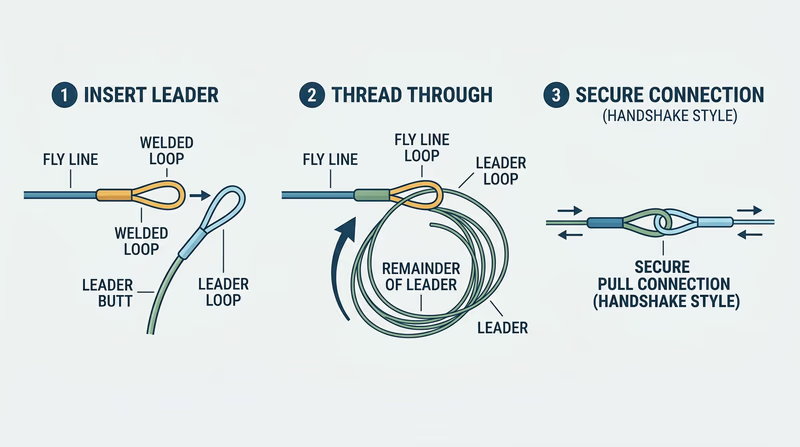
Many modern fly lines have a welded loop at the front end. Some leaders are sold with a loop in the butt section too. If both sides have loops, you can connect them quickly by passing the leader loop through the fly-line loop and then threading the leader through its own loop.
This creates a handshake-style connection that is easy to change.
Why anglers like loop-to-loop
- Fast leader changes
- Easy to learn
- No knot tool needed in the field
- Great for Scouts who are still building confidence with rigging
Why some anglers still prefer a nail knot
- Slightly smoother profile
- Fewer hinges in certain setups
- Good for custom leader systems
What Makes a Good Leader Connection
The connection should be:
- Strong enough that it does not slip or pull apart
- Straight enough that energy moves cleanly from line to leader
- Smooth enough that it passes through guides without trouble
- Convenient enough for the kind of fishing you are doing
A trout angler changing leader size during the day may love loop-to-loop. An angler who wants one sleek setup for a while may prefer a nail knot.
Leader Basics to Remember
The butt section of the leader is the thick end that attaches to the line. The fine end near the fly is the tippet end. If the leader is backward, it will not turn over properly.
This is also a good time to look for cracks, wind knots, or abrasions. A damaged leader can fail on a fish even if the connection knot was perfect.
Before You Cast
Quick rigging check after attaching a leader
- Butt end connected correctly: Thick end to the fly line
- Connection seated firmly: No slipping or twisting
- Leader straightened: Remove coils before fishing
- Tippet end intact: No nicks, frays, or wind knots
Learning both methods is useful because not every line and leader come with loops. A well-rounded fly angler can rig either way and understand the tradeoffs.
RIO Products — Loop to Loop Connection A practical explanation of loop-to-loop rigging and why it is popular for modern fly-fishing setups.Once the leader is attached, you are ready to lengthen or refresh the fine terminal section with tippet.