Req 3d — Tippet Connections
Tippet is the final, finer section between your leader and your fly. It is what you replace most often because it gets shortened by reties, scraped on rocks, or weakened by fish and branches. Knowing how to add fresh tippet keeps your rig fishing properly.
Why Tippet Matters
The tippet affects how naturally the fly moves and how visible the end of your rig is to fish. Smaller flies often need finer tippet. Larger flies, wind-resistant flies, or stronger fish may need thicker tippet.
Adding tippet lets you:
- Extend the life of a tapered leader
- Change diameters without replacing the entire leader
- Adjust to different flies and fish conditions
Surgeon’s Knot
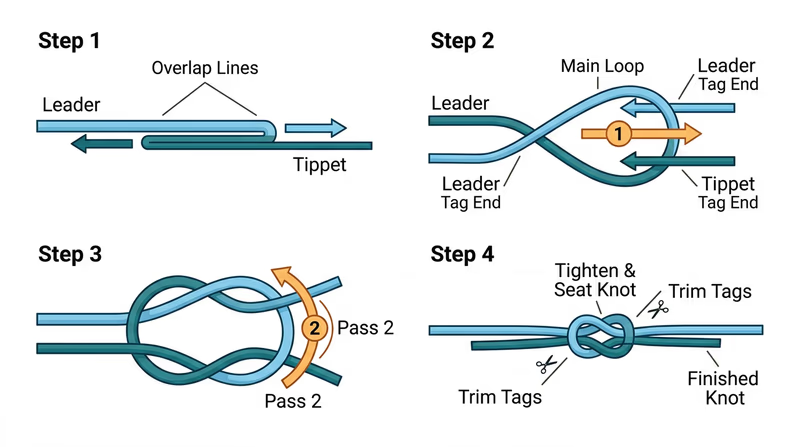
A surgeon’s knot is a fast, practical way to connect two pieces of line, especially when the diameters are fairly close. It is popular because it is easier than some other joining knots and works well on the water.
Basic idea
You overlap the leader end and the tippet, create a loop with both lines together, and pass both tag ends through the loop twice. Then you moisten and tighten evenly.
Why it works
The doubled pass increases friction, and the knot seats compactly when pulled down correctly. It is a good knot for Scouts because it is simple enough to learn without special tools.
Loop-to-Loop Connection
If both the leader end and the tippet section have loops, you can use a loop-to-loop connection. This is less common for standard trout tippet than for some specialty systems, but it is allowed by the requirement and useful to understand.
The advantage is speed. The tradeoff is that it can create a slightly hinging connection in very delicate presentations.
Choosing the Right Tippet Size
Tippet sizes often use an X system. Bigger X numbers mean finer tippet.
- 0X–2X: Stronger, thicker tippet for larger flies or bigger fish
- 3X–4X: General-purpose medium sizes
- 5X–6X: Finer tippet for smaller dries and cautious trout
A good match between fly size and tippet helps the cast turn over and the fly drift naturally. Too heavy, and the fly may look stiff. Too light, and it may break easily.
Practical Field Habits
- Check the end of your leader often for abrasion.
- Replace tippet after a fish, a snag, or repeated fly changes if it looks rough.
- Pull knots tight with steady pressure, not jerky yanks.
- Trim tag ends neatly but leave enough so the knot does not slip.
Tippet Connection Check
Signs your knot is ready to fish
- Diameters are appropriate: Not wildly mismatched for the knot
- Knot is moistened and seated: Helps it tighten smoothly
- Tag ends trimmed neatly: Clean but not cut too close
- Pull test completed: Better to fail in your hands than on a fish
As you keep building this system, notice how each connection gets you closer to the fly. The final knot is the one the fish will test directly.
Animated Knots — Surgeon’s Knot An easy visual reference for tying a surgeon’s knot and understanding when it is useful.The last knot in this rigging chain connects the fly itself.