Req 5 — Casting with Control
Thirty feet is not a giant cast in fly fishing, but it is far enough to expose weak timing, poor loop control, and sloppy aim. This requirement is really about control. A shorter accurate cast that lands softly is much more useful than a longer cast that crashes down or misses the target.
Overhead Cast
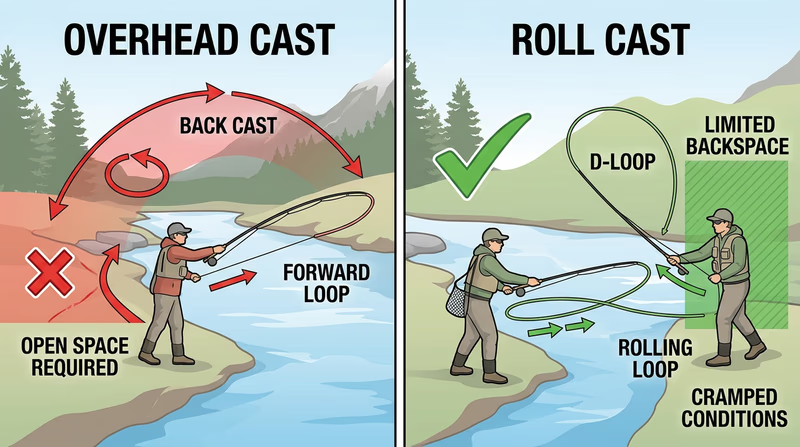
The overhead cast is the classic fly cast. The rod moves back and forward in a controlled path, and the line forms loops behind and in front of you.
A good overhead cast depends on four simple ideas:
- Smooth acceleration instead of jerking the rod
- A clear stop on the back cast and forward cast
- Good timing so you wait for the line to straighten behind you
- A straight casting path so the loop stays tight and efficient
Many beginners rush the forward cast before the back cast has unrolled. That sends the line into a tailing loop or a pile.
Roll Cast
The roll cast is especially important when trees, brush, or banks block your back cast. Instead of carrying line in the air behind you, the roll cast uses line already on the water to load the rod and send the fly forward.
This makes it perfect for tight streams and quick repositioning.
Key roll cast ideas
- Start with line on the water in front of you.
- Lift into a controlled setup position.
- Form a D-loop behind the rod.
- Drive the cast forward with a crisp stop.
If the D-loop is weak or blocked by bushes, the cast usually collapses.
Accuracy at 30 Feet
Consistency comes from repeatable mechanics. Try practicing at 20 feet first, then 25, then 30. Use paper plates, hoops, or cones as targets. Accuracy is easier to judge when you have something specific to aim at.
Aiming in fly fishing usually means aiming with the line and leader turnover, not just the fly itself. That is another reason a balanced system from Req 2 matters.
Practice Habits That Help
30-Foot Practice Routine
A smart way to build skill before your demonstration
- Start on grass: Practice without water distractions and with visible targets.
- Measure the distance: Do not guess. Mark 30 feet so you know what success looks like.
- Practice both casts separately: Build one skill at a time.
- Focus on clean loops first: Accuracy usually improves once loop shape improves.
- Stop before fatigue wrecks form: Short, focused practice beats wild flailing for an hour.
Common Casting Problems
Tailing loops
These happen when the rod tip dips and rises during the cast. The line crosses itself and often tangles. A smoother stroke and cleaner stop usually help.
Line crashing down
This usually means poor timing, too much force, or the rod tip dropping too low on the forward cast.
No power in the roll cast
Often the D-loop never formed correctly, or too little line was anchored on the water.
Casting Is About Presentation
The goal is not just to send line through the air. The goal is to place the fly where the fish can eat it naturally. That is why fly anglers practice on lawns and ponds before heading to prime water. Good mechanics free your attention to think about current, insects, and fish behavior.
Orvis Learning Center — Fly Casting Lessons A large collection of casting tutorials covering overhead casts, roll casts, accuracy, and common mistakes.Once you can put the fly where you want it, the next question becomes even more interesting: what should that fly imitate right now?