Req 6 — Matching the Hatch
A fish rising on the surface is giving you a clue, not a guarantee. To solve the puzzle, you have to observe the whole food scene: what is drifting on top, what is moving below, what insects are hatching, and how fish are feeding. That process is called matching the hatch.
What “Matching the Hatch” Means
A hatch happens when aquatic insects become active in large numbers, especially when nymphs or larvae emerge and transform into adults. Fish notice this quickly because it creates a concentrated, predictable food source.
Matching the hatch means choosing a fly that imitates the size, shape, color, stage, and behavior of what fish are actually eating. The better your imitation matches the real food, the more likely the fish will accept it.
Observe Above the Surface
Look for:
- Insects floating or skittering on top
- Fish rising, sipping, or slashing at the surface
- Birds feeding over the water, which may signal insect activity
- Spent insects collecting in eddies
If fish are gently sipping, they may be taking tiny dries or emergers. If they are crashing loudly, they may be chasing baitfish or striking larger prey.
Observe Beneath the Surface
The most important food may be invisible unless you look carefully. Turn over a stream rock, use a small aquarium net, or watch the shallows for movement. You might find nymphs, larvae, crayfish, minnows, or other prey.
This matters because fish often feed below the surface much more than they feed on top. A stream with no visible rises may still be full of actively feeding trout taking nymphs along the bottom.
What to Match
You do not need a perfect scientific match every time, but you should think through these factors:
- Size: Is the natural insect tiny, medium, or large?
- Stage: Is it a nymph, emerger, adult, drowned insect, or baitfish?
- Color: What general shades dominate?
- Profile: Slim mayfly? bushy caddis? minnow shape?
- Behavior: Dead drifting, swimming, twitching, struggling on top?
A fly that matches the right size and behavior often works even if the color is not exact.
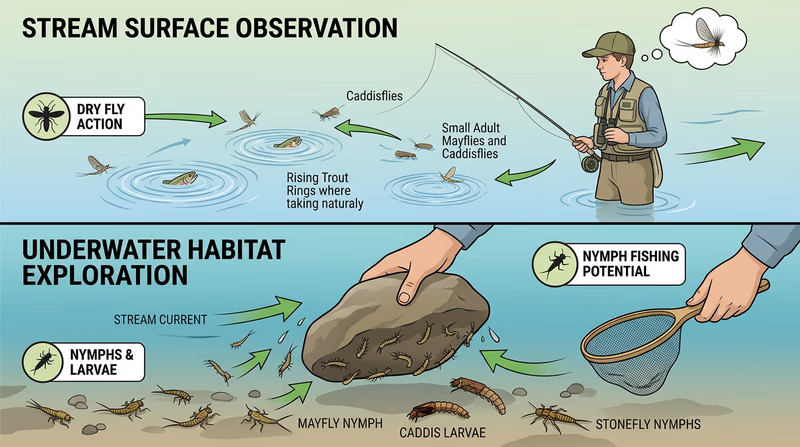
Observation Routine at the Water
How to study what fish are eating before choosing a fly
- Watch the water for a few minutes before casting: Do not rush straight into fishing.
- Study surface activity: Look for rises, insects, and drift lines.
- Check below the surface: Examine rocks, weeds, and shallow edges.
- Notice fish behavior: Sipping, chasing, cruising, or holding deep all suggest different foods.
- Choose a fly based on evidence: Do not just tie on your favorite pattern by habit.
Why Matching the Hatch Matters
Matching the hatch matters because fish become selective when easy, familiar food is abundant. If trout are feeding on tiny olive mayflies, a large black streamer may get ignored. If bass are blowing up on baitfish in the shallows, a tiny midge may not get noticed.
This idea separates fly fishing from random casting. It turns the sport into a mix of observation, natural history, and presentation.
A Scout-Level Example
Imagine you arrive at a creek and see no surface rises. You turn over a rock and find many small dark nymphs. That suggests starting with a nymph pattern and fishing below the surface.
Later, as the light changes, you see delicate insects lifting off the water and trout begin sipping. Now it makes sense to switch to a dry fly or emerger closer to what is hatching. The fish changed behavior because the food available changed too.
In Req 4, you learned what the main fly types imitate. This requirement puts that knowledge into the real world by asking you to compare your flies to actual fish food.
Orvis Learning Center — Matching the Hatch A practical explanation of how anglers observe insect activity and choose flies that better match what fish are eating.Once you understand fish behavior, it is time to think about something bigger than catching fish: how to protect the places where fly fishing happens.