 Getting Started
Introduction & Overview
A forest can look quiet from the trail, but it is busy all the time. Trees trade water and nutrients with the soil, birds nest in branches, fungi break down dead wood, and land managers make careful decisions that can affect the land for decades. Forestry is the study of how forests grow, how people use them, and how we care for them so they stay healthy.
The Forestry merit badge teaches you to notice what is really happening in the woods. You will identify species, study growth rings and tree damage, learn how forests protect water and wildlife, and see how professionals manage forests for many different goals. If you enjoy hiking, conservation, wildlife, fire science, or just learning how the outdoors works, this badge connects all of those interests.
Then and Now
Then — Forests as a Resource Frontier
For much of North American history, forests were viewed mainly as raw material. Settlers cleared huge areas for farms, towns, railroads, and timber. Logging camps cut old-growth forests with few limits, and people often assumed trees would simply grow back no matter how the land was treated. In many places, they did not. Erosion increased, streams warmed, wildlife habitat shrank, and catastrophic fires became more common where slash and dry fuel piled up.
As those problems became harder to ignore, a new idea took hold: forests needed stewardship, not just extraction. Early foresters began measuring tree growth, planning harvests, protecting watersheds, and studying how fire, insects, soil, and climate shaped the land.
- Main focus: Produce lumber, fuel, and cleared land quickly
- Common mindset: Forests were vast enough to use without much planning
Now — Forests as Working Ecosystems
Today, forestry is about balancing many values at once. A forest can provide wood products, clean drinking water, wildlife habitat, recreation, carbon storage, and protection for rare species — all on the same landscape. Modern foresters use science, mapping, field data, and long-term planning to decide what should happen in a forest and when.
That means forestry is not just about cutting trees. It can include thinning overcrowded stands, planting native species, restoring fire to fire-adapted ecosystems, controlling invasive plants, protecting stream buffers, and reducing hazard trees near trails and camps. Good forestry asks a big question: how do we help this forest stay healthy and useful for the future?
- Main focus: Stewardship, resilience, safety, and multiple uses
- Common mindset: Forests are living systems that need thoughtful long-term care
Get Ready!
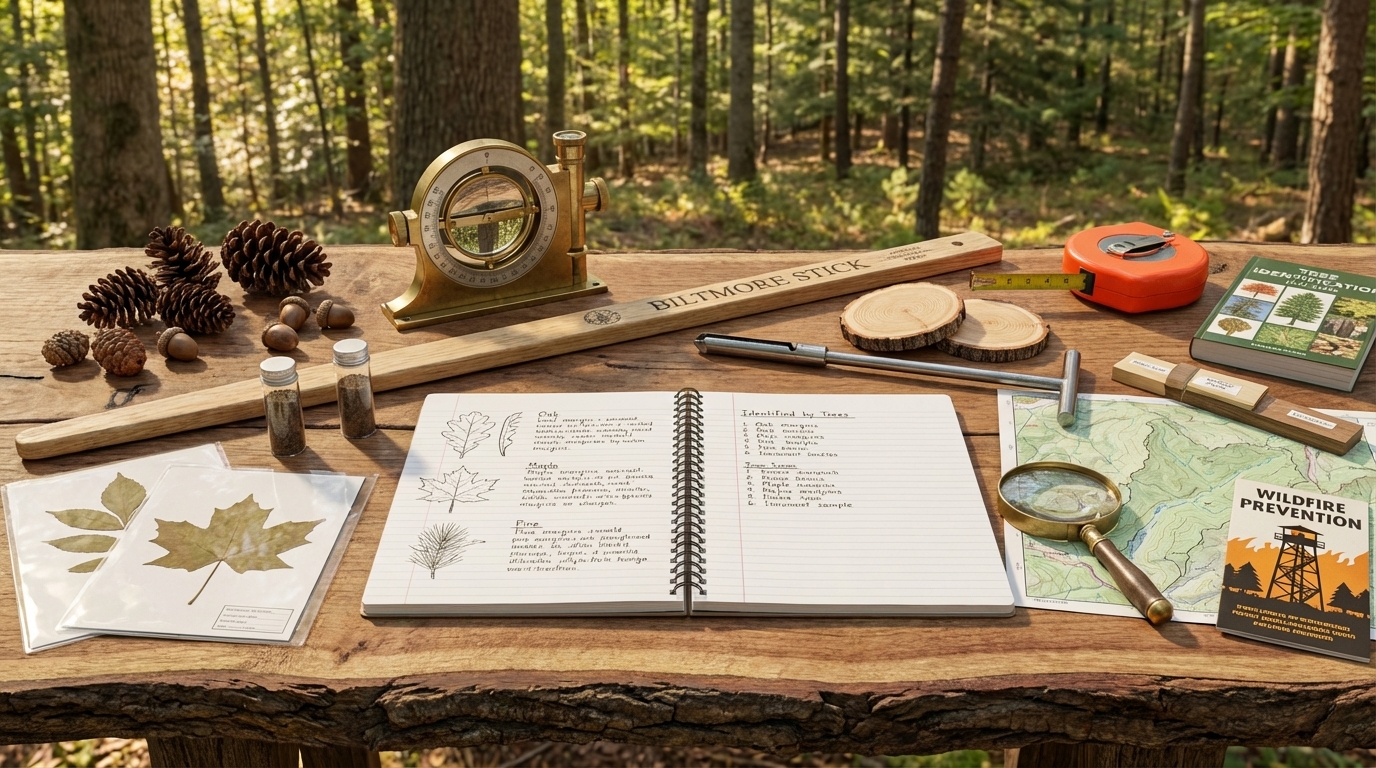
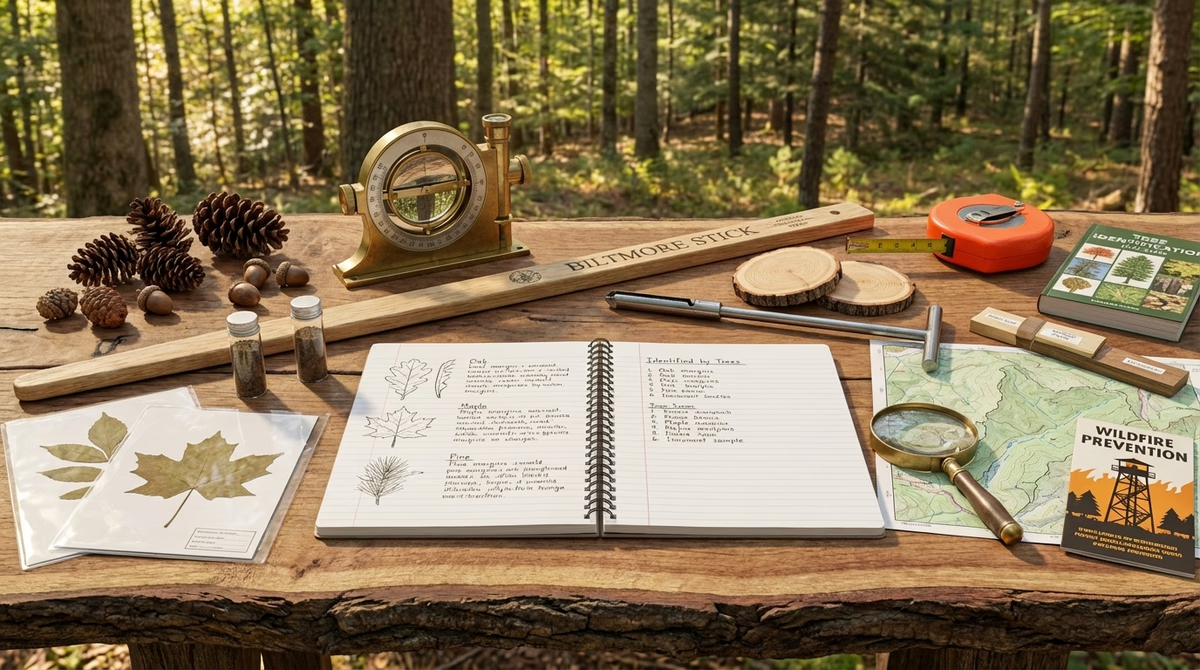
You do not need to be an expert to begin this badge. Bring curiosity, a notebook, and the willingness to look closely. A forest becomes much more interesting when you learn to read its clues — bark patterns, leaf shapes, scars, stumps, stream valleys, and signs of wildlife.
Kinds of Forestry
Forestry is broader than many people realize. Here are some of the main parts of the field you will run into during this guide.
Forest Ecology
Forest ecology looks at how living and nonliving parts of a forest interact. That includes trees, shrubs, vines, fungi, insects, birds, mammals, soil, sunlight, water, and weather. When you identify 15 species and study their habitats in Req 1, you are doing basic forest ecology.
Urban and Community Forestry
Not all forestry happens in remote woods. Urban foresters care for trees along streets, in parks, on school grounds, and in neighborhoods. They think about shade, stormwater, safety, pests, and how trees improve daily life for people who may not live near a large forest.
Production Forestry
Production forestry focuses on growing and harvesting trees for useful products like lumber, paper, plywood, flooring, and packaging. The goal is not just to cut trees, but to manage stands so they can keep producing wood over time while still protecting soil and water.
Fire and Fuels Management
Some forests evolved with regular fire. In those places, low-intensity fire can reduce dangerous fuel buildup and help certain plants and wildlife. Fire and fuels specialists study how wildfire behaves and how prescribed fire, thinning, and fuel breaks can lower the risk of severe fire.
Forest Health and Protection
Forest health specialists look for trouble: invasive plants, destructive insects, diseases, pollution stress, overbrowsing by deer, and storm damage. Their work overlaps with what you will study in Req 2c, Req 6, and Req 7.
Watershed Forestry
Forests and water are deeply connected. Tree roots help hold soil in place, leaf litter slows runoff, and shaded streams stay cooler for fish and aquatic insects. Many communities depend on forested watersheds for clean, reliable drinking water.
Now that you know what forestry is and why it matters, start by learning how to build a field notebook and study the species around you.