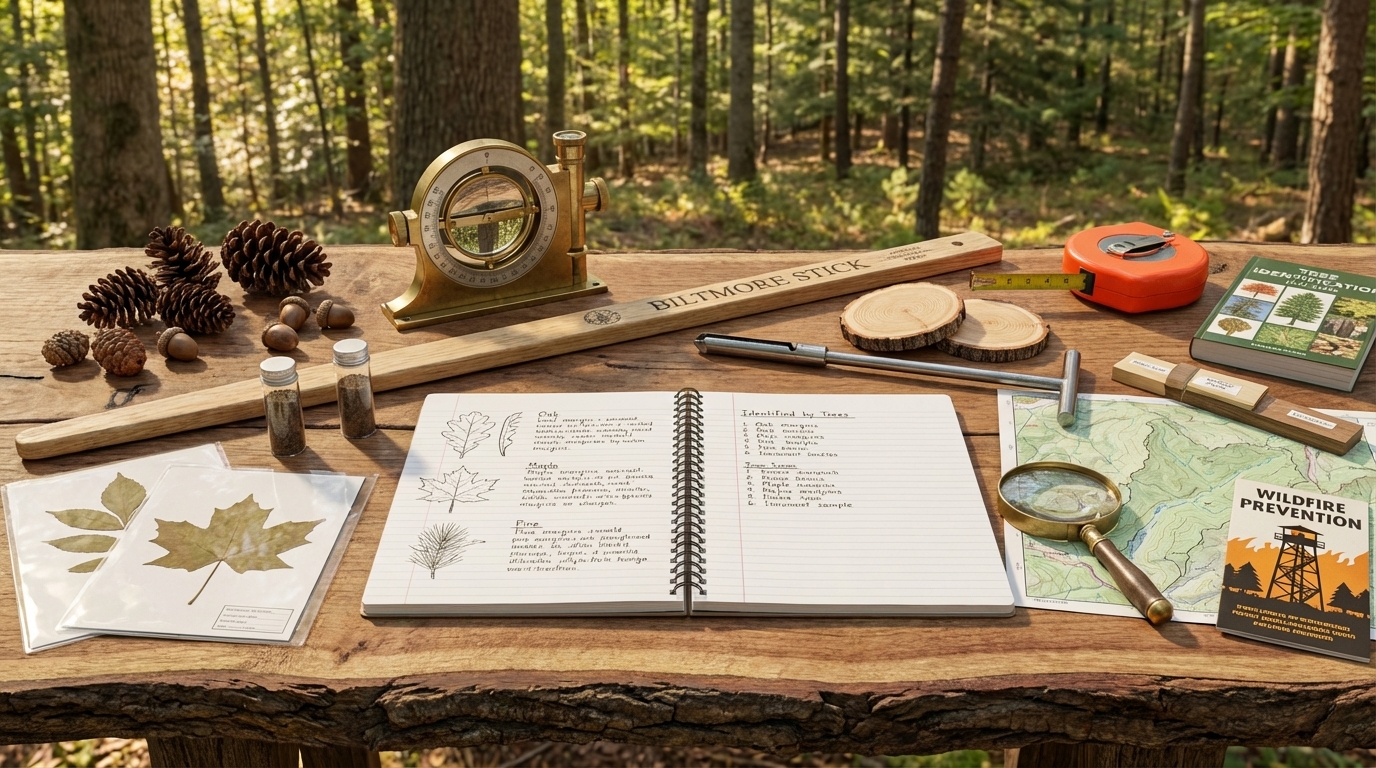
Forestry Merit Badge — Complete Digital Resource Guide
https://merit-badge.university/merit-badges/forestry/guide/
Introduction & Overview
A forest can look quiet from the trail, but it is busy all the time. Trees trade water and nutrients with the soil, birds nest in branches, fungi break down dead wood, and land managers make careful decisions that can affect the land for decades. Forestry is the study of how forests grow, how people use them, and how we care for them so they stay healthy.
The Forestry merit badge teaches you to notice what is really happening in the woods. You will identify species, study growth rings and tree damage, learn how forests protect water and wildlife, and see how professionals manage forests for many different goals. If you enjoy hiking, conservation, wildlife, fire science, or just learning how the outdoors works, this badge connects all of those interests.
Then and Now
Then — Forests as a Resource Frontier
For much of North American history, forests were viewed mainly as raw material. Settlers cleared huge areas for farms, towns, railroads, and timber. Logging camps cut old-growth forests with few limits, and people often assumed trees would simply grow back no matter how the land was treated. In many places, they did not. Erosion increased, streams warmed, wildlife habitat shrank, and catastrophic fires became more common where slash and dry fuel piled up.
As those problems became harder to ignore, a new idea took hold: forests needed stewardship, not just extraction. Early foresters began measuring tree growth, planning harvests, protecting watersheds, and studying how fire, insects, soil, and climate shaped the land.
- Main focus: Produce lumber, fuel, and cleared land quickly
- Common mindset: Forests were vast enough to use without much planning
Now — Forests as Working Ecosystems
Today, forestry is about balancing many values at once. A forest can provide wood products, clean drinking water, wildlife habitat, recreation, carbon storage, and protection for rare species — all on the same landscape. Modern foresters use science, mapping, field data, and long-term planning to decide what should happen in a forest and when.
That means forestry is not just about cutting trees. It can include thinning overcrowded stands, planting native species, restoring fire to fire-adapted ecosystems, controlling invasive plants, protecting stream buffers, and reducing hazard trees near trails and camps. Good forestry asks a big question: how do we help this forest stay healthy and useful for the future?
- Main focus: Stewardship, resilience, safety, and multiple uses
- Common mindset: Forests are living systems that need thoughtful long-term care
Get Ready!
You do not need to be an expert to begin this badge. Bring curiosity, a notebook, and the willingness to look closely. A forest becomes much more interesting when you learn to read its clues — bark patterns, leaf shapes, scars, stumps, stream valleys, and signs of wildlife.
Kinds of Forestry
Forestry is broader than many people realize. Here are some of the main parts of the field you will run into during this guide.
Forest Ecology
Forest ecology looks at how living and nonliving parts of a forest interact. That includes trees, shrubs, vines, fungi, insects, birds, mammals, soil, sunlight, water, and weather. When you identify 15 species and study their habitats in Req 1, you are doing basic forest ecology.
Urban and Community Forestry
Not all forestry happens in remote woods. Urban foresters care for trees along streets, in parks, on school grounds, and in neighborhoods. They think about shade, stormwater, safety, pests, and how trees improve daily life for people who may not live near a large forest.
Production Forestry
Production forestry focuses on growing and harvesting trees for useful products like lumber, paper, plywood, flooring, and packaging. The goal is not just to cut trees, but to manage stands so they can keep producing wood over time while still protecting soil and water.
Fire and Fuels Management
Some forests evolved with regular fire. In those places, low-intensity fire can reduce dangerous fuel buildup and help certain plants and wildlife. Fire and fuels specialists study how wildfire behaves and how prescribed fire, thinning, and fuel breaks can lower the risk of severe fire.
Forest Health and Protection
Forest health specialists look for trouble: invasive plants, destructive insects, diseases, pollution stress, overbrowsing by deer, and storm damage. Their work overlaps with what you will study in Req 2c, Req 6, and Req 7.
Watershed Forestry
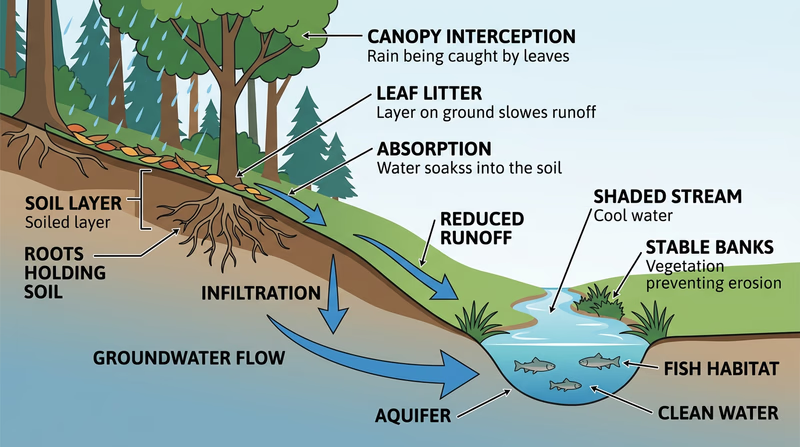
Forests and water are deeply connected. Tree roots help hold soil in place, leaf litter slows runoff, and shaded streams stay cooler for fish and aquatic insects. Many communities depend on forested watersheds for clean, reliable drinking water.
Now that you know what forestry is and why it matters, start by learning how to build a field notebook and study the species around you.
Req 1 — Field Notebook & Species Study
This requirement is where forestry stops being a topic and starts becoming something you can actually do. Instead of just talking about forests, you will go outside, study real plants, and learn to notice the clues that separate one species from another. By the time you finish, your notebook should show that you can identify 15 species and explain what each one tells you about the place where it grows.
This requirement covers three connected ideas:
- Identification clues — leaves, twigs, cones, fruits, bark, and other visible features
- Habitat — the kind of place where each species grows best
- Uses and native status — how people or wildlife use the species, and whether it belongs in your area naturally
Build a Field Notebook You Can Really Use
A good field notebook is more than a list of names. It is a record of what you observed, where you saw it, and how you figured it out. You can use a bound notebook, a clipboard with printed pages, or a small binder. What matters is that each species entry is complete and consistent.
Forest Field Notebook Worksheet Resource: Forest Field Notebook Worksheet — /merit-badges/forestry/guide/forest-field-notebook-worksheet/For each of your 15 entries, include:
- The species name
- Whether it is a tree, shrub, or vine
- The location and date
- Key identifying features
- The habitat where you found it
- Important uses by people or wildlife
- Whether it is native or introduced in your area
Req 1a — Identification Clues
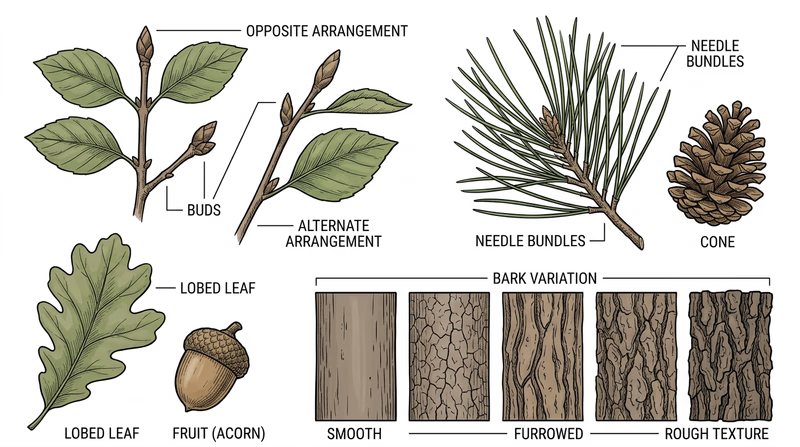
Tree identification is like detective work. You start with what you can see clearly, then narrow the possibilities. Leaves are often the first clue, but they are not the only one. In winter, twigs and buds may matter more than leaves. On conifers, cones and needles can be the most useful feature. On shrubs and vines, fruit clusters, stem color, growth pattern, and bark texture may help a lot.
Here are some clues to watch for:
- Leaf arrangement — opposite, alternate, or whorled on the twig
- Leaf type — simple or compound
- Leaf shape — oval, lobed, needlelike, heart-shaped, and more
- Leaf edge — smooth, toothed, or deeply lobed
- Twig features — buds, scars, color, fuzz, smell, or pith
- Bark — smooth, shaggy, scaly, furrowed, peeling, or patchy
- Cones, nuts, berries, seed pods, or fruits — shape, size, and season matter
It helps to compare similar species side by side. A red oak and a white oak may both look like “oak” at first glance, but their leaves, bark, and acorns have differences. The same is true for hickories, maples, ashes, dogwoods, pines, and many other groups.
What to Record for Each Species
Use more than one clue whenever possible- Leaf or needle details: shape, size, arrangement, and edge.
- Twig or bud clues: color, thickness, opposite or alternate buds, and any smell when scratched.
- Fruit or cone clues: acorns, samaras, berries, pods, cones, or nuts.
- Growth form: tall straight tree, understory shrub, climbing vine, or spreading thicket.
Req 1b — Habitat
A species name is only part of the story. Foresters also want to know why a plant is growing in a certain place. Habitat means the conditions that support that plant: sunlight, water, soil, slope, elevation, and neighboring species.
You might find one species thriving on a dry ridge, another along a cool stream, and another taking over an old field edge. Those patterns matter. They help you understand how forests are organized and how species respond to disturbance, moisture, and shade.
When you describe habitat, be specific. “In the woods” is too broad. Better notes might say:
- north-facing slope with moist soil
- sunny trail edge near a parking area
- floodplain near a creek
- rocky upland ridge with thin soil
- shaded understory under mature hardwoods
Those details help explain why you found that species there.
Req 1c — Uses, Wildlife Value, and Native Status
Forestry is not only about recognizing plants. It is about understanding their role. Some species provide strong lumber, rot-resistant posts, syrup, paper pulp, medicine, shade, erosion control, or ornamental value. Others are especially important to wildlife because they produce mast — food such as nuts, seeds, berries, or acorns — or provide nesting cover and browse.
Native status matters too. A native species evolved in your region and fits into the local ecosystem. Wildlife often depends on it in ways that are easy to miss. Introduced species may be harmless, helpful, or highly damaging. Some spread aggressively, crowd out native plants, change soil chemistry, or create poor habitat for native insects and birds. That is why the requirement asks you to think about whether a species is invasive or potentially invasive.
For each species, try to note at least one human use and one wildlife benefit when you can. For example, one species may be prized for furniture wood, while another stabilizes streambanks or feeds pollinators. A vine might offer bird cover but become a problem if it smothers young trees. Forestry often involves balancing those tradeoffs.
How to Find 15 Good Species
The best way to succeed is to visit more than one kind of place. A neighborhood park, creek edge, school woodland, and local trail may each add different species. Look high, low, and across layers of the forest. Mature canopy trees are only part of the picture. Shrubs, saplings, vines, and understory species all count if they are part of the local forested area.
Good species lists are not built by chasing rare plants. Start with common, easy-to-observe species and build confidence. As your eye improves, you will begin noticing differences you missed before.
If you want a head start on Req 2b or Req 2c later, pay attention now to stumps, fallen logs, scars, insect galleries, fungal growth, dead tops, and storm-damaged limbs. A careful Scout can gather clues for multiple requirements during the same outing.
Arbor Day Foundation — Tree Identification A beginner-friendly tree guide that helps you compare common identification clues such as leaves, bark, and fruit. Link: Arbor Day Foundation — Tree Identification — https://www.arborday.org/trees/treeguide/Req 2 — Choose a Tree Investigation
You choose exactly one investigation for this requirement. Each option teaches you a different way to read evidence from trees: from the wood they produce, from the rings they grow, or from the damage they survive.
Your Three Options
Req 2a — Wood Samples & Uses: Build a small wood collection from 10 tree species and learn how different wood properties make species useful for flooring, furniture, tools, paper, fuel, and more. This option is great if you like comparing materials and learning practical uses.
Req 2b — Reading Tree Rings: Examine stumps, logs, or core samples and study ring patterns to understand growth rate. You will connect those rings to slope, aspect, elevation, moisture, and competition. This option is great if you enjoy clues, patterns, and how environment affects growth.
Req 2c — Tree Damage Detectives: Investigate real examples of animal, insect, or disease damage and explain what caused them and what they mean for the tree. This option is great if you are interested in forest health, pests, and ecology.
How to Choose
Choosing Your Option
Pick the one that matches your interests and your local access- Time and setup: Req 2a takes collecting and labeling samples; Req 2b depends on finding useful stumps, logs, or cores; Req 2c depends on finding visible damage.
- Best location: Req 2a can work at home with gathered samples; Req 2b works best where cut wood or exposed cross-sections exist; Req 2c works best in woods, parks, or neighborhoods with living trees.
- Main skill you gain: Req 2a builds material knowledge; Req 2b builds pattern-reading and site interpretation; Req 2c builds forest health awareness.
- Connection to later requirements: Req 2b and Req 2c pair especially well with later work on forest management, hazard trees, and wildfire impacts.
Each option below has its own full page with practical guidance. Start with the first option, then skip to the one you want to complete.
Req 2a — Wood Samples & Uses
Wood may look simple from the outside, but it is one of the most versatile natural materials on Earth. Different tree species produce wood with different strength, weight, grain, hardness, rot resistance, and workability. This requirement helps you see that “wood” is not just one thing — it is a whole category of materials with very different uses.
Building a Useful Sample Collection
Your collection does not need to be fancy, but it should be organized. The goal is to compare 10 species in a way that helps you remember them. Small blocks, slices, or thin pieces can work well if they are clearly labeled. If possible, include both the common name and where the sample came from.
Try to notice:
- color differences between heartwood and sapwood
- whether the grain is straight, wavy, fine, or coarse
- how heavy the sample feels for its size
- whether it seems soft or hard
- whether it has a distinctive smell or texture
Hardwoods and softwoods can both be useful, but they are not defined by whether the wood is literally hard or soft. In general, hardwoods come from broadleaf trees and softwoods from conifers. There are exceptions: some hardwoods are relatively soft, and some softwoods are strong enough for major construction.
Sample Collection Tips
Keep your collection clear and counselor-friendly- Label every sample immediately so pieces do not get mixed up later.
- Record where it came from such as firewood pile, fallen branch, woodshop scrap, or sawmill offcut.
- Use safe, legal sources like scraps, downed wood, or donated samples rather than cutting live trees.
- Compare similar species side by side to notice grain, color, and weight differences.
Match Properties to Uses
The important part of this requirement is not just naming the species. It is understanding why one kind of wood is chosen for one job and another kind for a different job.
Some examples of useful wood properties include:
- Strength — needed for framing, flooring, tool handles, and structural lumber
- Decay resistance — useful for outdoor furniture, decking, fence posts, and boat parts
- Straight grain — helpful for lumber, trim, and anything that needs predictable cuts
- Light weight — useful for boxes, carvings, models, and some musical instruments
- Attractive appearance — valued for furniture, cabinets, veneer, and paneling
- Shock resistance — useful for handles, sporting goods, and equipment
When you list uses for each of your 10 species, try to connect them to real properties. Do not just write a random list. For example, a species might be used for flooring because it is hard and durable, or for paper because it grows quickly and produces useful fiber.
Where Scouts Usually Find Samples
You do not need access to a commercial timber yard to do this well. Good sources can include a family woodpile, workshop scrap bin, a local nature center, a forester, a school shop teacher, or a sawmill willing to share offcuts. If you gather samples from outdoors, make sure you can still identify them confidently. Bark attached to the sample, matching leaves nearby, or help from a knowledgeable adult can make a big difference.
This option also pairs nicely with Req 5b later. If you visit a logging operation or wood-using manufacturing plant, you will see how raw logs are sorted by species and quality before becoming finished products.
A Strong Final Result
A strong collection shows variety. If all 10 samples are very similar hardwoods, you may miss the bigger lesson. Try to include a range of species and uses if your area allows it. Your counselor should be able to look at your set and see that you understand both identification and practical value.
You can also make quick comparison notes in your field notebook: color, grain, weight, likely uses, and one interesting fact about each species. That will make your discussion with your counselor much easier.
Arbor Day Foundation — About Trees Background information on tree species, growth, and why different trees matter in different settings. Link: Arbor Day Foundation — About Trees — https://www.arborday.org/trees/Req 2b — Reading Tree Rings
A stump can look like just a cut tree, but to a forester it is a timeline. Every ring records a season of growth, and the spacing of those rings can reveal wet years, dry years, crowding, release from competition, storm damage, fire, insects, and changing light conditions. This requirement teaches you how to look at wood like a history book.
What Ring Width Tells You
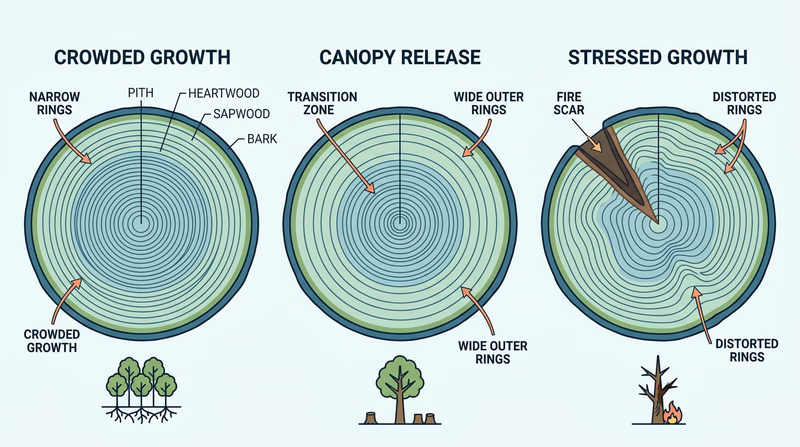
In many climates, a tree forms one visible growth ring each year. A wider ring usually means the tree had better growing conditions that year. A narrow ring can mean stress: drought, shade, poor soil, crowding, insect attack, damage, or some other limit on growth.
What matters most is not one single ring, but the pattern across many years. You are looking for variation in growth rate. That means you want examples where rings change noticeably over time or differ from one part of the forest to another.
Record the Site, Not Just the Rings
This requirement specifically asks for location or origin details such as elevation, aspect, slope, and position on the slope. That is because growth patterns make more sense when you understand the site.
Here is what those terms mean:
- Elevation — how high the site is above sea level
- Aspect — the direction the slope faces, such as north, south, east, or west
- Slope — how steep the ground is
- Position on slope — ridge top, upper slope, middle slope, lower slope, or bottomland
These factors affect sunlight, moisture, wind, and soil depth. A north-facing slope may stay cooler and moister than a south-facing slope. A bottomland may have deeper soil and more water than a dry ridge. That is why two trees of similar age can show very different growth.
What to Notice in Ring Patterns
Use these clues while examining each stump, log, or core- Ring width: Are some years wide and some narrow?
- Sudden change: Does growth suddenly speed up or slow down?
- Damage clues: Are there scars, stains, rot, or uneven shapes?
- Competition clues: Was the tree crowded early, then released later after nearby trees were removed or died?
Common Reasons Growth Rates Change
Several forces can alter ring patterns:
- Competition for light — A tree growing under a closed canopy may show many narrow rings until a gap opens above it.
- Water availability — Drought years often produce narrow rings, while wetter years may produce wider ones.
- Site quality — Deeper, richer soil usually supports faster growth than rocky, shallow soil.
- Damage — Fire scars, insect outbreaks, broken tops, and root problems can slow growth.
- Stand changes — Thinning or storm damage in the surrounding stand can suddenly give a tree more light and space.
A good explanation connects ring evidence to site evidence. For example, if a log from a lower moist slope has wider rings than a stump on a rocky ridge, that difference may reflect better water supply and deeper soil. If a tree has narrow early rings followed by much wider later rings, it may have spent years shaded by older trees and then been “released” when the canopy opened.
🎬 Video: What Can Tree Rings Tell Us? - Ecosystem Essentials — Ecosystem Essentials — https://www.youtube.com/watch?v=G4FHVIL3Fh0
Three Strong Example Types
If you are searching for good material, these are often productive:
- A stump in a crowded stand where trees competed for light.
- A log near a stream or moist hollow where growth may have been faster.
- A tree with obvious injury or disturbance history such as a scar, rot pocket, lean, or abrupt growth change.
If you cannot identify the exact species, you may still be able to interpret the ring pattern, but species information always helps because some trees naturally grow faster than others.
Sketching and Interpreting
Your sketch does not need to be artistic. It just needs to communicate what you saw. Mark the pith if visible, note especially wide or narrow zones, and label any scars or unusual features. In your notes, explain what you think happened and why. Forestry often involves reasoned interpretation, not perfect certainty.
This requirement also builds directly toward Req 4 on forest management. When foresters thin a stand or change how trees are spaced, they are partly trying to influence future growth patterns like the ones you are studying here.
USDA Forest Service — Forests and Water Information on how forest conditions, soils, and management affect water and the health of forested landscapes. Link: USDA Forest Service — Forests and Water — https://www.fs.usda.gov/managing-land/private-land/forest-management/waterReq 2c — Tree Damage Detectives
Healthy forests still contain stressed, injured, and dying trees. That is normal. Forestry is not about expecting every tree to be perfect. It is about recognizing what caused damage, how serious it is, and what the damage means for the rest of the stand. This requirement turns you into a forest health investigator.
Three Main Damage Categories
Animal Damage
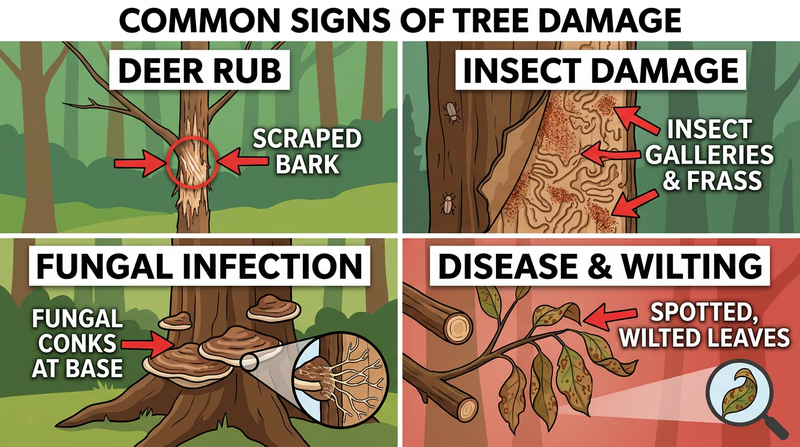
Animals can injure trees in many ways. Deer browse buds and young shoots. Buck rubs scrape bark from small trees. Beavers cut stems and flood root zones. Porcupines chew bark. Squirrels may strip bark in patches. Even livestock can compact soil and damage roots around trees.
Insect Damage
Insects may chew leaves, bore into bark, feed under the bark, suck sap, or deform shoots and buds. Some damage is mostly cosmetic. Other damage can kill trees by disrupting water transport under the bark or by weakening the tree so disease can move in.
Disease Damage
Tree diseases are often caused by fungi, but bacteria, viruses, and other organisms can also be involved. Common signs include cankers, rot, wilted leaves, unusual growths, dead branches, fungal fruiting bodies, and discoloration under the bark.
What to Look For in the Field
Damage is easier to interpret when you describe evidence, not just your conclusion. Look for:
- holes in bark or wood
- sawdust-like frass from boring insects
- galleries under loose bark
- chewed twigs or buds
- stripped bark or trunk scars
- dead tops or branch dieback
- mushrooms or conks on trunk or roots
- leaf spots, wilting, curling, or unusual color
It also helps to ask where the damage is located. Is it on leaves, twigs, bark, roots, or the whole crown? Is it on one tree or many? Is it recent or old? Those details help you separate a minor issue from a stand-wide problem.
Questions to Ask About Damage
These questions help you explain cause and effect- What exactly is damaged? Leaves, buds, bark, cambium, roots, or crown?
- What likely caused it? Animal feeding, insects, disease, weather, or a combination?
- How serious is it? Cosmetic, stressful, or likely to kill the tree?
- What happens next? Recovery, long-term weakness, hazard, or death?
Effects on the Tree
Different types of damage affect trees in different ways:
- Leaf damage can reduce photosynthesis, which means less energy for growth.
- Bark and cambium damage can interrupt the flow of water and sugars.
- Root damage can reduce stability and water uptake.
- Repeated browsing can deform young trees and prevent them from reaching the canopy.
- Decay can make a tree structurally weak, even if it still has green leaves.
That last point matters a lot in forestry. A tree may be alive but unsafe. That becomes especially important later in Req 6 when you look at hazard trees near people or structures.
Two Strong Example Choices
For this requirement, choose damage examples that are easy to explain. One living tree with visible bark or crown damage and one stump, log, or dead tree with clear evidence can make a strong pair. For example, a deer-rubbed sapling and a trunk showing fungal decay tell very different stories and help you show range.
Try to connect the damage to forest conditions. Deer overpopulation, drought stress, crowding, invasive insects, and soil disturbance often make damage worse. In other words, the damage you see may be a symptom of a larger issue in the forest.
This requirement prepares you well for Req 7, where you will look at forest threats on a bigger scale. A single damaged tree can be the first clue to a larger forest problem.
USDA Forest Service — Forest Health Protection Forest health information about insects, diseases, invasive species, and monitoring tree damage. Link: USDA Forest Service — Forest Health Protection — https://www.fs.usda.gov/foresthealth/Req 3a–3b — Forest Benefits & Your Watershed
This requirement covers two big ideas that belong together:
- How forests help people and ecosystems
- Where your own community’s water comes from
When foresters talk about the value of forests, they do not just mean trees standing on a hillside. They mean all the benefits those forests provide every day, often without people noticing.
Req 3a — The Contributions Forests Make
Forests contribute to our lives in many ways at once.
1. Products and the Economy
Forests provide lumber, paper, plywood, furniture material, pallets, packaging, fuelwood, maple syrup, cork-like products in some regions, and many chemicals originally developed from wood compounds. They also support jobs for loggers, truck drivers, mill workers, arborists, foresters, firefighters, nursery workers, and recreation businesses.
2. Social Well-Being and Recreation
People go to forests to hike, camp, hunt, fish, paddle, bird-watch, photograph wildlife, and simply cool off in the shade. Forests can improve mental health, reduce stress, and make communities more pleasant places to live.
3. Soil Protection and Fertility
Roots hold soil in place. Leaf litter cushions the ground from heavy rain and slowly breaks down into organic matter. That organic matter helps soil store water and nutrients. Without forest cover, slopes can erode quickly.
4. Clean Water
Forests act like giant filters. Rain falls on leaves, trickles down trunks, soaks into forest soil, and moves more slowly into streams. That reduces erosion and helps remove sediment before it reaches rivers and reservoirs.
5. Clean Air and Carbon Cycling
Trees absorb carbon dioxide during photosynthesis and store carbon in wood, roots, and soil. Forests also release oxygen and help reduce some air pollutants. Carbon storage is one reason forests matter in discussions about climate.
6. Wildlife Habitat
A forest is not just a place with trees. It is a layered habitat system. Canopy trees, understory shrubs, fallen logs, standing dead trees, leaf litter, and streams all create places for animals to feed, hide, and reproduce.
7. Fisheries Habitat
Forests upstream affect fish downstream. Shade helps keep streams cool. Roots stabilize banks. Fallen trees create pools and cover. When forest cover is removed badly, streams can warm up and fill with sediment, making them worse for fish.
8. Threatened and Endangered Species
Many rare plants and animals depend on very specific forest conditions. Some need old-growth structure, others need open pine woodland maintained by fire, and others depend on clean cold streams flowing through intact forest. Protecting forests can mean protecting species that have nowhere else to go.
One Forest, Many Benefits
Foresters often have to think about all of these at once- Wood products for homes, tools, paper, and jobs.
- Water protection for towns, farms, and fish.
- Habitat for common wildlife and rare species.
- Recreation for hikers, campers, hunters, and families.
- Carbon storage and clean air that help the broader environment.
Req 3b — Your Community’s Water Source
A watershed is all the land that drains water to the same stream, river, lake, or reservoir. If rain falls anywhere in that area, gravity eventually pulls it toward the same outlet. Your community may rely on a reservoir, a river, wells that tap groundwater, or a combination of sources.
This part of the requirement asks you to identify which watershed or source your community depends on. That means moving from a general idea to a specific local answer. You may need to ask your water utility, city government, county environmental department, or state agency.
When you research your community’s water source, try to learn:
- the name of the river, reservoir, aquifer, or watershed
- whether the water is surface water or groundwater
- whether forested land helps protect that source
- what threats could affect water quality
If your area gets water from a forested reservoir or river basin, you now have a direct connection between forestry and everyday life. Turning on a faucet can depend on decisions made far upstream.
The Big Idea
Req 3 is really about seeing forests as infrastructure. Roads, pipes, and dams are visible infrastructure. Forests are quieter, but they also do jobs people depend on. They protect slopes, cool streams, store carbon, and support species and industries. Once you understand that, forest management makes more sense — because people are not managing only trees, they are managing all the benefits forests provide.
This leads naturally to Req 4. If forests are important for so many reasons, how should they be managed? That is the question foresters face every day.
USDA Forest Service — Forest Management and Water An overview of how forests influence water quality, soil protection, and watershed health. Link: USDA Forest Service — Forest Management and Water — https://www.fs.usda.gov/managing-land/private-land/forest-management/waterReq 4 — Forest Management Basics
This requirement covers five ideas that help explain how foresters make decisions:
- Multiple-use management
- Sustainable forest management
- Even-aged and uneven-aged management
- Intermediate cuttings
- Prescribed burning and related practices
Forest management means guiding what happens in a forest so it can meet clear goals over time. Those goals may include timber, wildlife habitat, clean water, recreation, wildfire risk reduction, rare species protection, or public safety. The key word is guiding. Forests will change with or without people, but management tries to shape that change on purpose.
Multiple-Use Management
Multiple-use management means the same forest may be managed for more than one value at the same time. A national forest, for example, might support hiking, hunting, timber production, wildlife habitat, watershed protection, and scenic beauty. Those uses do not always fit together perfectly, so foresters must balance tradeoffs.
A trail user may want dense shade, while a wildlife biologist may want a sunny opening for young forest habitat. A timber harvest may improve stand health in one place but create a short-term visual change people dislike. Multiple-use management is the art of planning for all those needs, not just one.
Sustainable Forest Management
Sustainable forest management means caring for forests so they remain healthy, productive, and useful far into the future. It does not mean never cutting a tree. It means harvests, restoration work, and protection efforts are planned so the forest can keep functioning over time.
Sustainability includes more than tree growth. It also includes soil, water, biodiversity, regeneration, and resilience to future stress. A forest is not being managed sustainably if it produces timber today but leaves behind erosion, invasive species, damaged streams, or no next generation of trees.
Even-Aged and Uneven-Aged Management
These terms describe the age structure of a stand.
Even-Aged Management
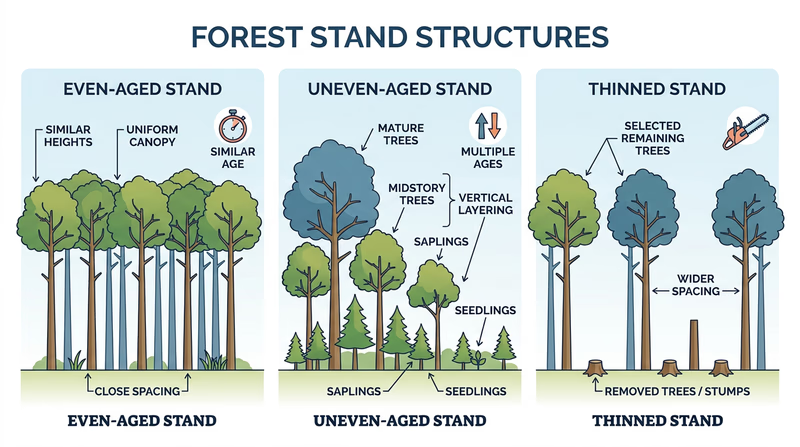
In an even-aged stand, most trees began growing around the same time, so they are close in age. This often happens after a major disturbance such as fire, clearcutting followed by regeneration, or a large storm event. Even-aged systems may be used for species that need a lot of sunlight to regenerate well.
Uneven-Aged Management
In an uneven-aged stand, trees of many ages grow together. Some are seedlings, some are saplings, some are mature, and some are very old. This can create a more layered structure and is often used where continuous cover is important.
Neither approach is automatically better. The right choice depends on species, site conditions, wildlife goals, fire regime, and management objectives.
Intermediate Cuttings
Intermediate cuttings are treatments made before the final harvest stage in a stand. They are used to improve forest conditions while the stand is still developing. Examples can include thinning crowded trees, removing damaged trees, or improving spacing so the remaining trees grow better.
The basic idea is simple: if too many trees are competing for limited light, water, and nutrients, the stand may stagnate. Removing some trees at the right time can increase growth, improve tree quality, and reduce stress.
Prescribed Burning and Related Practices
Prescribed burning is the planned use of fire under specific weather, fuel, and safety conditions to meet management goals. In some ecosystems, this can reduce fuel buildup, recycle nutrients, control unwanted vegetation, and help fire-adapted plants and wildlife.
Related practices can include mechanical thinning, mowing, pile burning, and creating fuel breaks. These are often used together. In many places, decades of fire suppression allowed fuels to build up so much that wildfires became hotter and more destructive than the natural fires those forests once experienced.
🎬 Video: Forestry 101: What is Silviculture? — Forestry and Natural Resources Extension — https://www.youtube.com/watch?v=j72u9i8IAjY
Putting the Ideas Together
Imagine a forest near a town. People hike there, wildlife lives there, the stream below supplies water, and some trees near the road have become hazardous. The stand is overcrowded, fuel has built up, and invasive shrubs are spreading. A forester may respond with thinning, invasive plant control, stream buffer protection, hazard tree removal near the road, and maybe prescribed fire in the right season. That is forest management in real life: combining tools to meet several goals at once.
Req 4 also connects strongly to Req 5 and Req 6. When you visit a managed forest or study hazard trees, you will see these ideas applied on the ground.
Project Learning Tree Forestry and environmental education resources that explain how forests are managed for ecology, products, wildfire, and people. Link: Project Learning Tree — https://www.projectlearningtree.org/Req 5 — Choose a Forestry Field Experience
You choose exactly one field experience for this requirement. The goal is to see forestry as a real-world practice, not just a set of definitions. Each option teaches you to observe, ask questions, and write a short report based on what you learned.
Your Three Options
Req 5a — Managed Forest Visit: Visit a public or private forest with a manager or forester and learn the goals for that land. This is the best option for seeing management decisions directly on the landscape.
Req 5b — Logging or Wood Products Visit: Visit a logging operation or wood-using manufacturing plant and trace wood from the forest to finished products. This option is great if you are interested in industry, equipment, and practical uses of timber.
Req 5c — Fire Prevention Campaign: Take part in a wildfire prevention effort with a professional or agency and explain how it helps prevent fires. This option is great if you care about public education, preparedness, and forest protection.
How to Choose
Choosing Your Field Experience
Think about access, interests, and what you want to learn- Easiest local access: If you have a nearby state forest or park, Req 5a may be easiest.
- Interest in products and equipment: If you want to see logs, mills, and manufacturing, choose Req 5b.
- Interest in wildfire prevention and outreach: If your area has seasonal fire danger or a local wildfire agency, choose Req 5c.
- What you will gain: Req 5a teaches management goals, Req 5b teaches the forest-products chain, and Req 5c teaches prevention and public service.
Start with the first option page below, then skip to the one you actually complete.
Req 5a — Managed Forest Visit
This option is your chance to see forest management where it actually happens. Instead of looking at a forest as one big green background, you will look at it the way a forester does: as a place with goals, constraints, and history.
What to Observe During the Visit
Start by identifying the type of forest. Is it mostly hardwoods, mostly pines, a mixed stand, a bottomland forest, an upland oak-hickory stand, or something else common in your region? Then ask what the land manager is trying to accomplish. The answer may include several goals at once.
Possible objectives include:
- improving timber quality
- protecting a watershed
- reducing wildfire risk
- restoring native species
- improving wildlife habitat
- maintaining recreation access
- protecting rare plants or animals
Then look for the techniques used to reach those goals. You may see thinning, selective harvest, invasive species control, streamside buffers, planting, road maintenance, prescribed burn evidence, or hazard tree work near trails.
Questions That Make Your Report Better
A brief report becomes much stronger when it answers practical questions:
- Why is this forest managed the way it is?
- What problems is the manager trying to solve?
- How do they know whether the forest is getting healthier?
- What tradeoffs do they have to balance?
- What might this area look like in 10 or 20 years if the plan succeeds?
If you notice something surprising — a recently cut area, burn marks, piles of slash, dense young growth, or a protected stream corridor — ask what purpose it serves. Many forestry techniques look strange until you understand the goal behind them.
Writing the Report
Your report does not need to be long, but it should be specific. A strong report includes:
- the type of forest
- the main management objectives
- the techniques you observed
- one or two examples showing how the techniques support the objectives
- something you learned from the forester that you would not have noticed on your own
This option connects closely to Req 4. During the visit, listen for words like sustainable, multiple use, stand improvement, regeneration, burn unit, or watershed protection. Those are the ideas from Req 4 showing up in real decisions.
National Association of State Foresters A hub for state forestry agencies that can help you locate nearby forestry professionals, public forests, and programs. Link: National Association of State Foresters — https://www.stateforesters.org/Req 5b — Logging or Wood Products Visit
This requirement covers seven topics that help you follow the story of wood from the forest to the final product:
- species and size of trees harvested or used
- origin of the stand
- successional stage and future of the forest
- where the trees come from or where they go
- products made from the trees
- how those products are made and used
- how waste materials are handled
A logging site or wood-products plant shows that forestry is not just about trees standing in place. It is also about supply chains, materials, markets, and long-term planning. A log truck, a saw line, a chip pile, and a stack of finished boards all tell different parts of the same story.
What to Pay Attention To
Species and Size
Ask what species are being harvested or processed and why those species are useful. Size matters too. Small-diameter trees may become pulp, chips, or composite products, while larger straight logs may be more valuable for lumber or veneer.
Origin of the Stand
Was the wood grown in a planted stand, a naturally regenerated stand, or a mixture of both? That answer tells you something about the management history of the forest.
Successional Stage and Future
A young stand, a mid-rotation stand, and a mature stand all look different and are managed differently. If the operation is from a past logging site, look for regeneration. Are young trees coming back naturally? Were seedlings planted? Is the site becoming brush, new forest, or something else?
Where the Wood Comes From or Goes
If you visit a logging operation, learn who owns the land and where the logs are headed next. If you visit a plant, ask where the logs came from and what types of mills or customers the finished products go to.
Products, Process, and Waste
A strong report explains not only what is made but also how it is made. Sawmills turn logs into boards, slabs, sawdust, and chips. Paper or panel plants use smaller material differently. Waste is not always wasted — bark, chips, and sawdust may become mulch, fiberboard, paper feedstock, animal bedding, or fuel.
Report Notes to Capture
You do not need to memorize everything if you record it clearly during the visit- Species and log sizes you observed or were told about.
- Where the wood came from and what kind of stand produced it.
- What products were made and what steps turned raw wood into those products.
- How leftovers were handled so you can explain waste use or disposal.
Why This Matters in Forestry
Forestry is easier to understand when you see the connection between standing trees and useful products. This requirement helps you see that different species, stand conditions, and management decisions shape what wood can become. It also shows why sustainable forestry matters. If forests are not regenerated and managed well, the product pipeline eventually runs out or becomes less healthy and less diverse.
This option also connects back to Req 2a. If you built a wood sample collection there, this visit helps explain where those materials come from and why the industry values each species differently.
USDA Forest Service — Forest Products Laboratory Research and educational information about wood properties, wood products, and how forest materials are used. Link: USDA Forest Service — Forest Products Laboratory — https://www.fpl.fs.usda.gov/Req 5c — Fire Prevention Campaign
Wildfire prevention work can seem small compared with a giant fire on the news, but that is exactly the point. Prevention tries to keep small mistakes from becoming major disasters. This option puts you on the prevention side of forestry and public safety.
What Counts as a Campaign?
A campaign is a coordinated effort to change behavior or reduce risk. That might include distributing information at a community event, helping post signs, supporting a fire-prevention day, creating educational materials with an agency, or helping people understand burn restrictions, campfire safety, spark risks, and evacuation awareness.
The important part is that your work happens in cooperation with a knowledgeable adult or agency connected to wildfire prevention. That gives your project credibility and makes sure your report reflects real local fire concerns.
What Your Report Should Explain
Your report needs three parts:
- What the campaign was — who ran it, what it focused on, and where it happened.
- How it helps prevent wildfires — what risky behavior or condition it is trying to reduce.
- Your part in it — what you actually did.
Strong reports explain cause and effect. For example, if the campaign reminds campers to drown, stir, and feel campfires until they are cold, explain how escaped campfires start wildfires. If the campaign focuses on equipment sparks or roadside ignitions, explain why those causes matter in your area.
Common Prevention Messages
A wildfire prevention campaign may focus on topics like:
- campfire safety
- respecting burn bans and fire restrictions
- trailer chains and vehicle sparks
- debris burning safety
- safe use of equipment during dry periods
- reporting smoke quickly
- clearing flammable material around structures
Why Prevention Is a Forestry Topic
Forestry and wildfire are tightly linked. Fire affects regeneration, wildlife habitat, soil, water quality, hazard trees, and future management costs. Preventing unwanted fires protects not only homes and people, but also forest structure and watershed health. In some places, preventing destructive human-caused fires is what allows managers to use prescribed fire more safely for good reasons later.
This option leads directly into Req 7, where you will examine wildfire as one of several major threats to forests.
🎬 Video: Firewise Ohio: ODNR Forestry and Ohio Fire Departments - Cooperative Efforts for Community Safety — OhioDNR — https://www.youtube.com/watch?v=IdQvjwq1BAo
Req 6 — Choose a Hazard Tree Activity
You choose exactly one hazard tree activity. Both options are about safety, but they teach slightly different skills.
Your Two Options
Req 6a — Hazard Tree Inventory: Survey a defined area, note tree species and hazardous conditions, and suggest whether trimming or removal might be appropriate. This option teaches observation and practical reporting.
Req 6b — Review a Professional Hazard Tree Report: Study a report prepared by a professional, then visit the trees and the results of the prescribed work. This option teaches you how experts document and act on risk.
How to Choose
Choosing Your Hazard Tree Option
Pick the version that fits your access and confidence- If you can work in a camp, park, or neighborhood with an adult’s help, Req 6a gives you hands-on observation.
- If a park, camp, or agency already has a tree report, Req 6b lets you learn from professional documentation.
- What you will gain: Req 6a builds field judgment; Req 6b helps you interpret expert recommendations and outcomes.
- Best follow-up: Both options connect strongly to Req 7 because storm damage, disease, insects, and wildfire can all create hazard trees.
Go to the option page that fits your situation.
Req 6a — Hazard Tree Inventory
A shady campsite or neighborhood tree can feel safe and welcoming, but trees are living structures. Limbs die, trunks decay, roots weaken, and storms change stability. This requirement teaches you to notice problems before they hurt someone or damage property.
What Makes a Tree a Hazard?
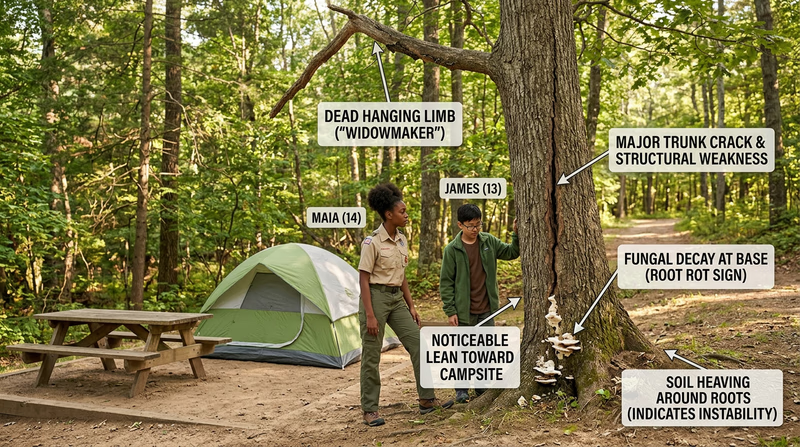
A hazard tree has a defect that could fail and a target that could be hit. That target might be a tent site, road, picnic table, trail, parking lot, street, building, or play area. If a tree is deep in the woods where no one goes, it may not be a hazard in the same sense even if it is badly damaged.
Common warning signs include:
- dead or hanging branches
- major trunk cracks or splits
- mushrooms or decay at the base
- hollow sections or cavities
- root damage or soil heaving
- a tree leaning toward a target
- dead top or major dieback in the crown
Species matters too. Some species tend to shed branches more readily, decay faster after injury, or break under snow or wind more easily than others.
How to Inventory Safely
Pick a specific area and move through it slowly. You are not diagnosing every tree in the landscape. You are looking for obvious issues near places used by people. Record:
- the tree species if you can identify it
- where the tree is located
- the hazardous condition you observed
- what target could be hit
- your suggested remedy
A remedy might be trimming, removing the tree, moving the target, or getting a professional inspection. Do not assume removal is always the answer. Sometimes a single dangerous limb is the real issue.
Hazard Tree Notes
Keep your list practical and easy for others to review- Location: campsite number, trail marker, street address area, or landmark.
- Species: identify if possible, or note “unknown hardwood/conifer” if not certain.
- Hazard observed: cracked stem, dead top, decay, hanging limb, lean, root issue.
- Suggested action: monitor, trim, inspect further, or remove.
Think Like a Reporter, Not a Chainsaw Operator
Your job is to observe and communicate clearly. The proper authority — camp ranger, park manager, public works department, homeowners association, or other responsible agency — decides what to do next. That is why the requirement says to make your list available to the proper authority. A clear report can help professionals prioritize the most urgent problems.
This option also builds on what you studied in Req 2c. Decay fungi, insect attack, root damage, and dead tops are not just biological facts — they can become safety concerns where people gather.
USDA Forest Service — Hazard Trees Background on why hazardous trees matter for safety and how agencies think about tree risk in developed or frequently used areas. Link: USDA Forest Service — Hazard Trees — https://www.fs.usda.gov/managing-land/fire/ibp/hazard-treesReq 6b — Review a Professional Hazard Tree Report
This option teaches you how professional tree risk assessment works in the real world. Instead of making your own full inventory, you study a report prepared by someone with training and then compare that report with what happened on the ground.
What a Professional Report Usually Includes
A professional hazard tree report often records:
- tree species or tree number
- exact location
- defect or risk factor observed
- target that could be affected
- recommended action such as prune, remove, monitor, or restrict access
- priority level or urgency
The report may use technical language, but the basic idea is simple: identify a defect, identify the target, estimate the risk, and choose an action.
What to Look for During the Site Visit
When you visit the trees from the report, compare three things:
- What the report said was wrong with the tree.
- What work was prescribed — pruning, removal, or other action.
- What you can see now after the work was completed, or what still remains if work is pending.
This helps you see that tree risk management is not just about spotting defects. It is also about deciding what action best matches the situation.
For example, a dead hanging limb over a trail might be solved by pruning. A severely decayed tree leaning over a cabin may need removal. A tree with a possible issue but low target value might simply be monitored.
Questions Worth Asking
If you have access to the professional or an informed staff member, ask:
- What defect made this tree a concern?
- How urgent was the risk?
- Why was this treatment chosen?
- How often are these areas rechecked?
- Did insects, disease, storms, or fire contribute to the hazard?
Those questions connect this requirement to Req 2c and Req 7. Hazard does not appear out of nowhere. It often grows out of larger forest health and disturbance issues.
What You Learn from This Option
This option shows that good forestry near people includes hard decisions. Dead wood can be valuable wildlife habitat away from trails and camps, but near a target it may need action. A forester or arborist is often balancing habitat, cost, appearance, safety, and long-term stand condition all at once.
Your counselor will likely want to hear not just what the report said, but what you learned by comparing paper recommendations with real trees. Did the prescription make sense once you saw the site? Did the surrounding area make the risk clearer? Those are strong discussion points.
🎬 Video: Tree Risk Assessment Explained (ISA TRAQ Module 1) #TreeRiskAssessment#ISATRAQ#TRAQReview#Arborist — Arborist-podcast — https://www.youtube.com/watch?v=ByoF3U0ZEEg
Req 7 — Forest Threats & Wildfire Response
This requirement covers three connected topics:
- major threats that can damage forests
- ways to reduce those consequences
- what to do if you discover a forest fire
Forests are resilient, but they are not invincible. Some disturbances are natural and even helpful in the right pattern. Others become destructive when they are too severe, too frequent, or mixed with human pressure.
Req 7a — Consequences of Major Forest Threats
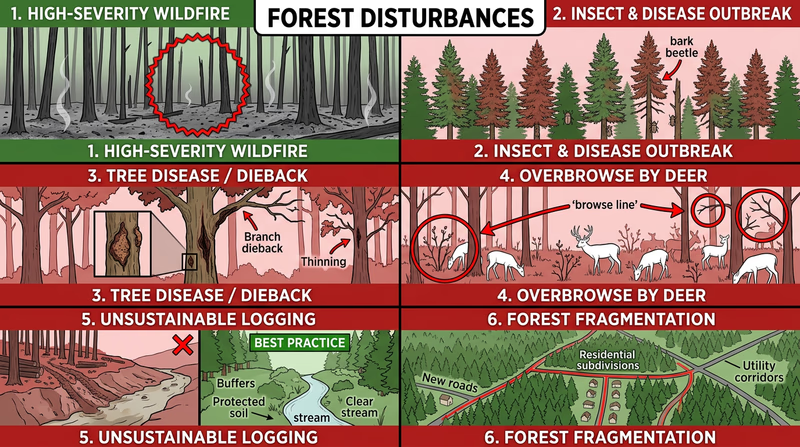
The requirement asks you to describe consequences from five listed elements. Here is a quick guide to all ten so you can choose the ones you understand best.
Wildfire
Severe wildfire can kill mature trees, damage soil, fill streams with ash and sediment, and create hazard trees. But in some fire-adapted ecosystems, low-intensity fire can also help maintain healthy forest structure.
Absence of Fire
In forests that evolved with regular fire, too little fire can allow fuel to build up, shade-intolerant plants to disappear, and later wildfires to become more severe.
Destructive Insects
Outbreaks can kill large numbers of trees, weaken stands, and increase future fire or hazard-tree problems. They can also shift which species dominate a forest.
Loss of Pollinating Insect Population
Many flowering shrubs, vines, and understory plants depend on pollinators. If pollinators decline, seed production can drop and forest plant diversity can suffer.
Tree Diseases
Diseases can cause rot, cankers, wilt, dieback, and mortality. Some wipe out key species in parts of their range, which changes habitat and forest composition.
Air Pollution
Ozone and other pollutants can stress trees, reduce growth, and make forests more vulnerable to drought or pests. Acid deposition can also affect soils and streams.
Overgrazing
Livestock or heavy browsing pressure can strip vegetation, compact soil, and prevent regeneration of young trees and shrubs.
Deer or Other Wildlife Overpopulation
Too many browsers can reshape the understory, eliminate seedlings of preferred species, and reduce plant diversity for decades.
Improper Harvest
Poorly planned harvest can damage soil, increase erosion, reduce regeneration, harm streams, and leave a stand less healthy than before.
Urbanization
Development can fragment habitat, increase invasive species, change drainage, create more edge, and isolate wildlife populations.
A Good Way to Tackle 7a
Choose five threats you can explain with real cause-and-effect details- Name the threat clearly.
- Describe what it does to trees or forest structure.
- Explain who or what else is affected such as streams, wildlife, people, or soil.
- Give one specific consequence like erosion, habitat loss, fuel buildup, or failed regeneration.
Req 7b — How to Reduce the Consequences
Once you describe a threat, ask what could make the situation better. The answer depends on the problem:
- Wildfire or absence of fire: prescribed burning, thinning, defensible space, education, and prevention.
- Insects and diseases: monitoring, quarantine rules, removing infested material, increasing species diversity, and reducing tree stress.
- Overbrowsing or overgrazing: fencing, herd management, rotational grazing, and protecting regeneration.
- Improper harvest: better planning, stream buffers, erosion control, and regeneration standards.
- Urbanization: smart land-use planning, green corridors, retaining tree cover, and invasive-species control.
A strong answer pairs each consequence with a realistic response. Foresters cannot eliminate every threat, but they can often reduce severity and improve resilience.
Req 7c — What to Do If You Discover a Forest Fire
If you discover a forest fire, your job is not to fight it. Your job is to report it quickly and protect yourself and others.
- Get to a safe location first.
- Call 911 or your local wildfire control agency.
- Give the best location you can using road names, trail names, mile markers, GPS, landmarks, or map coordinates.
- Warn nearby adults or staff if you are in a park, camp, or recreation area.
- Leave the area if directed or if the fire is spreading toward you.
Professional crews may control a wildfire with hand tools, engines, dozers, aircraft, hose lays, fireline construction, burnout operations, and careful use of weather and terrain. They study wind, slope, fuels, and access before acting.
National Interagency Fire Center Information on wildfire response, fire behavior, and the agencies that coordinate wildland firefighting in the United States. Link: National Interagency Fire Center — https://www.nifc.gov/Req 8 — Foresters & Forestry Careers
By this point in the badge, you have already been thinking like a forester: observing species, reading sites, noticing damage, thinking about wildfire, and asking how forests should be managed. This requirement helps you connect those skills to real people and real jobs.
What Foresters Actually Do
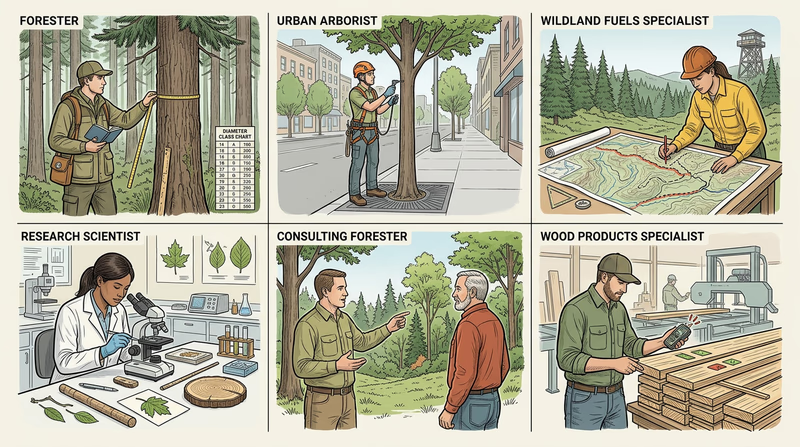
A forester’s job changes with the setting. One forester may spend the week cruising timber, marking stands, and writing management plans. Another may focus on urban trees, wildfire fuels, watershed protection, or forest health. Others work in education, policy, GIS mapping, research, consulting, or manufacturing.
Common duties can include:
- measuring trees and evaluating stands
- identifying species and regeneration
- planning harvests or restoration work
- protecting streams and soils
- monitoring insects, disease, and invasive species
- writing reports and management plans
- meeting with landowners, agencies, and the public
- supervising contractors or field crews
Education and Qualifications
Many professional foresters earn a degree in forestry, natural resources, forest engineering, ecology, or a related field. Coursework may include dendrology, soils, hydrology, silviculture, mensuration, GIS, wildfire, wildlife habitat, and statistics. In some roles, licenses, certifications, or agency-specific training may also matter.
But education is not only classroom work. Forestry is a field profession. Being observant, careful with data, comfortable outdoors, and able to explain technical ideas clearly are all important.
Different Career Paths in Forestry
Public Land Forestry
Foresters in federal, state, county, or local agencies may manage public forests, parks, watersheds, and fire programs. They often balance multiple-use goals and public expectations.
Private and Consulting Forestry
Consulting foresters work with private landowners to develop plans, improve timber value, protect habitat, and meet family or business goals.
Urban Forestry and Arboriculture
These professionals manage trees in towns and cities, where public safety, shade, storm damage, infrastructure conflicts, and tree health are major concerns.
Wildland Fire and Fuels
Some forestry careers focus heavily on wildfire prevention, fuels reduction, prescribed fire, and post-fire recovery.
Research and Education
Forest scientists, extension specialists, and educators study how forests respond to changing conditions and help landowners and the public use that knowledge.
Questions to Ask a Forester
Use these if you interview someone for the report option- What does a normal week look like for you?
- What kind of training or degree helped most?
- What is the hardest part of the job?
- What do you enjoy most about working in forestry?
- What advice would you give a Scout interested in this field?
Why This Career Matters
Forestry is one of those careers where decisions can last for decades. A forester may help shape what a stand looks like long after they retire. That makes the job both exciting and serious. Forests grow slowly, so good judgment matters.
If you like science, fieldwork, maps, problem-solving, and being outdoors, forestry offers a lot of paths. Some jobs are physically demanding and field-heavy. Others mix office planning with site visits. The field also overlaps with wildlife biology, hydrology, fire science, conservation law, and environmental education.
🎬 Video: What is a Forester? — TreeStand Forestry — https://www.youtube.com/watch?v=ZEmBFp95VL0
Extended Learning
A. Keep Reading the Forest
You have finished the Forestry merit badge, but the forest is still full of clues you have not read yet. The more time you spend outside with a notebook, the more patterns you will notice: which species dominate ridges, where regeneration is succeeding, which streams stay cold in summer, and how storm damage reshapes a stand. Forestry rewards patience. A site you visit in March tells a different story in July or October.
B. Forest Succession in Real Time
A forest is never frozen in one stage forever. Disturbance and regrowth are always happening. After a harvest, wildfire, storm, or insect outbreak, sunlight reaches the ground and opens opportunities for grasses, wildflowers, shrubs, and tree seedlings. Over time, some species race ahead in open sun while others wait for shade and stable conditions.
Watching succession in real time teaches you to think beyond a single season. A brushy patch that looks messy to one person may be an important young-forest stage for birds, pollinators, and browsing mammals. A mature closed-canopy stand may seem healthy but could also be missing regeneration in the understory. Foresters pay attention to those transitions because the future forest starts long before the current one disappears.
One great long-term project is to revisit the same few spots every few months and record what changes. Sketch the canopy, the understory, and the ground layer. Note which species appear after disturbance and which fade out later. Over time, you will begin to see succession not as an abstract term, but as a real process unfolding around you.
C. Forests, Climate, and Resilience
Climate affects forests through temperature, rainfall, drought, storms, insects, disease pressure, and wildfire conditions. Some species may struggle if conditions become hotter or drier than what they are adapted to. Others may expand into new places. Resilience means a forest can absorb stress, recover, and continue functioning.
Forestry plays a role in resilience by promoting species diversity, protecting soils, reducing severe fire risk in fire-prone systems, and helping forests regenerate after disturbance. Resilience does not mean a forest never changes. In fact, change is normal. The goal is to keep change from becoming collapse. That is why foresters study long-term trends instead of only reacting to today’s problem.
If you want to go deeper, start noticing resilience questions in your own area. Are there signs of drought stress? Are invasive plants taking over disturbed ground? Are there many young trees of only one species? These are the kinds of observations that turn a curious Scout into a skilled land steward.
D. Wood in Everyday Life
Once you start learning forestry, wood products show up everywhere. Doors, shelves, cabinets, cardboard boxes, books, pencils, flooring, paper towels, musical instruments, and even some clothing fibers have ties to forest products. That does not mean every use is automatically good or bad. It means material choices connect back to land management.
A smart extended-learning question is this: what happens before and after a product reaches me? Where did the fiber come from? Was the forest regenerated? Was waste reused? Could the product be recycled or used longer? Forestry is not just about standing trees. It is also about how society values, uses, and wastes the materials forests provide.
Looking at products this way helps you connect ecology and economy. It also helps explain why sustainable forestry matters. A forest managed well can keep producing useful materials while still protecting water, wildlife, and future growth.
E. Real-World Experiences
- Visit a state forest or demonstration forest and compare different stand types, harvest areas, and recreation zones.
- Join a guided tree walk or native plant hike at a park, arboretum, or nature center to sharpen your identification skills.
- Volunteer for an invasive plant removal day to see how restoration work happens on the ground.
- Attend a wildfire prevention or prescribed fire education event if one is offered in your area.
- Tour a sawmill, forestry school, or conservation district office to learn how forest decisions connect to products and public service.
F. Organizations to Explore
- USDA Forest Service — Manages national forests, conducts research, and shares educational resources about forest health, wildfire, watersheds, and management.
- Society of American Foresters — A professional organization for forestry education, careers, and standards.
- National Association of State Foresters — Connects state forestry agencies and helps you find forestry programs close to home.
- Project Learning Tree — Forestry and environmental education resources for students, educators, and families.
- Arbor Day Foundation — Offers tree identification, tree care, and community forestry resources.