Req 2c — Tree Damage Detectives
Healthy forests still contain stressed, injured, and dying trees. That is normal. Forestry is not about expecting every tree to be perfect. It is about recognizing what caused damage, how serious it is, and what the damage means for the rest of the stand. This requirement turns you into a forest health investigator.
Three Main Damage Categories
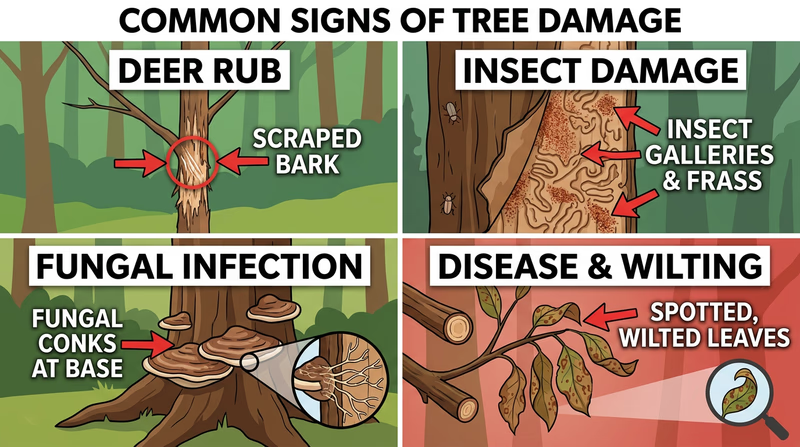
Animal Damage
Animals can injure trees in many ways. Deer browse buds and young shoots. Buck rubs scrape bark from small trees. Beavers cut stems and flood root zones. Porcupines chew bark. Squirrels may strip bark in patches. Even livestock can compact soil and damage roots around trees.
Insect Damage
Insects may chew leaves, bore into bark, feed under the bark, suck sap, or deform shoots and buds. Some damage is mostly cosmetic. Other damage can kill trees by disrupting water transport under the bark or by weakening the tree so disease can move in.
Disease Damage
Tree diseases are often caused by fungi, but bacteria, viruses, and other organisms can also be involved. Common signs include cankers, rot, wilted leaves, unusual growths, dead branches, fungal fruiting bodies, and discoloration under the bark.
What to Look For in the Field
Damage is easier to interpret when you describe evidence, not just your conclusion. Look for:
- holes in bark or wood
- sawdust-like frass from boring insects
- galleries under loose bark
- chewed twigs or buds
- stripped bark or trunk scars
- dead tops or branch dieback
- mushrooms or conks on trunk or roots
- leaf spots, wilting, curling, or unusual color
It also helps to ask where the damage is located. Is it on leaves, twigs, bark, roots, or the whole crown? Is it on one tree or many? Is it recent or old? Those details help you separate a minor issue from a stand-wide problem.
Questions to Ask About Damage
These questions help you explain cause and effect
- What exactly is damaged? Leaves, buds, bark, cambium, roots, or crown?
- What likely caused it? Animal feeding, insects, disease, weather, or a combination?
- How serious is it? Cosmetic, stressful, or likely to kill the tree?
- What happens next? Recovery, long-term weakness, hazard, or death?
Effects on the Tree
Different types of damage affect trees in different ways:
- Leaf damage can reduce photosynthesis, which means less energy for growth.
- Bark and cambium damage can interrupt the flow of water and sugars.
- Root damage can reduce stability and water uptake.
- Repeated browsing can deform young trees and prevent them from reaching the canopy.
- Decay can make a tree structurally weak, even if it still has green leaves.
That last point matters a lot in forestry. A tree may be alive but unsafe. That becomes especially important later in Req 6 when you look at hazard trees near people or structures.
Two Strong Example Choices
For this requirement, choose damage examples that are easy to explain. One living tree with visible bark or crown damage and one stump, log, or dead tree with clear evidence can make a strong pair. For example, a deer-rubbed sapling and a trunk showing fungal decay tell very different stories and help you show range.
Try to connect the damage to forest conditions. Deer overpopulation, drought stress, crowding, invasive insects, and soil disturbance often make damage worse. In other words, the damage you see may be a symptom of a larger issue in the forest.
This requirement prepares you well for Req 7, where you will look at forest threats on a bigger scale. A single damaged tree can be the first clue to a larger forest problem.
USDA Forest Service — Forest Health Protection Forest health information about insects, diseases, invasive species, and monitoring tree damage.