Req 8 — Foresters & Forestry Careers
By this point in the badge, you have already been thinking like a forester: observing species, reading sites, noticing damage, thinking about wildfire, and asking how forests should be managed. This requirement helps you connect those skills to real people and real jobs.
What Foresters Actually Do
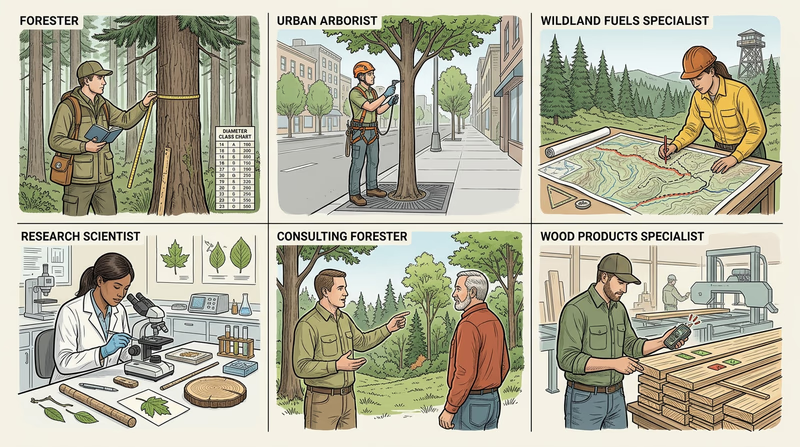
A forester’s job changes with the setting. One forester may spend the week cruising timber, marking stands, and writing management plans. Another may focus on urban trees, wildfire fuels, watershed protection, or forest health. Others work in education, policy, GIS mapping, research, consulting, or manufacturing.
Common duties can include:
- measuring trees and evaluating stands
- identifying species and regeneration
- planning harvests or restoration work
- protecting streams and soils
- monitoring insects, disease, and invasive species
- writing reports and management plans
- meeting with landowners, agencies, and the public
- supervising contractors or field crews
Education and Qualifications
Many professional foresters earn a degree in forestry, natural resources, forest engineering, ecology, or a related field. Coursework may include dendrology, soils, hydrology, silviculture, mensuration, GIS, wildfire, wildlife habitat, and statistics. In some roles, licenses, certifications, or agency-specific training may also matter.
But education is not only classroom work. Forestry is a field profession. Being observant, careful with data, comfortable outdoors, and able to explain technical ideas clearly are all important.
Different Career Paths in Forestry
Public Land Forestry
Foresters in federal, state, county, or local agencies may manage public forests, parks, watersheds, and fire programs. They often balance multiple-use goals and public expectations.
Private and Consulting Forestry
Consulting foresters work with private landowners to develop plans, improve timber value, protect habitat, and meet family or business goals.
Urban Forestry and Arboriculture
These professionals manage trees in towns and cities, where public safety, shade, storm damage, infrastructure conflicts, and tree health are major concerns.
Wildland Fire and Fuels
Some forestry careers focus heavily on wildfire prevention, fuels reduction, prescribed fire, and post-fire recovery.
Research and Education
Forest scientists, extension specialists, and educators study how forests respond to changing conditions and help landowners and the public use that knowledge.
Questions to Ask a Forester
Use these if you interview someone for the report option
- What does a normal week look like for you?
- What kind of training or degree helped most?
- What is the hardest part of the job?
- What do you enjoy most about working in forestry?
- What advice would you give a Scout interested in this field?
Why This Career Matters
Forestry is one of those careers where decisions can last for decades. A forester may help shape what a stand looks like long after they retire. That makes the job both exciting and serious. Forests grow slowly, so good judgment matters.
If you like science, fieldwork, maps, problem-solving, and being outdoors, forestry offers a lot of paths. Some jobs are physically demanding and field-heavy. Others mix office planning with site visits. The field also overlaps with wildlife biology, hydrology, fire science, conservation law, and environmental education.