Req 3 — Intellectual Property
You cannot hold an idea in your hand the way you hold a game token or a soccer ball. But ideas, art, names, music, code, stories, and characters still have value. That is why designers need to understand intellectual property, often shortened to IP.
Intellectual property means creative work and identifying marks that the law can protect. In game design, IP can include a game’s name, logo, artwork, written story, original characters, music, computer code, and sometimes technical inventions.
The Main Types of IP in Games
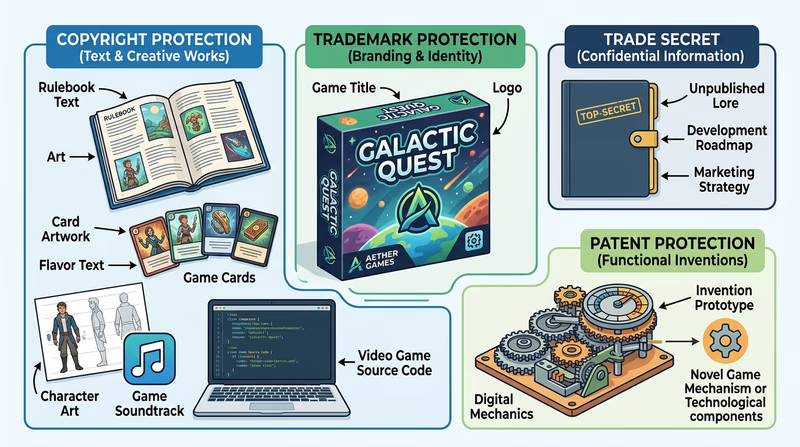
The game industry usually talks about four big types of protection.
Copyright
Copyright protects original creative expression. In games, that can include artwork, written rules, character backstories, soundtracks, animations, and software code. Copyright does not protect a broad idea like “a game where players race to collect treasures.” It protects the specific way someone expressed that idea.
Trademark
Trademark protects brand identity — names, logos, slogans, and symbols that tell people who made something. A game title, publisher logo, or special emblem can become a trademark. Trademark law helps prevent confusion in the marketplace.
Patent
A patent protects certain new inventions or technical processes. Some games and game technologies have used patents for special hardware, control systems, or unique technical methods. Patents are less common for Scouts to deal with directly, but they matter in the larger industry.
Trade Secret
A trade secret is valuable information a company keeps private, such as internal tools, unreleased plans, secret formulas, or special development methods. A game studio might protect unreleased story details, secret balancing tools, or private engine technology this way.
Why Protection Matters
Protection gives creators a reason to keep making things. If anyone could copy a game’s art, logo, soundtrack, and code instantly without consequences, the original creators could lose money, recognition, and control.
Protection also helps players. It makes it easier to know what is official, what is copied, and who is responsible for the product. When you see a trusted brand name, you know what experience you are likely to get.
How IP Is Protected
Protection happens in several ways:
- creators automatically receive copyright in original work when it is fixed in a tangible form, such as writing, art files, or code
- companies register trademarks for names and logos
- inventors apply for patents when they believe they created a new patentable invention
- studios use contracts, passwords, and private workflows to guard trade secrets
- licenses and permissions spell out who may use a property and under what terms
As a Scout designer, one of the best habits you can build is keeping clear notes in your notebook. Date your sketches, rules, and revisions. That does not replace legal advice, but it does show your creative process.
What Is a Licensed Property?
A licensed property is an IP that one person or company allows another to use under specific conditions. For example, a game studio might receive permission to make a game based on a movie, sports league, comic book, or toy brand. The studio does not own the property outright. It has a license to use it.
A board game based on a superhero movie is a good example of a licensed property. So is a sports video game that uses real team names and player likenesses under license.
What This Means for Your Own Design
When you create your own game later in this badge, make it yours. Do not build it as a copy of a famous brand or a mashup of someone else’s characters and story world. Learn from what you like, but create original rules, presentation, and themes.
U.S. Copyright Office — What Is Copyright? An official overview of what copyright protects and what it does not protect. USPTO — Basic Facts About Trademarks A beginner-friendly guide from the U.S. Patent and Trademark Office on how trademarks work.In the next requirement, you will stop talking about existing designs and start changing one yourself by testing rule changes in action.